Graphene/Chalcogenide Heterojunctions for Enhanced Electric-Field-Sensitive Dielectric Performance: Combining DFT and Experimental Study
Bo Li, Nanhui Zhang, Yuxing Lei, Mengmeng Zhu, Haitao Yang

TL;DR
This paper explores how combining graphene with chalcogenide materials improves the electric-field sensitivity of flexible dielectric composites, using both theory and experiments.
Contribution
The novel contribution is the use of graphene/TMD heterojunctions as fillers to enhance dielectric performance through interfacial electronic modulation.
Findings
Graphene/TMD heterojunctions show negative binding energy and significant interfacial charge redistribution.
The WS2-G/PDMS composite exhibited a 7.607% higher electric-field-induced voltage amplitude compared to pure PDMS.
Dielectric spectroscopy confirmed improved dielectric constants with stable loss trends in the composites.
Abstract
Electric-field-sensitive dielectrics play a crucial role in electric field induction sensing and related capacitive conversion, with interfacial polarization and charge accumulation largely determining the signal output. This paper introduces graphene/transition metal dichalcogenide (TMD) (MoSe2, MoS2, and WS2) heterojunctions as functional fillers to enhance the dielectric response and electric-field-induced voltage output of flexible polydimethylsiloxane (PDMS) composites. Density functional theory (DFT) calculations were used to evaluate the stability of the heterojunctions and interfacial electronic modulation, including binding behavior, charge redistribution, and Fermi level-referenced band structure/total density of states (TDOS) characteristics. The calculations show that the graphene/TMD interface is primarily controlled by van der Waals forces, exhibiting negative binding…
Genes, proteins, chemicals, diseases, species, mutations and cell lines named across the full text — each resolved to its canonical identifier and authoritative record.
Click any figure to enlarge with its caption.
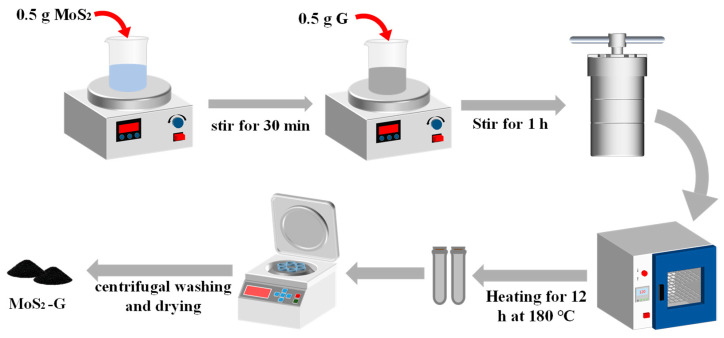 Figure 1
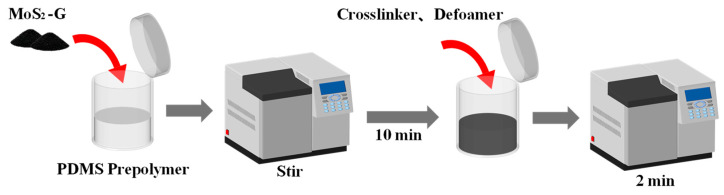 Figure 2
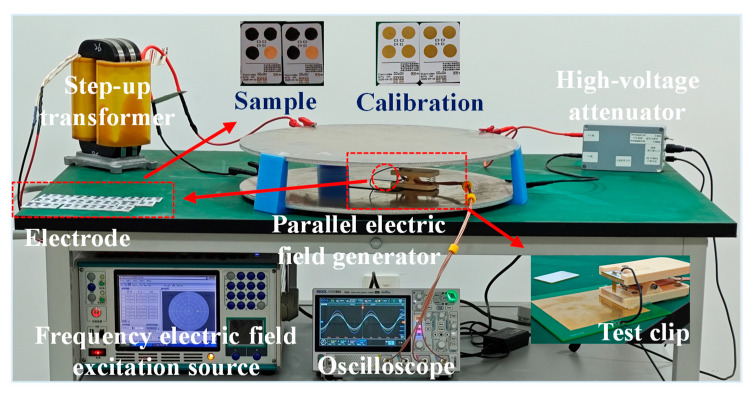 Figure 3
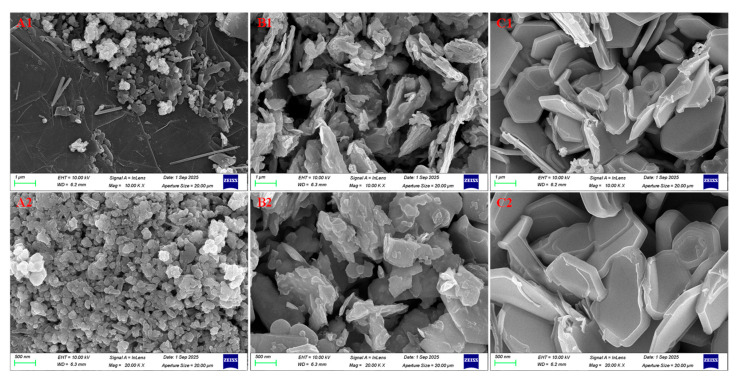 Figure 4
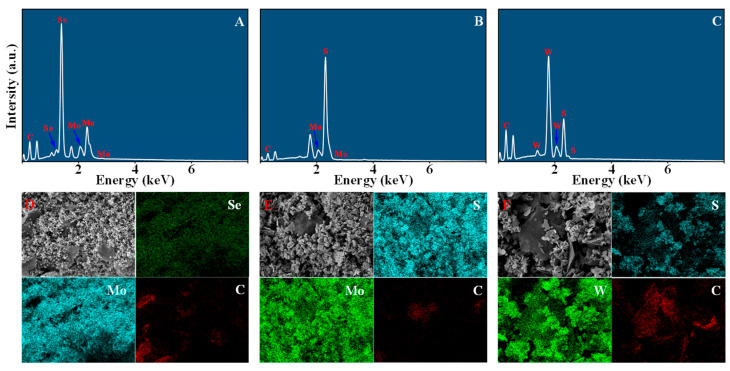 Figure 5
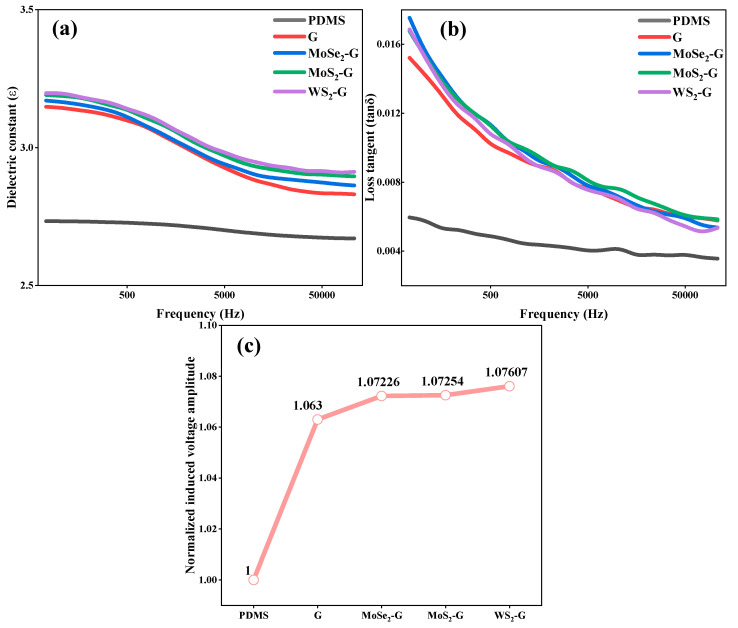 Figure 6
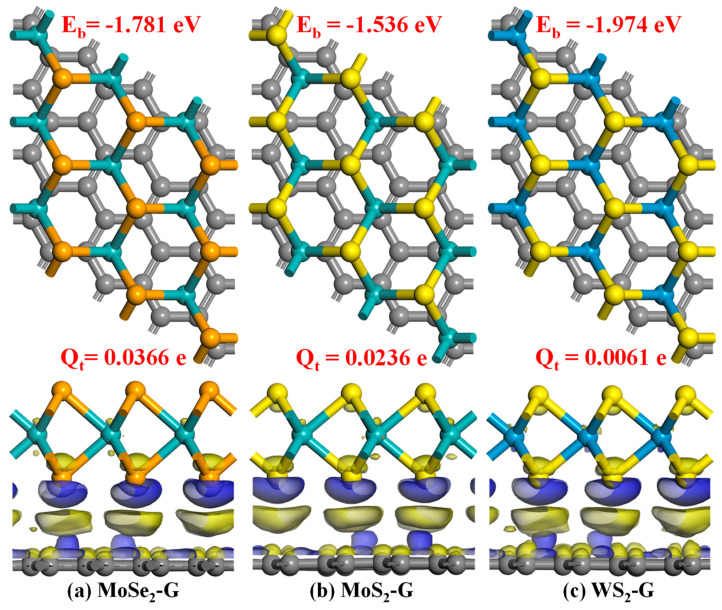 Figure 7
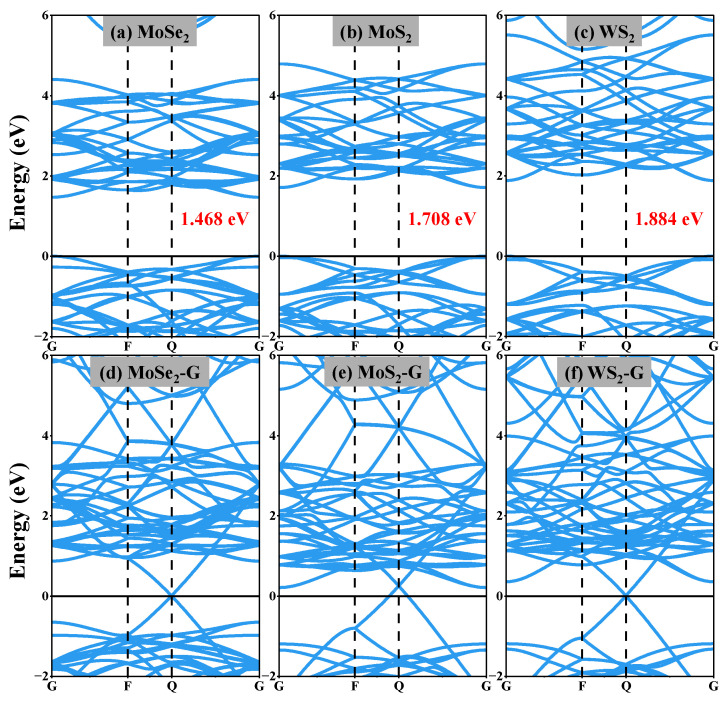 Figure 8
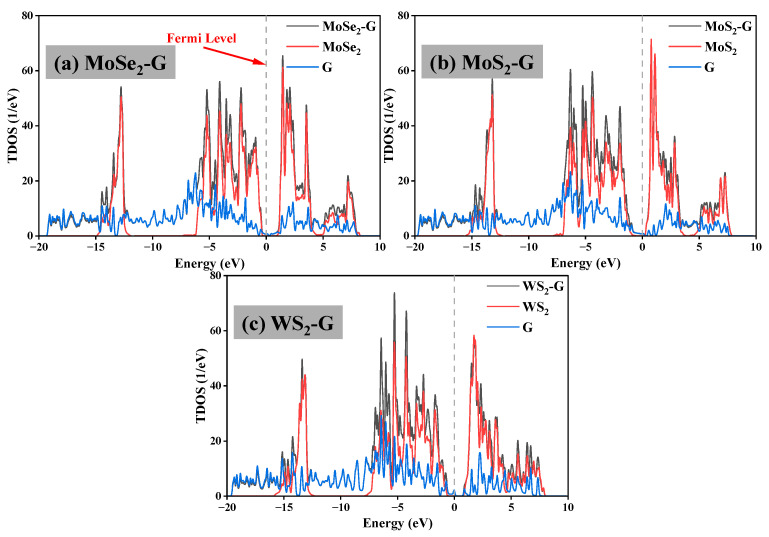 Figure 9
Peer Reviews
No public reviews on file for this paper yet. If you reviewed it on a platform where reviews are public (OpenReview, ICLR, NeurIPS, ICML), you can paste yours below so the community can read it here.
Videos
No videos yet. Explain this paper in a talk, walkthrough, or lecture? Add one.
Taxonomy
TopicsDielectric materials and actuators · Advanced Sensor and Energy Harvesting Materials · Smart Materials for Construction