Computational Identification of Blood–Brain Barrier-Permeant Microbiome Metabolites with Binding Affinity to Neurotransmitter Receptors in Neurodevelopmental Disorders
Ricardo E. Buendia-Corona, María Fernanda Velasco Dey, Lisset Valencia Robles, Hannia Josselín Hernández-Biviano, Cristina Hermosillo-Abundis, Lucila Isabel Castro-Pastrana

TL;DR
This study identifies microbiome metabolites that can cross the blood-brain barrier and bind to neurotransmitter receptors linked to neurodevelopmental disorders.
Contribution
A novel computational framework combining rule-based and neural network models identifies BBB-permeant microbiome metabolites with receptor binding affinity.
Findings
Fungal metabolites from Ascomycota were the most abundant high-affinity ligands for neurotransmitter receptors.
Menaquinone MK-7 showed broad phylogenetic conservation across phyla.
Complementary BBB prediction methods revealed distinct sets of permeant metabolites.
Abstract
The gut microbiome produces thousands of metabolites with potential to modulate central nervous system function through peripheral or direct neural mechanisms. Tourette syndrome, attention-deficit/hyperactivity disorder, and autism spectrum disorder exhibit shared neurotransmitter dysregulation and microbiome alterations, yet mechanistic links between microbial metabolites and receptor-mediated neuromodulation remain unclear. We screened 27,642 microbiome SMILES metabolites for blood–brain barrier permeability using rule-based SwissADME classification and a PyTorch 2.0 neural network trained on 7807 experimental compounds (test accuracy 86.2%, AUC 0.912). SwissADME identified 1696 BBB-crossing metabolites following Lipinski’s criteria, while PyTorch classified 2484 metabolites with expanded physicochemical diversity. Following 3D conformational optimization (from SMILES) and curation…
Genes, proteins, chemicals, diseases, species, mutations and cell lines named across the full text — each resolved to its canonical identifier and authoritative record.
Click any figure to enlarge with its caption.
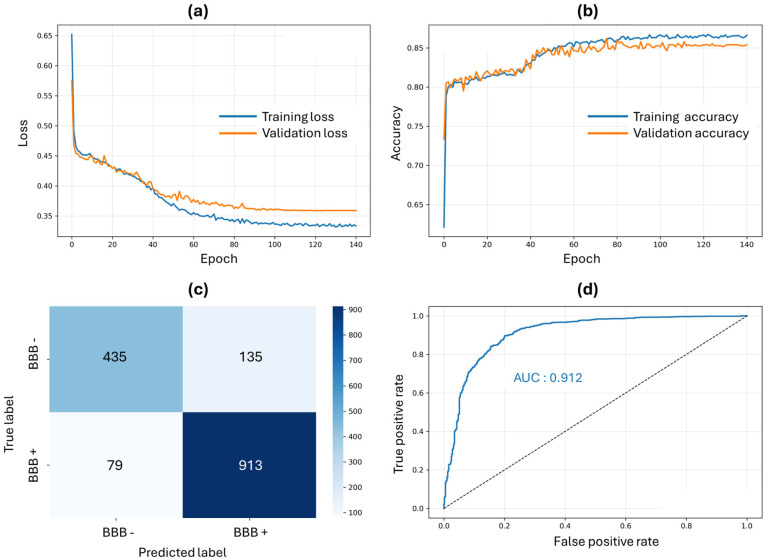 Figure 1
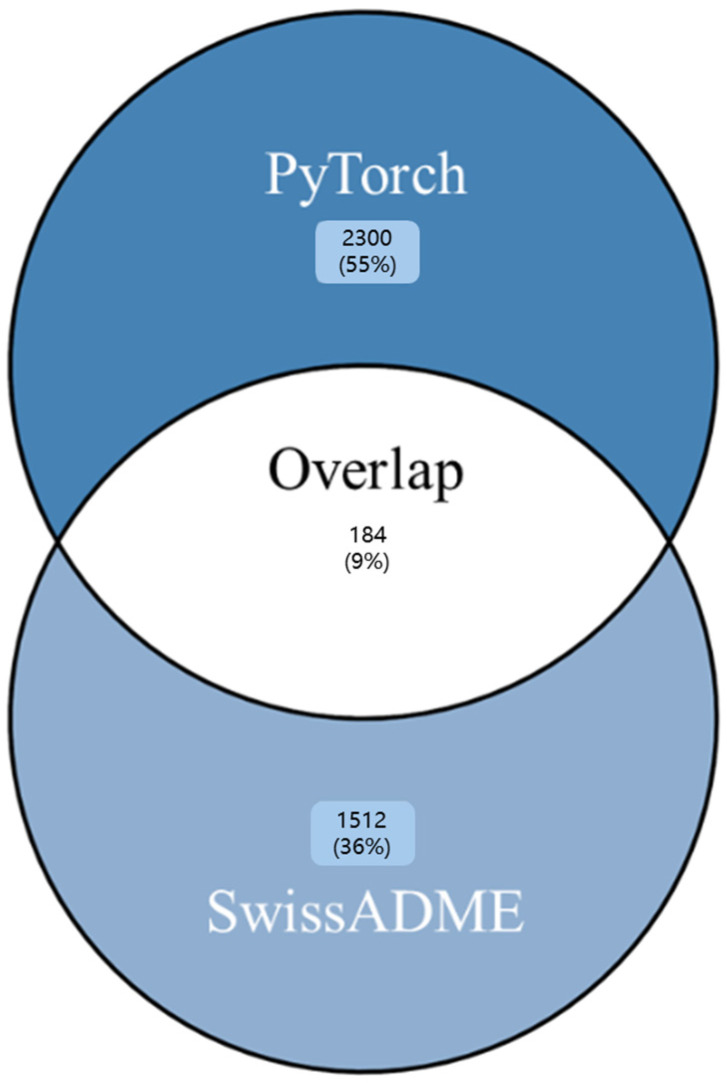 Figure 2
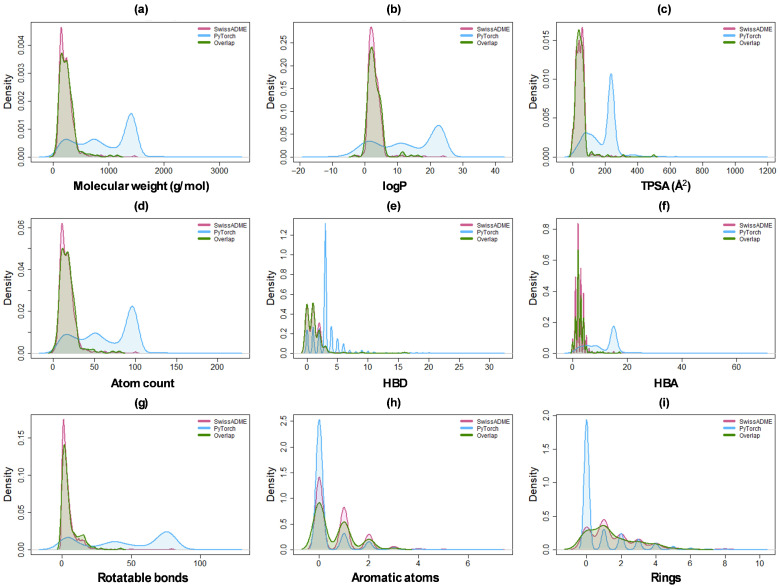 Figure 3
 Figure 4
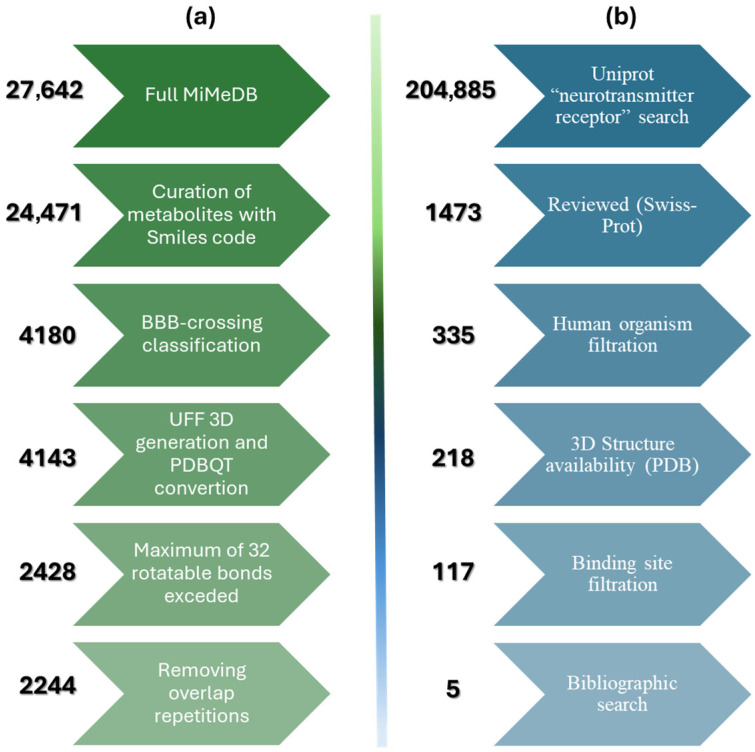 Figure 5
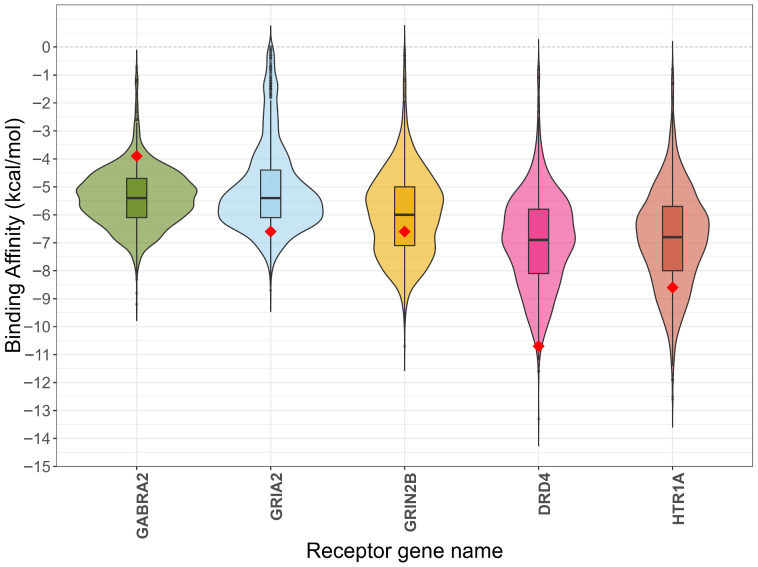 Figure 6
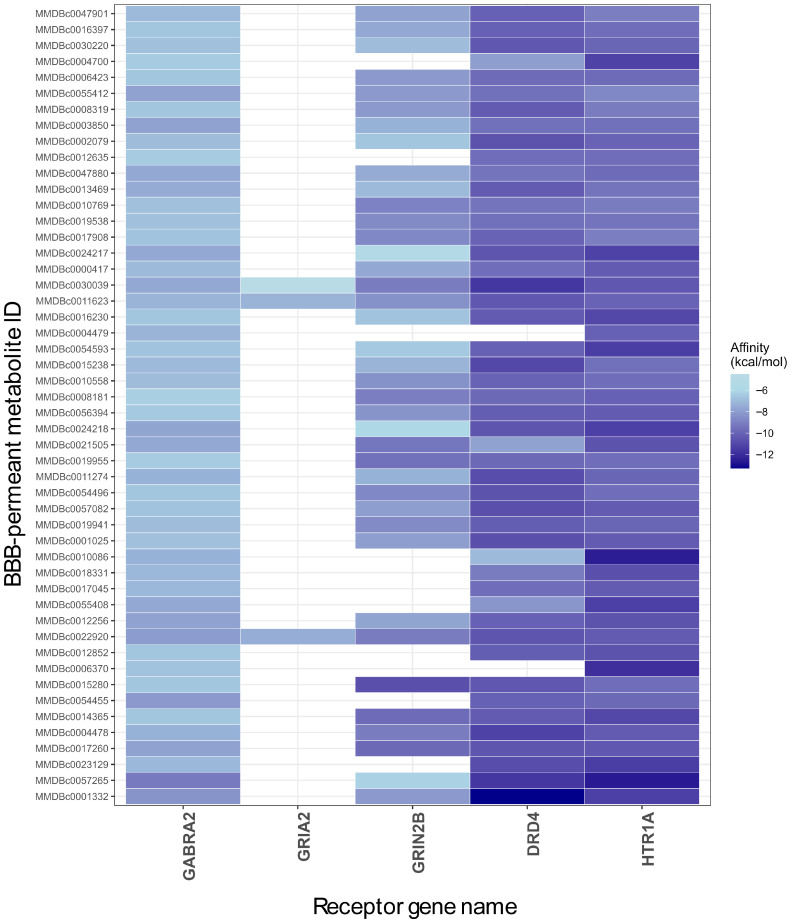 Figure 7
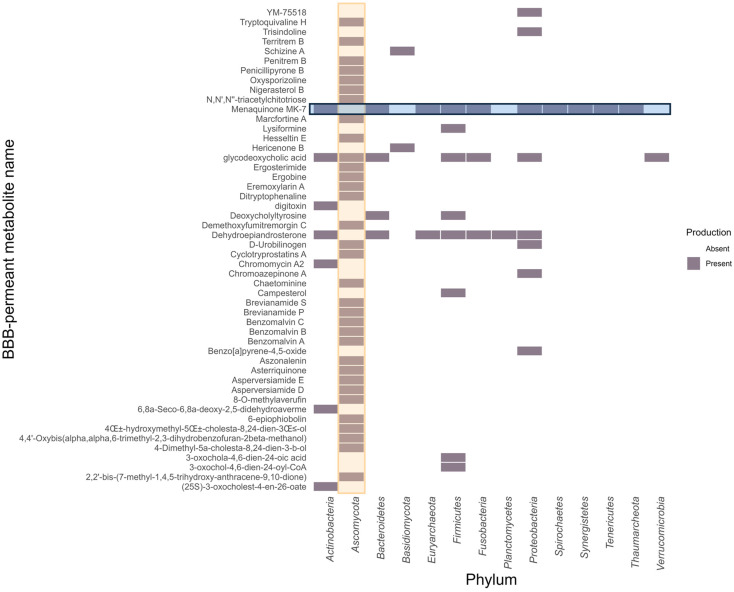 Figure 8
Peer Reviews
No public reviews on file for this paper yet. If you reviewed it on a platform where reviews are public (OpenReview, ICLR, NeurIPS, ICML), you can paste yours below so the community can read it here.
Videos
No videos yet. Explain this paper in a talk, walkthrough, or lecture? Add one.
Taxonomy
TopicsGut microbiota and health · Microbial Natural Products and Biosynthesis · Tryptophan and brain disorders