Deciphering the Genomic Traits of Multi-Enterocin-Producing E. faecium 1702 from Bottarga: A WGS-Based Characterization
Abdelkader Fathallah, Mohamed Selim Kamoun, Chaima Hkimi, Kais Ghedira, Mohamed Salah Abbassi, Salah Hammami

TL;DR
This study uses whole-genome sequencing to analyze a probiotic E. faecium strain with multiple bacteriocin and anticancer-related genes, suitable for biotech and health applications.
Contribution
The study identifies a novel E. faecium strain with multiple probiotic and biotechnological traits through whole-genome sequencing.
Findings
The E. faecium 1702 strain has a genome size of 2,621,416 bp and belongs to the sequence type ST722.
The strain produces three enterocins and harbors genes for anticancer and GABA-related activities.
No clinically relevant antibiotic resistance or virulence factor genes were detected in the strain.
Abstract
Enterococcus spp. produce diverse bioactive molecules used for biotechnological purposes or as probiotic agents for livestock and human health. The main aim of this study was to decipher the genetic traits using whole-genome sequencing (WGS) of a bacteriocinogenic Enterococus faecium 1702 strain showing diverse probiotic traits. Genetic traits of the strain were determined by performing WGS using the NovaSeq6000 platform followed by consecutive sequence analysis using appropriate software. WGS showed that the genome of the E. faecium 1702 strain has a size of 2,621,416 bp, with a GC content of 38.03%. The strain belonged to the sequence type ST722 not known as a human clonal lineage. The strain was free of genes encoding clinically relevant antibiotic resistance; in addition, genes encoding sensu stricto virulence factors, plasmids, and prophages were not detected. Annotations through…
Genes, proteins, chemicals, diseases, species, mutations and cell lines named across the full text — each resolved to its canonical identifier and authoritative record.
Click any figure to enlarge with its caption.
 Figure 1
 Figure 2
 Figure 3
 Figure 4
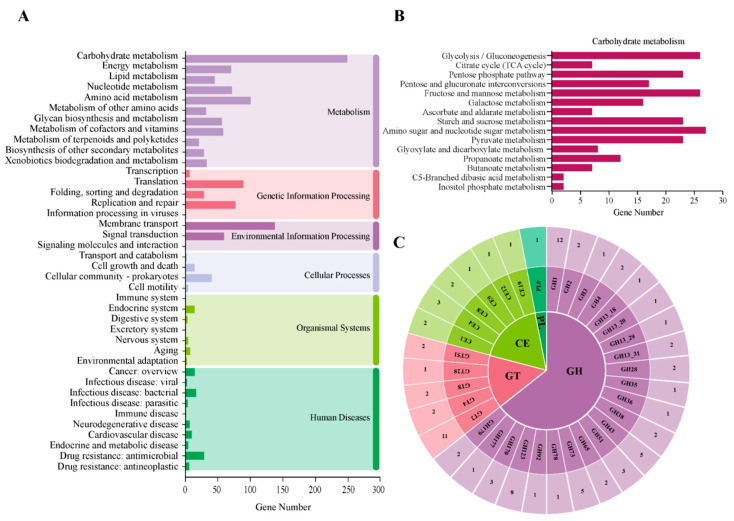 Figure 5
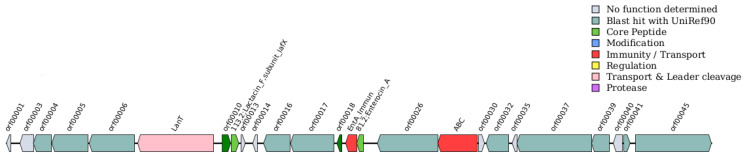 Figure 6
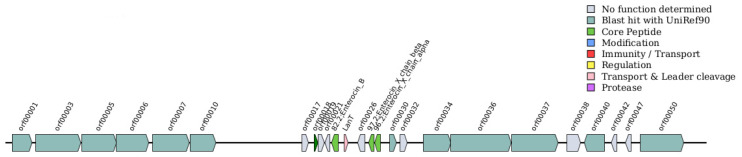 Figure 7
Peer Reviews
No public reviews on file for this paper yet. If you reviewed it on a platform where reviews are public (OpenReview, ICLR, NeurIPS, ICML), you can paste yours below so the community can read it here.
Videos
No videos yet. Explain this paper in a talk, walkthrough, or lecture? Add one.
Taxonomy
TopicsProbiotics and Fermented Foods · GABA and Rice Research · Biopolymer Synthesis and Applications