Unified Parametric Optimization Framework for Microchannel Fin Geometries in High-Power Processor Cooling
Abtin Ataei

TL;DR
This paper introduces a flexible optimization framework for designing microchannel fin geometries to improve cooling in high-power processors.
Contribution
The study presents a shape-agnostic parametric model for fin geometry optimization, enabling continuous design within manufacturability and hydraulic constraints.
Findings
Optimized fin dimensions are mapped as functions of spreader conductivity, showing how material properties affect thermal resistance.
The framework minimizes total thermal resistance across a range of flow rates and pressure drops, reducing chip temperature rise.
Design charts clarify the interplay between conductivity, flow rate, and pass configuration in determining optimal geometry.
Abstract
This study presents a unified parametric optimization framework for the thermal design of microchannel spreaders used in high-power processor cooling. The fin geometry is expressed in a shape-agnostic parametric form defined by fin thickness, top and bottom gap widths, and channel height, without prescribing a fixed cross-section. This approach accommodates practical fin profiles ranging from rectangular to tapered and V-shaped, allowing continuous geometric optimization within manufacturability and hydraulic limits. A coupled analytical–numerical model integrates conduction through the spreader base, interfacial resistance across the thermal interface material (TIM), and convection within the coolant channels while enforcing a pressure-drop constraint. The optimization uses a deterministic continuation method with smooth sigmoid mappings and penalty functions to maintain constraint…
Genes, proteins, chemicals, diseases, species, mutations and cell lines named across the full text — each resolved to its canonical identifier and authoritative record.
Click any figure to enlarge with its caption.
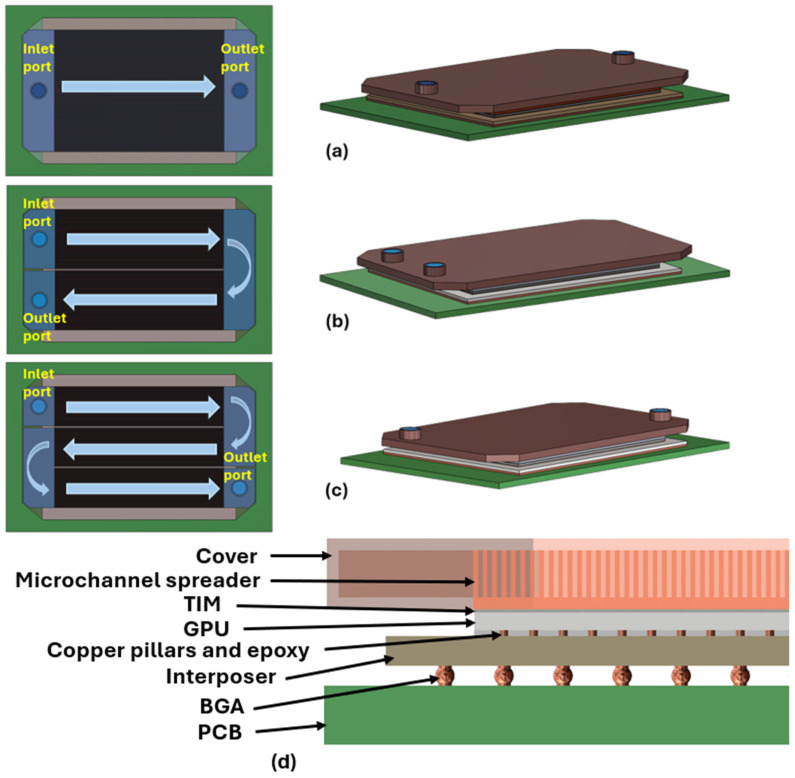 Figure 1
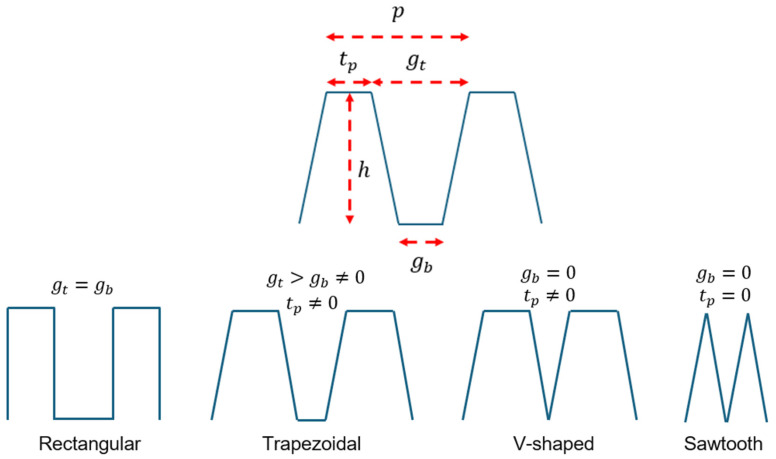 Figure 2
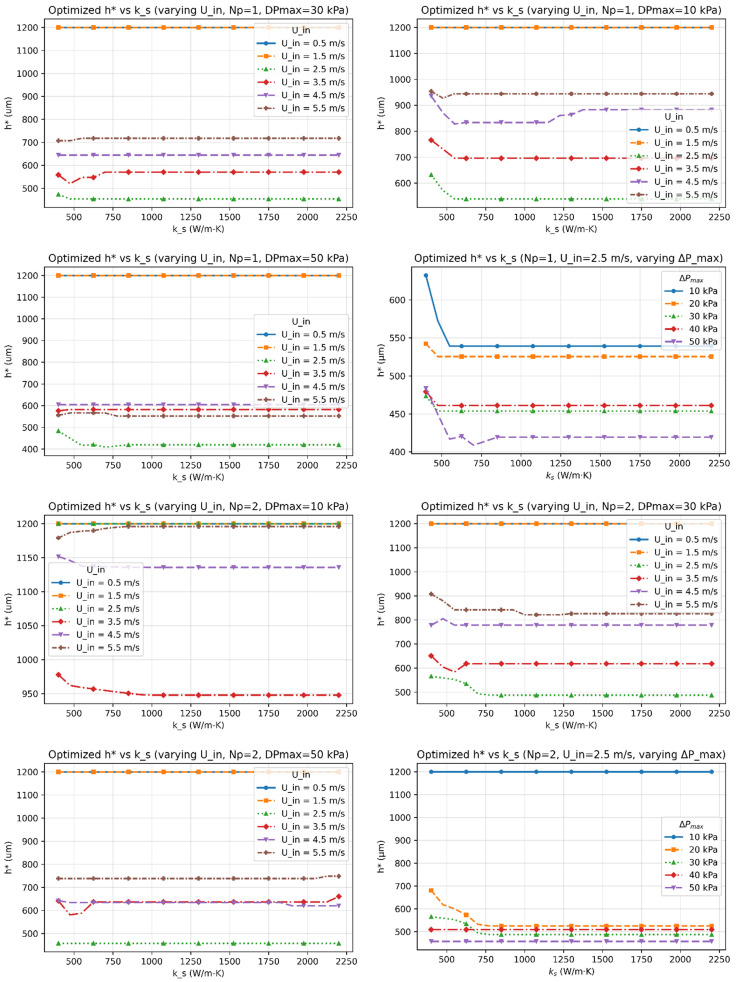 Figure 3
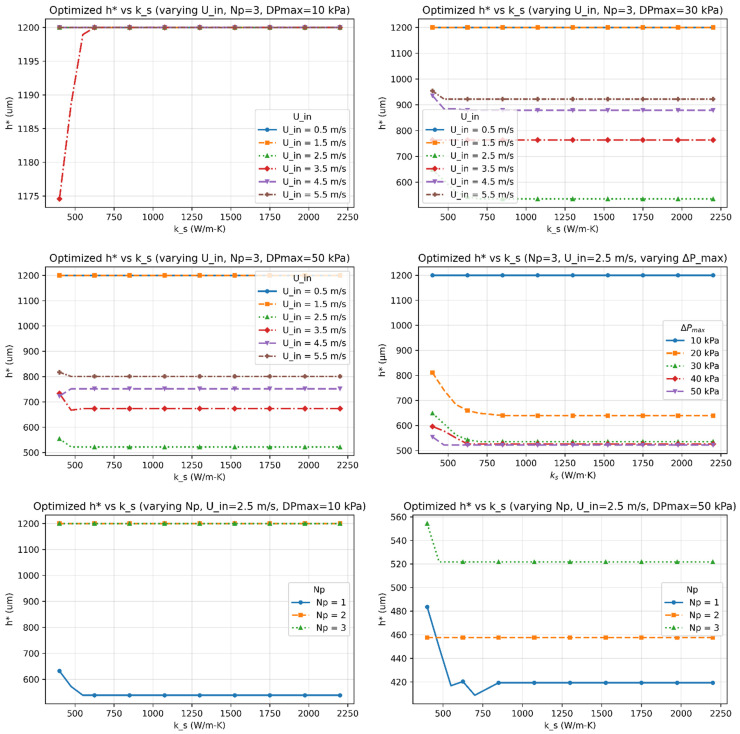 Figure 4
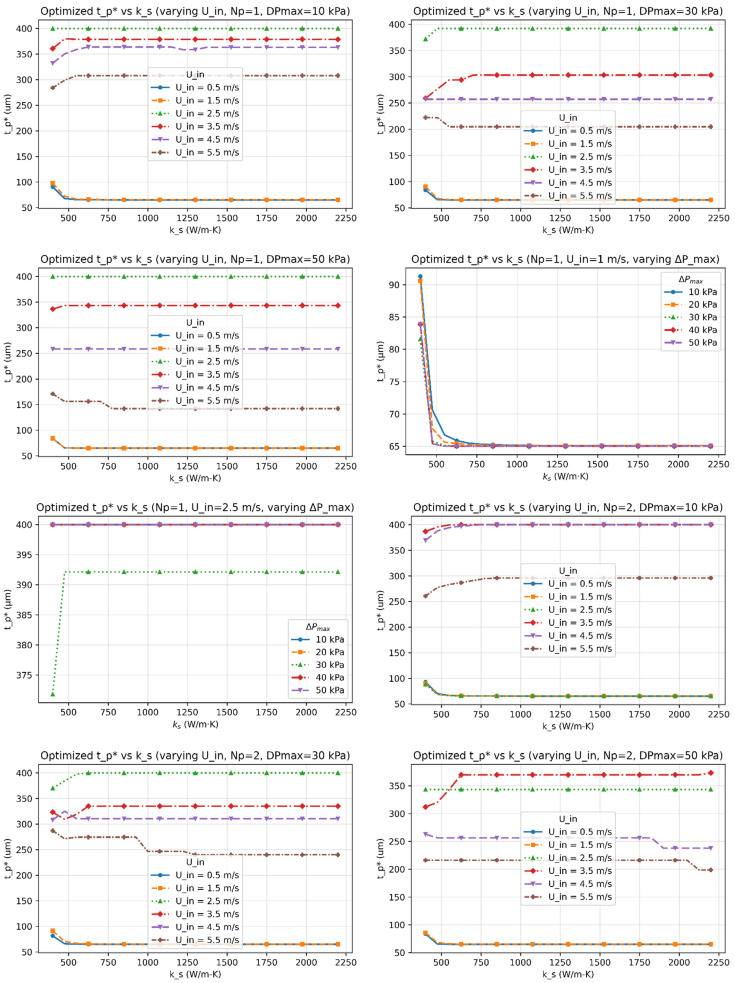 Figure 5
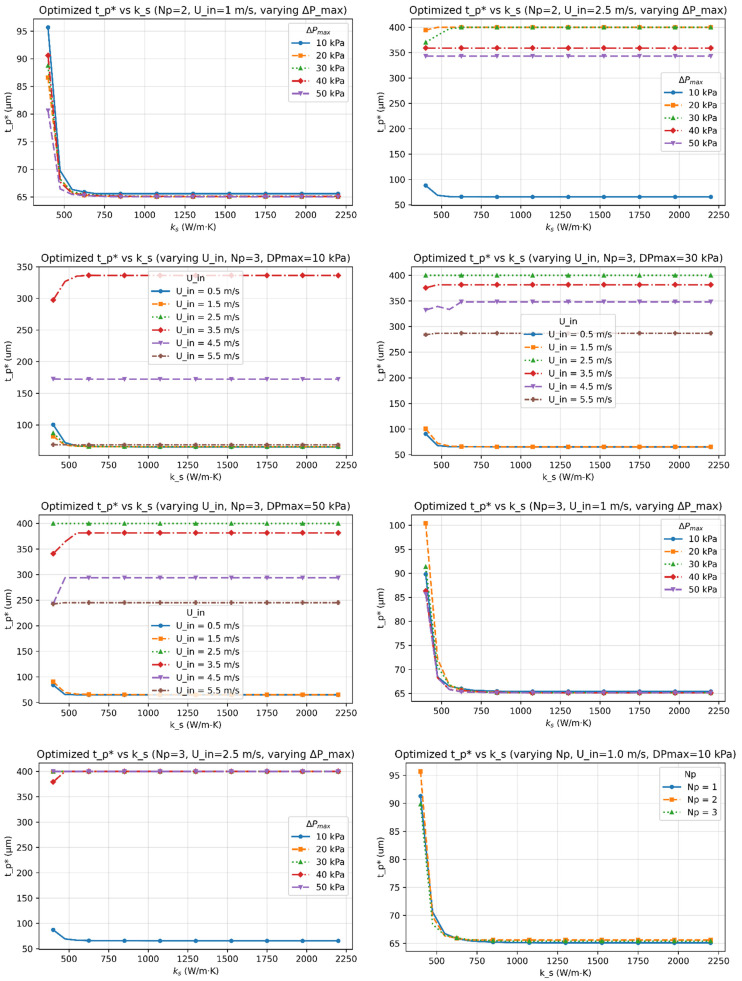 Figure 6
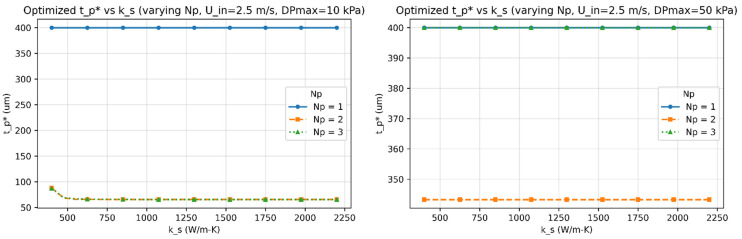 Figure 7
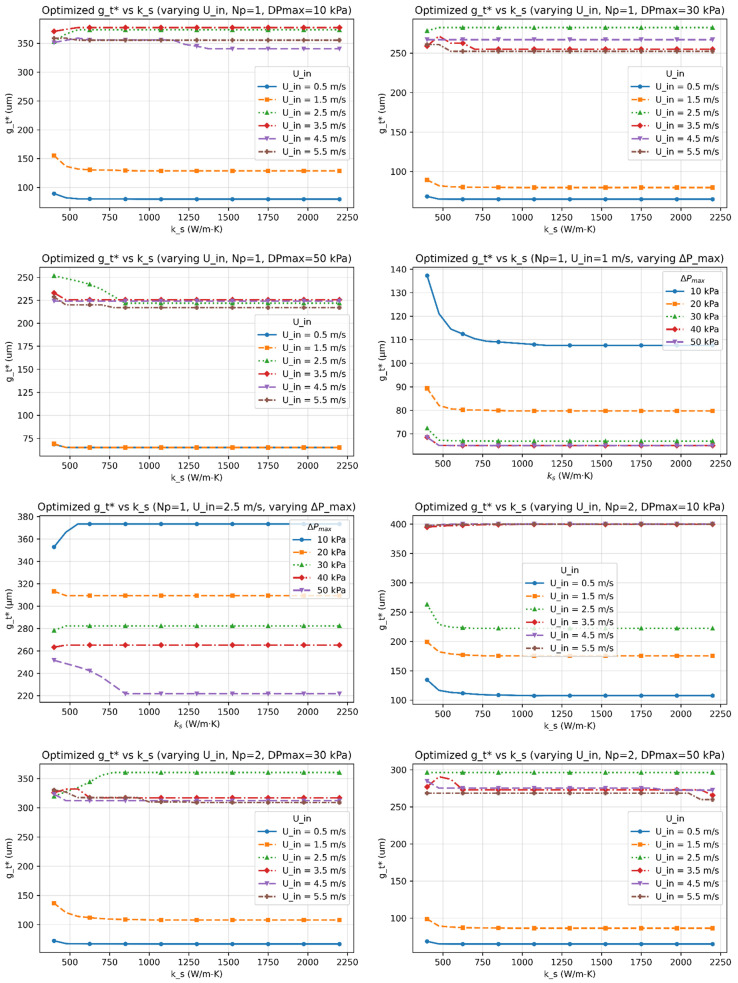 Figure 8
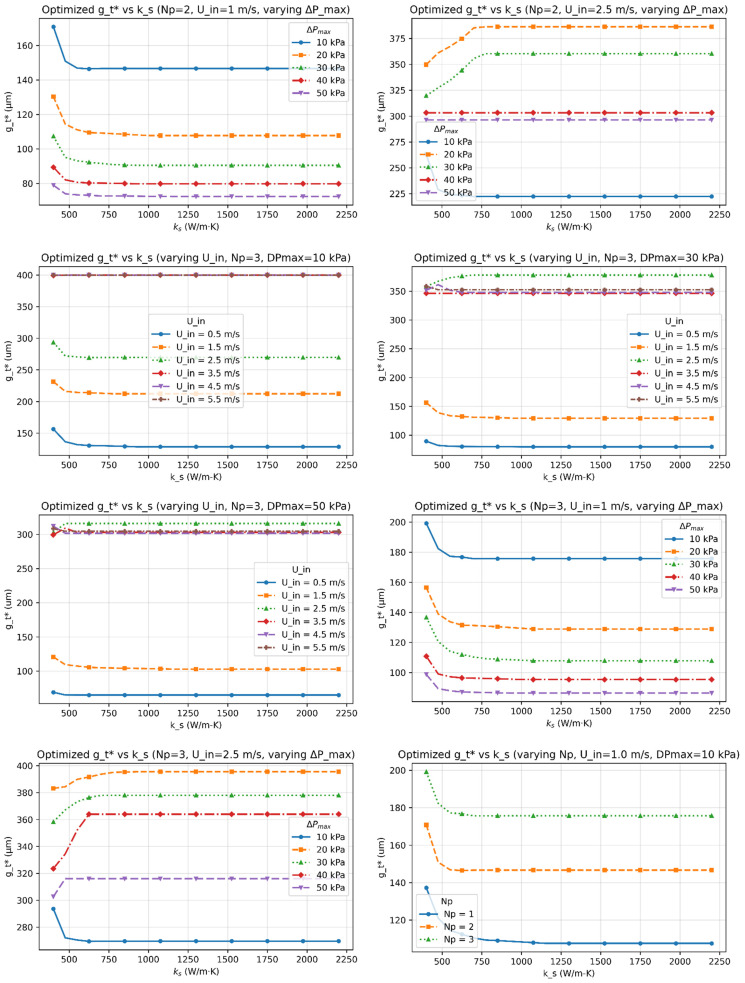 Figure 9
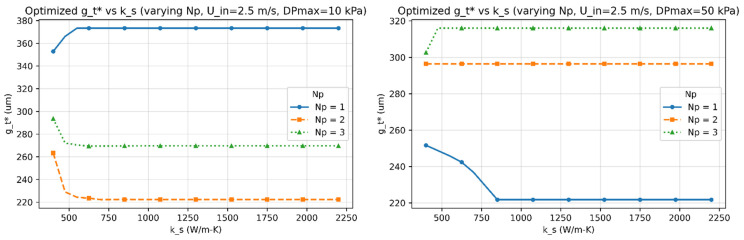 Figure 10
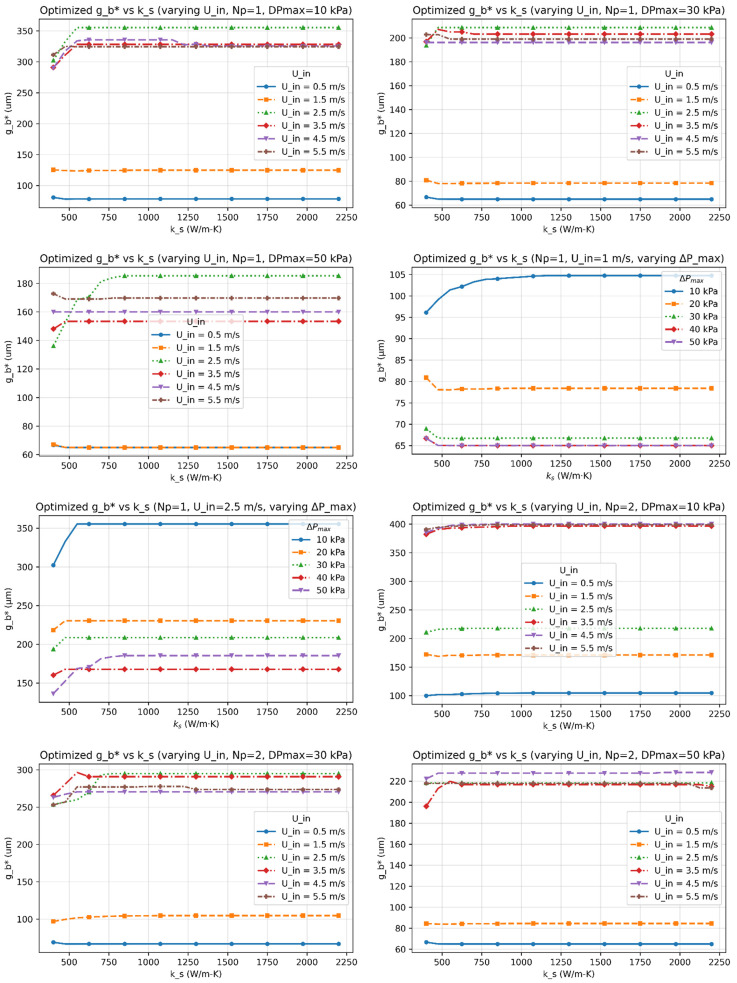 Figure 11
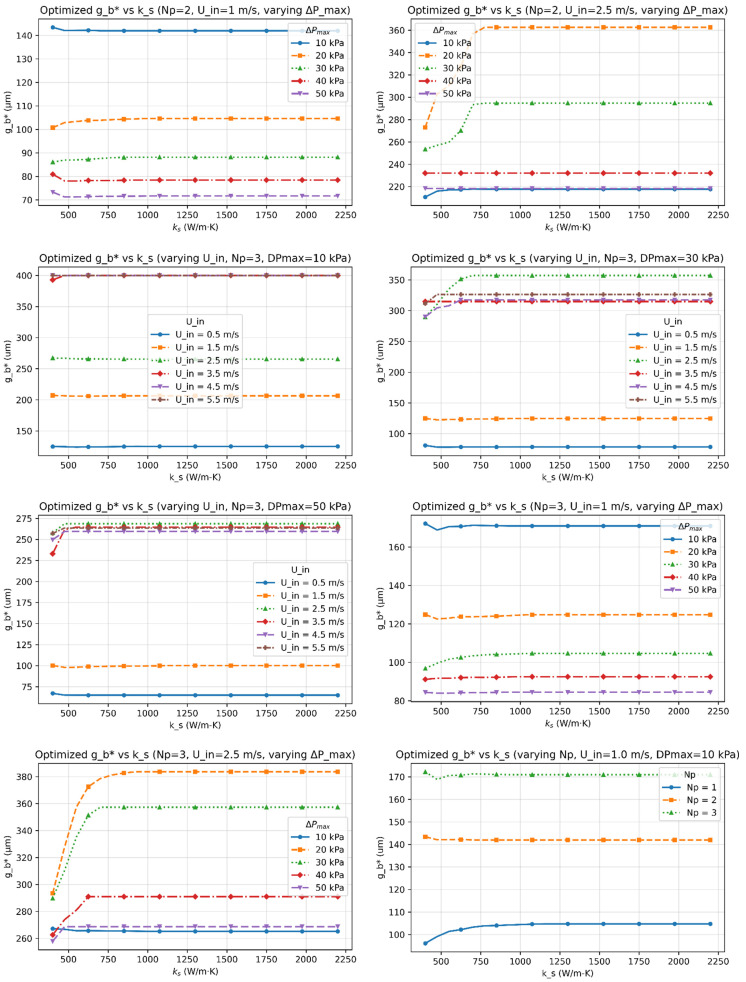 Figure 12
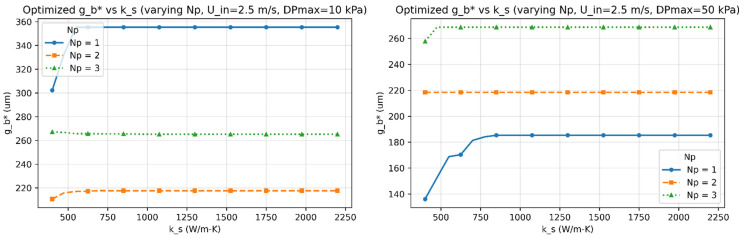 Figure 13
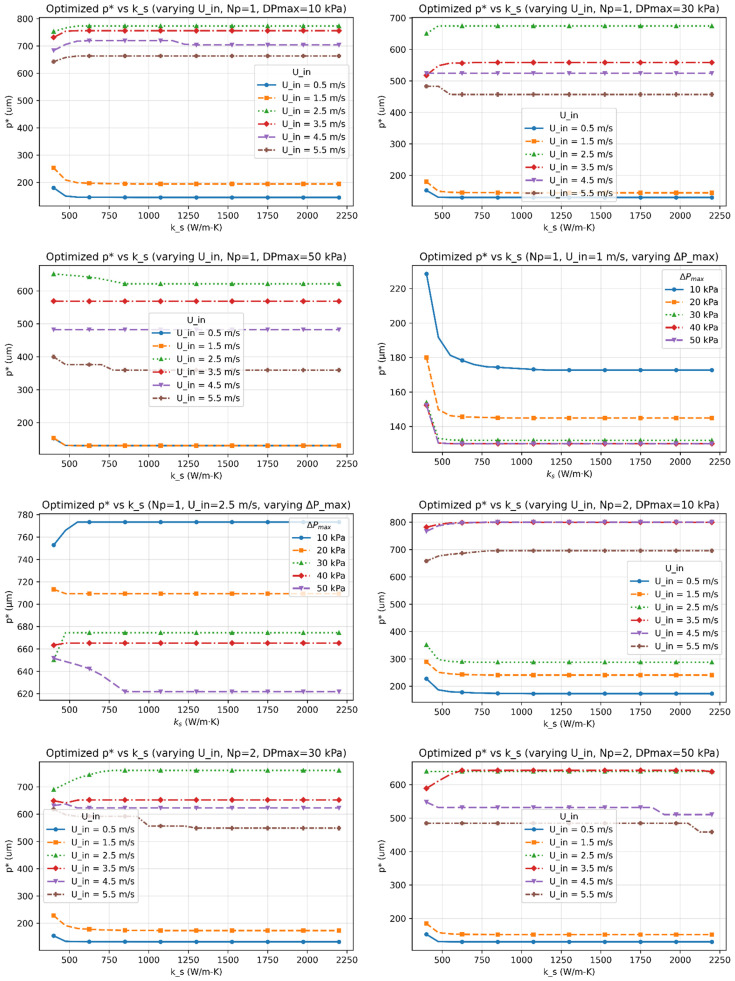 Figure 14
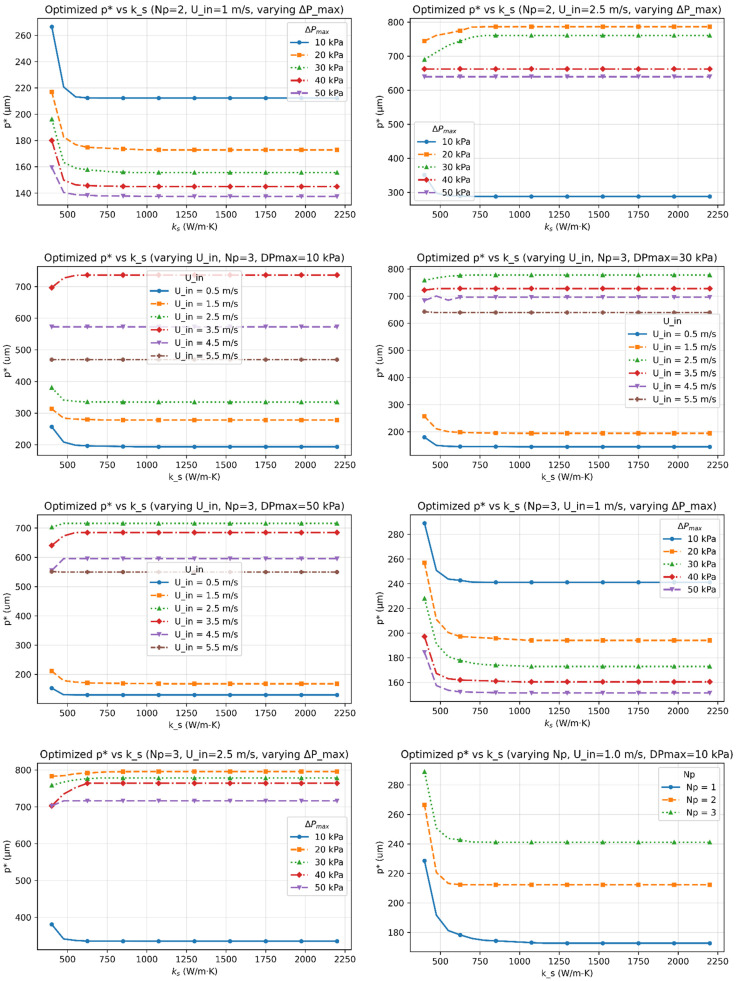 Figure 15
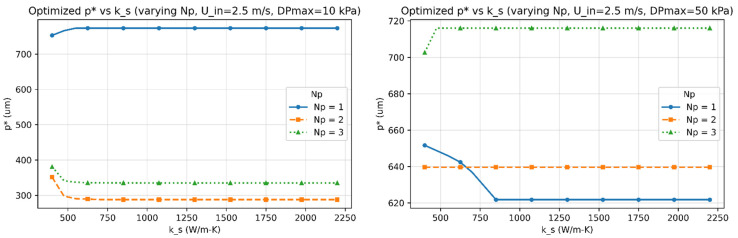 Figure 16
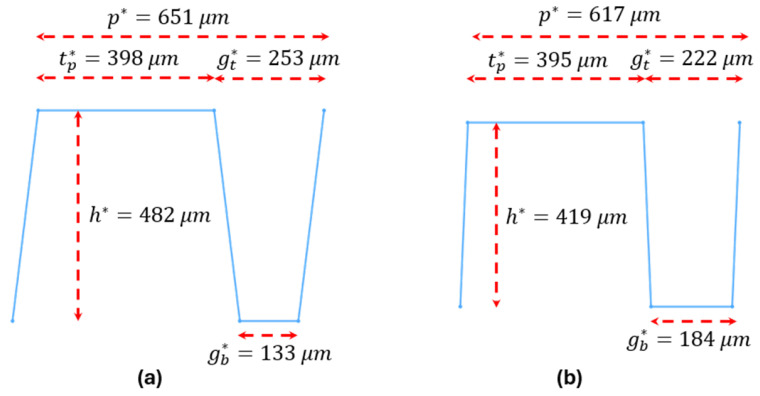 Figure 17
Peer Reviews
No public reviews on file for this paper yet. If you reviewed it on a platform where reviews are public (OpenReview, ICLR, NeurIPS, ICML), you can paste yours below so the community can read it here.
Videos
No videos yet. Explain this paper in a talk, walkthrough, or lecture? Add one.
Taxonomy
TopicsHeat Transfer and Optimization · Heat Transfer and Boiling Studies · Heat transfer and supercritical fluids