The Tumor Cell Proliferation Inhibitory Activity of the Human Herpes Virus Type 6 U94 Protein Relies on a Stable Tridimensional Conformation
Anna Bertelli, Matteo Uggeri, Federica Filippini, Melissa Duheric, Francesca Caccuri, Arnaldo Caruso

TL;DR
This study identifies a short fragment of the U94 protein from Human Herpesvirus 6 that can inhibit cancer cell growth by affecting a key cancer-related gene.
Contribution
The study identifies KI95 as the shortest active U94 fragment with antiproliferative activity and highlights the importance of its stable β-sheet structure.
Findings
The antiproliferative activity of U94 resides in its N-terminal region.
The KI95 fragment (aa 14–108) maintains biological activity and a stable β-sheet structure.
Structural integrity, not linear sequence, is critical for U94's antiproliferative effects.
Abstract
The U94 protein of Human Herpesvirus 6 exerts antiproliferative effects through downregulation of the Src proto-oncogene. We aimed to define the shortest U94 fragment that preserves antiproliferative activity and to explore its structural properties. U94 was truncated into shorter fragments, which were subjected to computational analyses and proliferation assays on MDA-MB-468, BT-549 breast cancer cells. Src phosphorylation levels were scrutinized by Western blot analysis. Data obtained demonstrated that the U94 antiproliferative activity resides in its N-terminal region. Specifically, MT153 (aa 1–153) and MT117 (aa 1–117) fragments exhibited antiproliferative activity, whereas MV85 (aa 1–85) fragment did not. Computational analyses identified MG112 (aa 1–112) and MI108 (aa 1–108) as biologically active and suggested that the β-sheet of the structure is critical. The shortest KI95…
Genes, proteins, chemicals, diseases, species, mutations and cell lines named across the full text — each resolved to its canonical identifier and authoritative record.
Click any figure to enlarge with its caption.
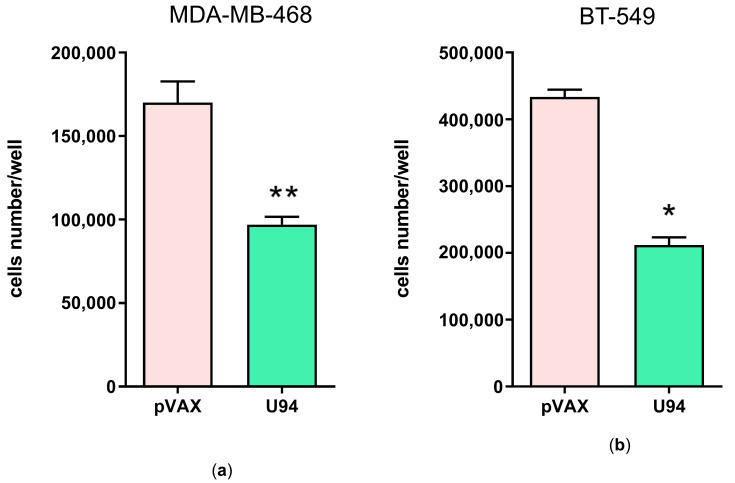 Figure 1
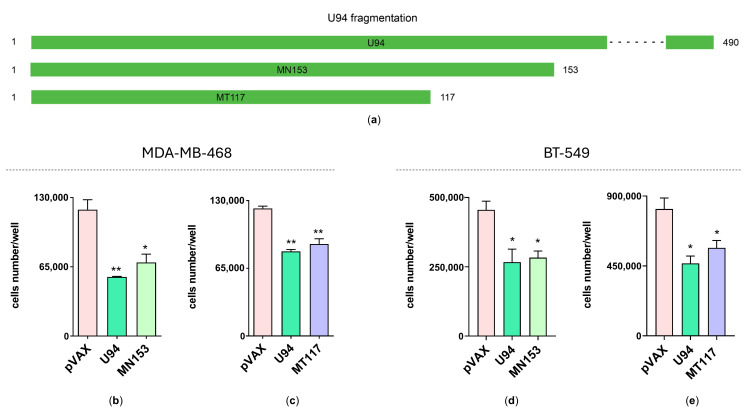 Figure 2
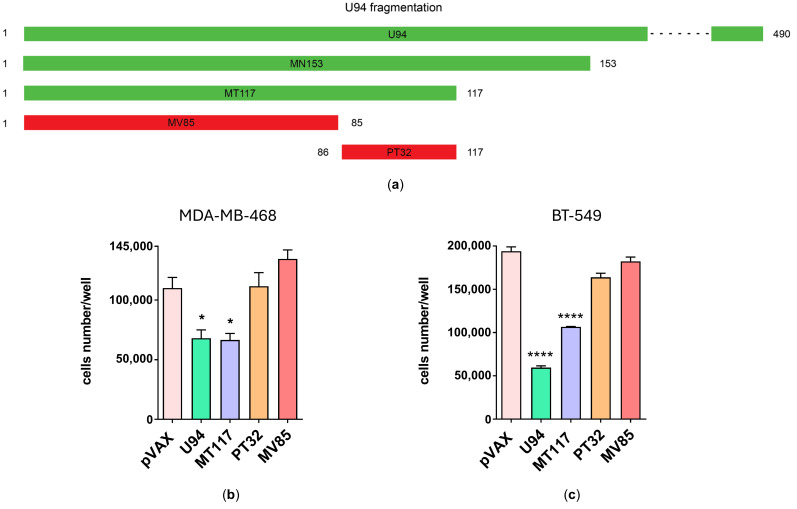 Figure 3
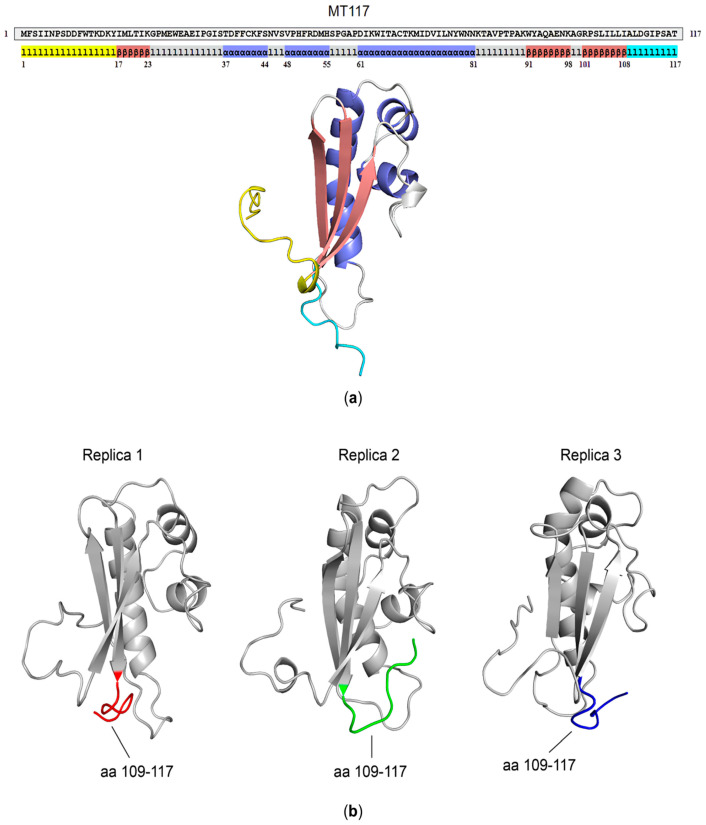 Figure 4
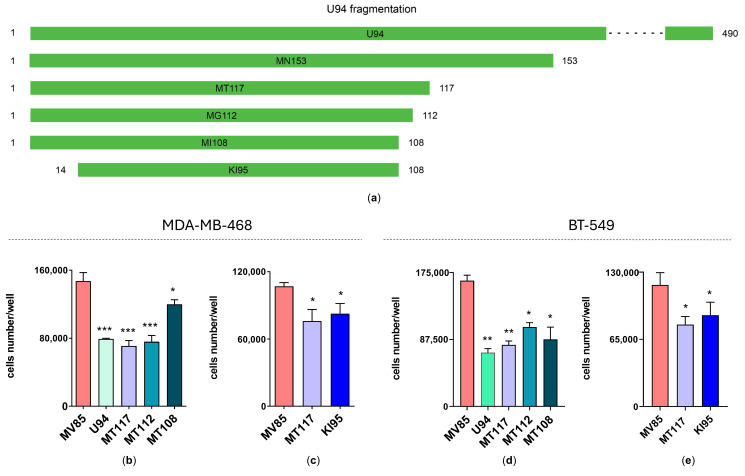 Figure 5
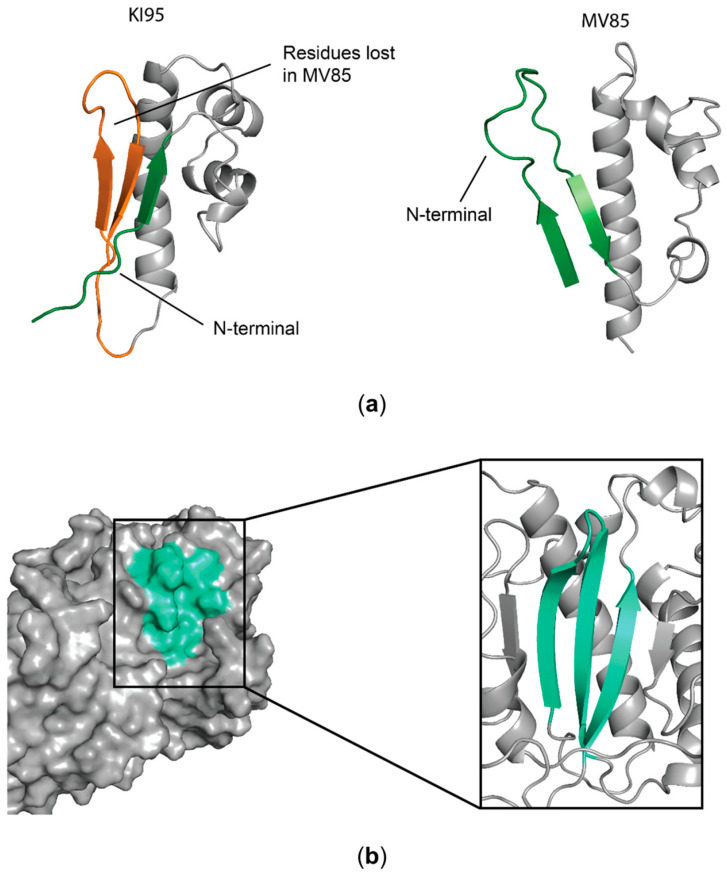 Figure 6
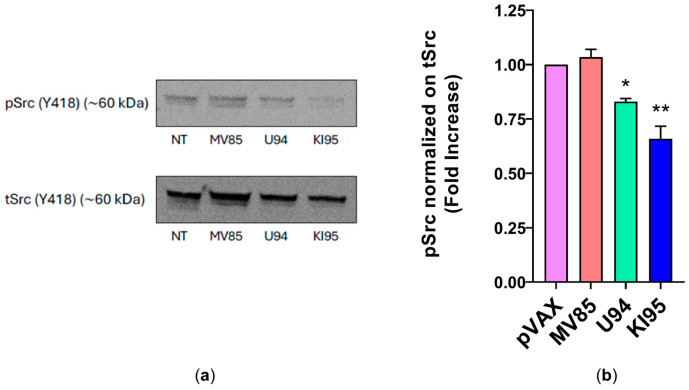 Figure 7
Peer Reviews
No public reviews on file for this paper yet. If you reviewed it on a platform where reviews are public (OpenReview, ICLR, NeurIPS, ICML), you can paste yours below so the community can read it here.
Videos
No videos yet. Explain this paper in a talk, walkthrough, or lecture? Add one.
Taxonomy
TopicsHerpesvirus Infections and Treatments · Viral-associated cancers and disorders · Cytomegalovirus and herpesvirus research