Seasonal Variation in Wild Rosmarinus officinalis L.: Phytochemicals and Their Multifunctional Potential Against Metabolic Disorders
Khaled Kherraz, Khalil Guelifet, Mokhtar Benmohamed, Luca Rastrelli, Latifa Khattabi, Afaf Khadra Bendrihem, Abderrazek Ferhat, Mohamed Amine Ferhat, Khaled Aggoun, Duygu Aygünes Jafari, Barbara Sawicka, Lilya Harchaoui, Wafa Zahnit, Azzeddine Zeraib, Mohammed Messaoudi

TL;DR
This study shows that the chemical content and health benefits of rosemary vary by season, with autumn and spring being the best times to harvest for medicinal and cosmetic use.
Contribution
The study reveals how seasonal changes affect the phytochemical profile and bioactivities of Rosmarinus officinalis, identifying optimal harvesting periods.
Findings
Autumn extract had the highest phenolic and flavonoid content and strongest antioxidant activity.
Spring extract showed the best reducing power, urease inhibition, and analgesic activity without toxicity.
Seasonal variation significantly influenced the plant's chemical profile and biological activities.
Abstract
This investigation explored how seasonal variation affects the phytochemical composition and biological potential of Rosmarinus officinalis L., a widely used aromatic and medicinal plant. Aerial parts collected during spring, summer, autumn, and winter were extracted with ethanol and analyzed using LC-ESI-MS/MS, while total phenolic (TPC) and flavonoid (TFC) contents were determined spectrophotometrically. The extracts were evaluated for antioxidant, anti-inflammatory, enzyme inhibitory, analgesic, antimicrobial, cytotoxic, and photoprotective properties. Major constituents identified in all seasons included luteolin, kaempferol, rutin, and biochanin A. The autumn extract contained the highest phenolic (353.21 ± 4.05 µg GAE/mg) and flavonoid (190.11 ± 5.65 µg QE/mg) levels. Antioxidant assays revealed that the autumn extract had the strongest DPPH radical scavenging activity (IC50 =…
Genes, proteins, chemicals, diseases, species, mutations and cell lines named across the full text — each resolved to its canonical identifier and authoritative record.
Click any figure to enlarge with its caption.
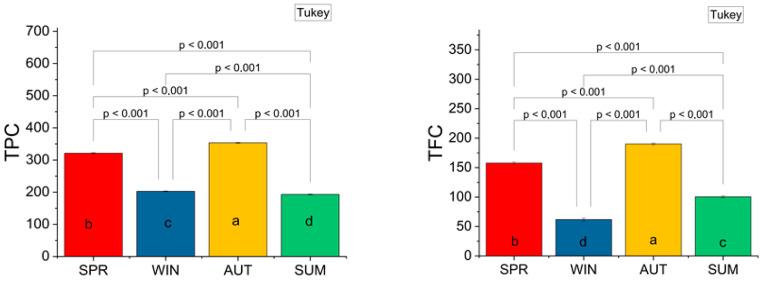 Figure 1
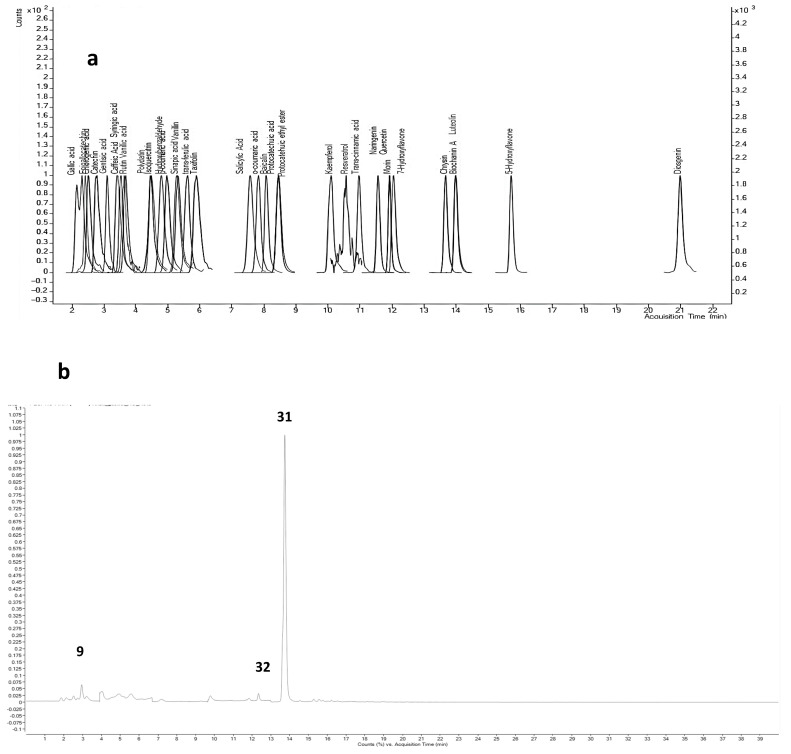 Figure 2
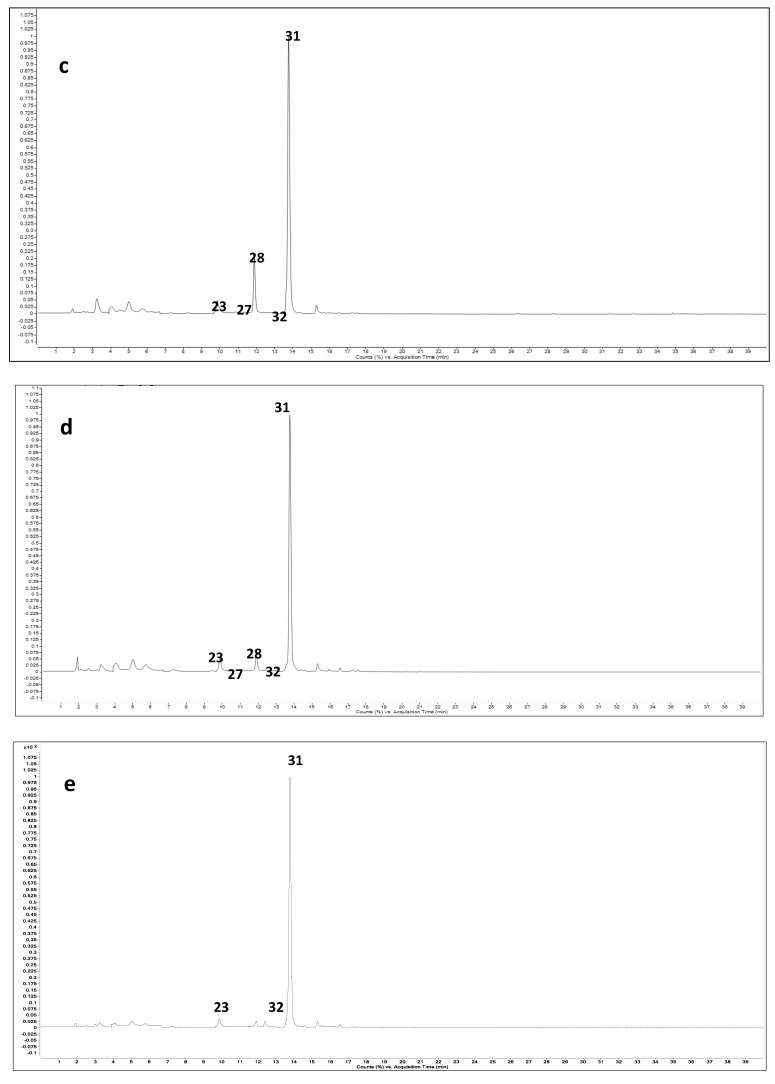 Figure 3
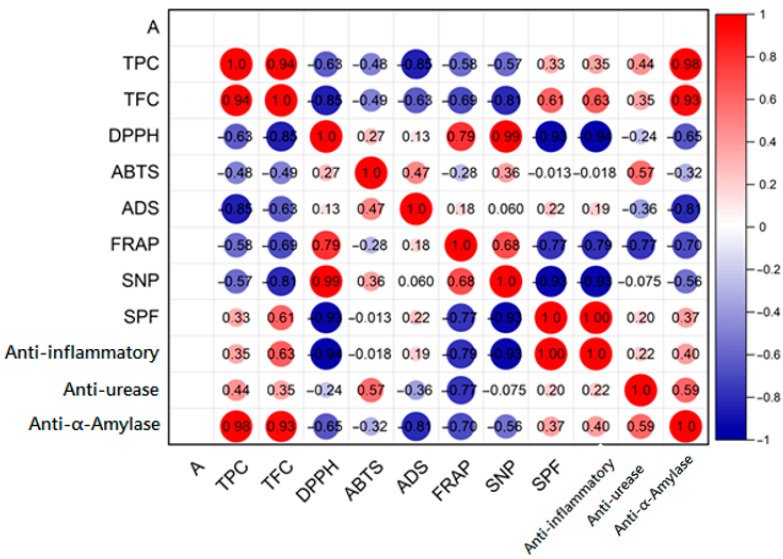 Figure 4
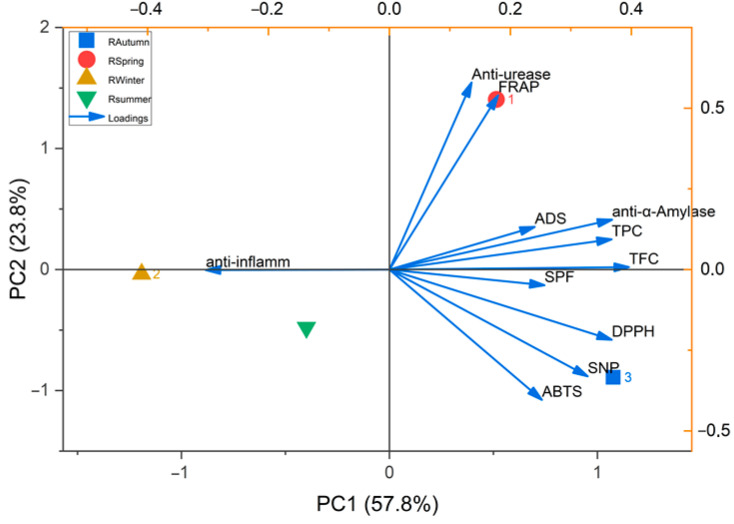 Figure 5
Peer Reviews
No public reviews on file for this paper yet. If you reviewed it on a platform where reviews are public (OpenReview, ICLR, NeurIPS, ICML), you can paste yours below so the community can read it here.
Videos
No videos yet. Explain this paper in a talk, walkthrough, or lecture? Add one.
Taxonomy
TopicsPhytochemicals and Antioxidant Activities · Essential Oils and Antimicrobial Activity · Cynara cardunculus studies