Screening and Action Mechanism of Biological Control Strain Bacillus atrophaeus F4 Against Maize Anthracnose
Pengfei Wang, Yingying Xi, Ke Liu, Jiaqi Wang, Qiubin Huang, Haodong Wang, Shaowei Wang, Gang Wang, Nuerguli Reheman, Fengying Liu

TL;DR
Researchers identified a bacterial strain, Bacillus atrophaeus F4, that effectively controls maize anthracnose and explored its mechanisms of action.
Contribution
The study identifies a highly effective biocontrol strain and reveals its antifungal mechanisms through genomic and biochemical analyses.
Findings
Bacillus atrophaeus F4 fermentation broth achieved 79.78% control of maize anthracnose.
Lipopeptides from F4 inhibit fungal growth by disrupting cell walls and membranes.
F4 produces antimicrobial compounds like surfactin, iturin, and fengycin B.
Abstract
Anthracnose caused by Colletotrichum graminicola (Ces.) G.W.Wils is a significant disease of maize (Zea mays) worldwide. To obtain an efficient biocontrol strain and elucidate its mechanisms, 103 bacterial isolates were obtained from soil samples collected in the Tianshan Mountains, Xinjiang, China. Among these, Bacillus atrophaeus F4’s fermentation broth had the highest efficacy in controlling maize anthracnose, reaching 79.78%. To further investigate biocontrol mechanisms of F4 strain, its complete genome was sequenced, assembled, and annotated. Lipopeptides extracted from the fermentation broth of F4 were found to strongly inhibit the growth of hyphae and the germination of conidia in the pathogen. Microscopic and biochemical analyses indicated that the lipopeptide extract inhibited chitin synthesis and disrupted the integrity of the cell wall and membrane, thereby exerting…
Genes, proteins, chemicals, diseases, species, mutations and cell lines named across the full text — each resolved to its canonical identifier and authoritative record.
Click any figure to enlarge with its caption.
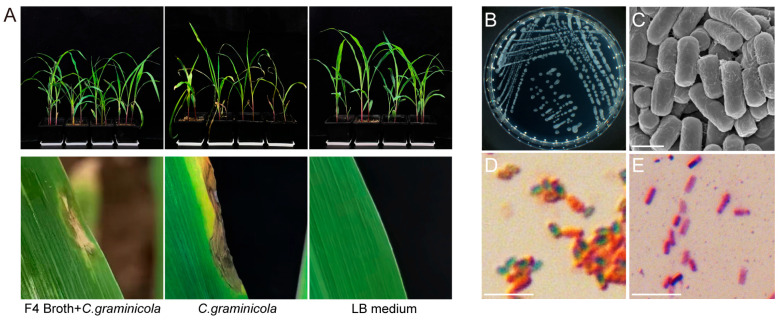 Figure 1
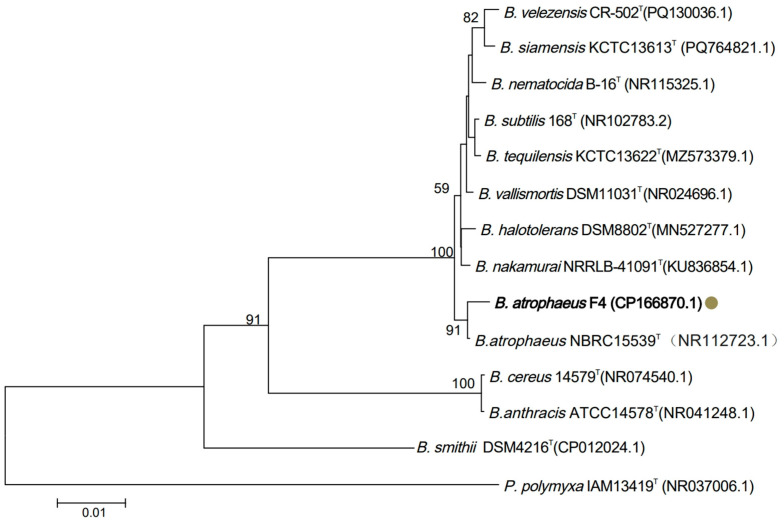 Figure 2
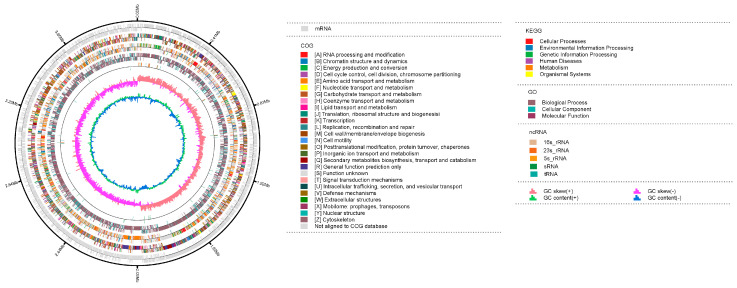 Figure 3
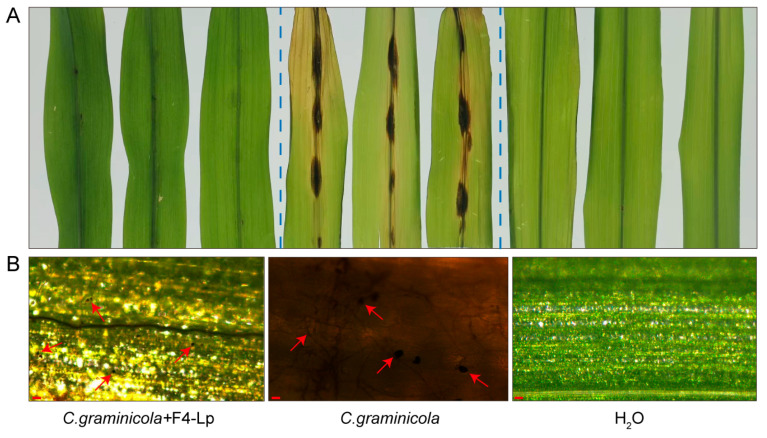 Figure 4
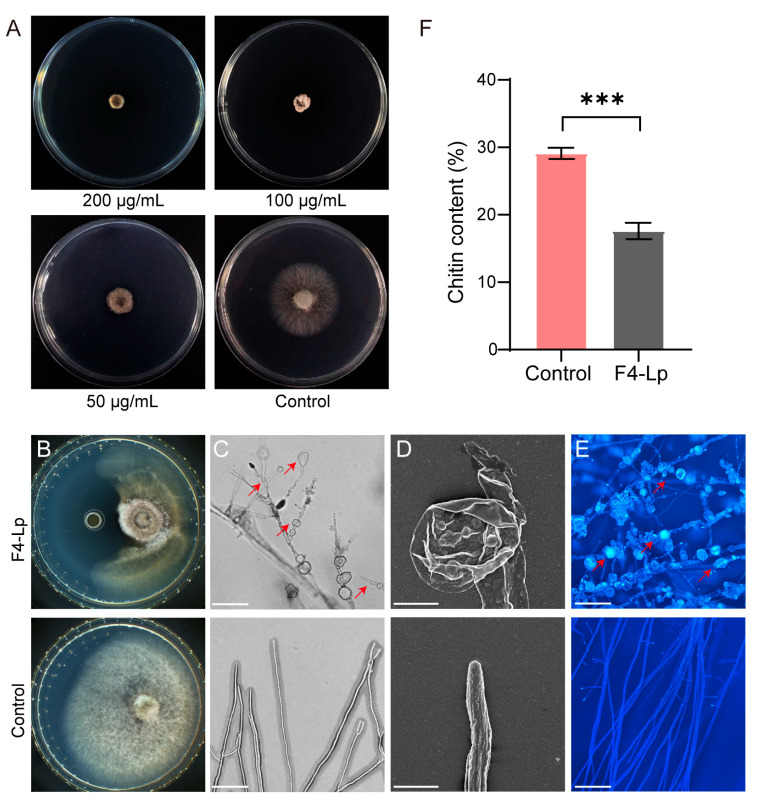 Figure 5
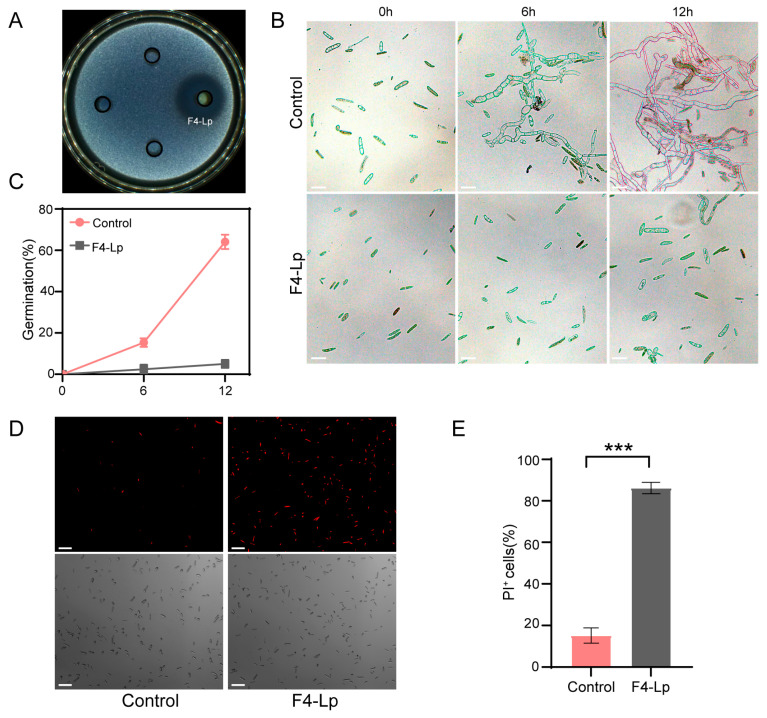 Figure 6
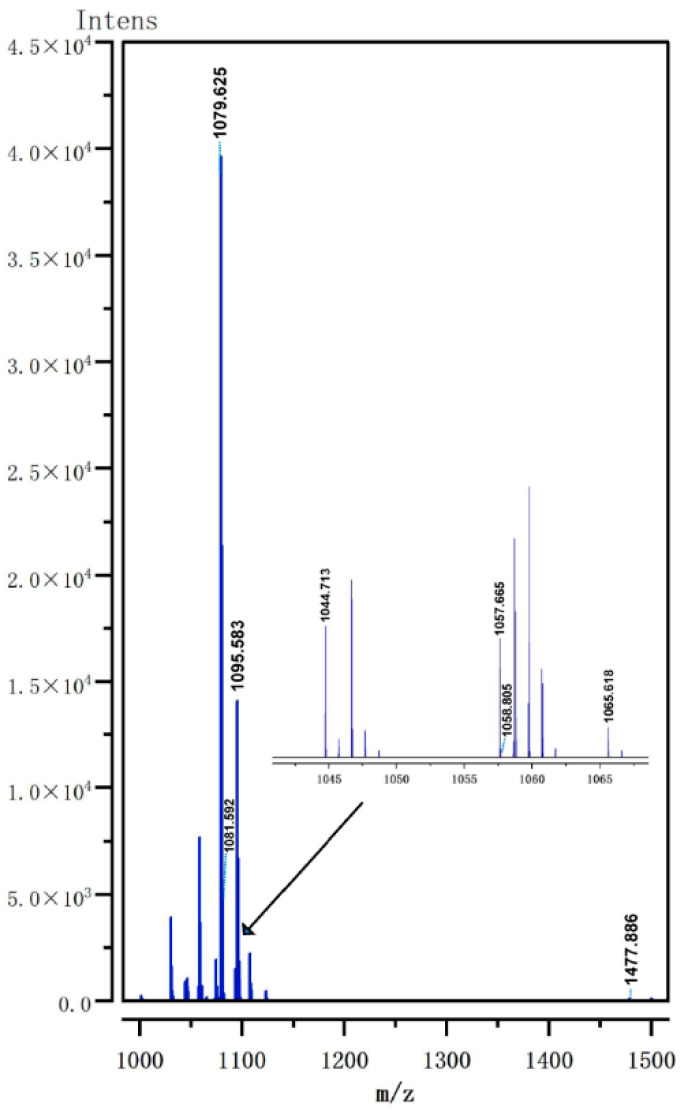 Figure 7
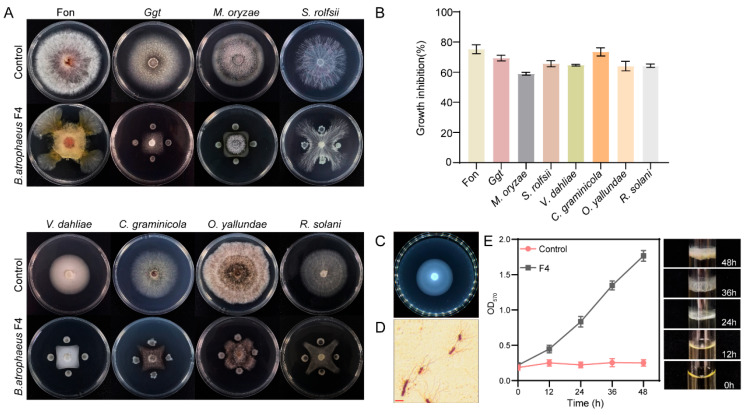 Figure 8
Peer Reviews
No public reviews on file for this paper yet. If you reviewed it on a platform where reviews are public (OpenReview, ICLR, NeurIPS, ICML), you can paste yours below so the community can read it here.
Videos
No videos yet. Explain this paper in a talk, walkthrough, or lecture? Add one.
Taxonomy
TopicsPlant-Microbe Interactions and Immunity · Studies on Chitinases and Chitosanases · Insect Resistance and Genetics