The Clausius–Mossotti Factor in Dielectrophoresis: A Critical Appraisal of Its Proposed Role as an ‘Electrophysiology Rosetta Stone’
Ronald Pethig

TL;DR
This paper examines the role of the Clausius–Mossotti factor in dielectrophoresis, showing it is a general geometric effect rather than a unique biological indicator.
Contribution
The paper clarifies that the CM factor is a universal outcome of field geometry and boundary conditions, not specific to biological systems.
Findings
The CM factor arises from geometry and boundary conditions in linear Laplacian fields.
Membrane surface charge affects DEP through boundary conditions, not as an independent mechanism.
DEP spectra mainly reflect field-particle coupling, limiting parameter identifiability in inverse problems.
Abstract
The Clausius–Mossotti (CM) factor underpins the theoretical description of dielectrophoresis (DEP) and is widely used in micro- and nano-scale systems for frequency-dependent particle and cell manipulation. It has further been proposed as an “electrophysiology Rosetta Stone” capable of linking DEP spectra to intrinsic cellular electrical properties. In this paper, the mathematical foundations and interpretive limits of this proposal are critically examined. By analyzing contrast factors derived from Laplace’s equation across multiple physical domains, it is shown that the CM functional form is a universal consequence of geometry, material contrast, and boundary conditions in linear Laplacian fields, rather than a feature unique to biological systems. Key modelling assumptions relevant to DEP are reassessed. Deviations from spherical symmetry lead naturally to tensorial contrast factors…
Click any figure to enlarge with its caption.
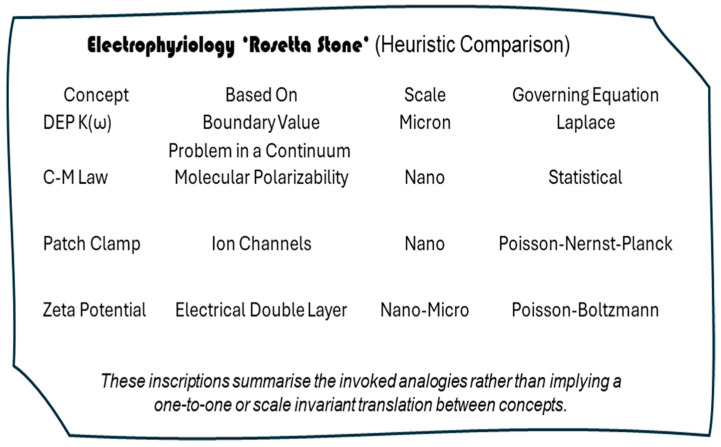 Figure 1
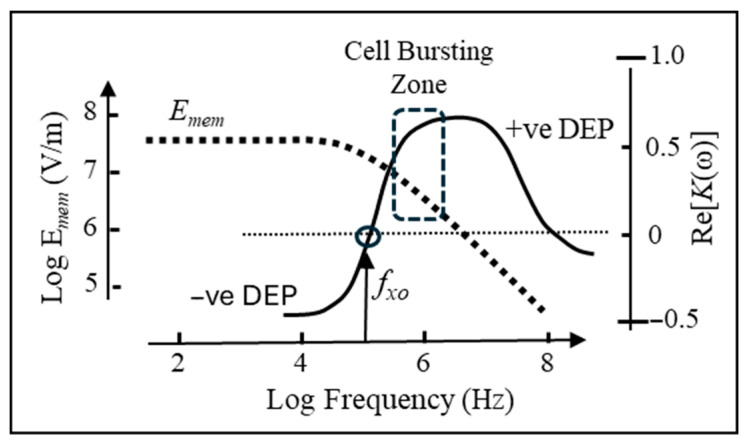 Figure 2
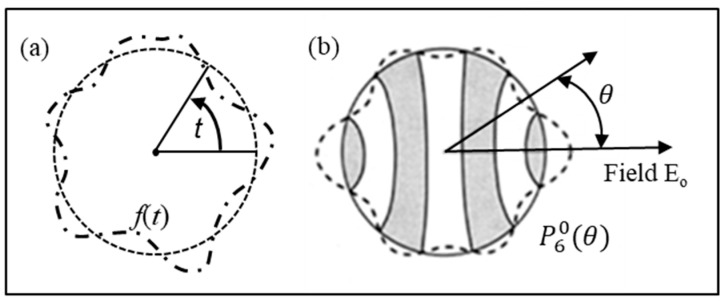 Figure 3
 Figure 4
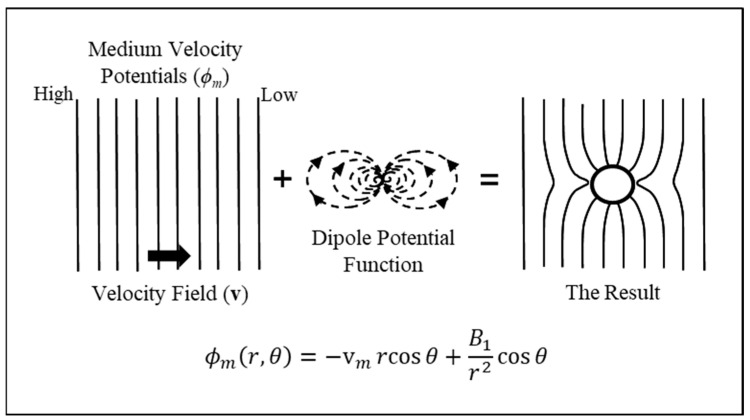 Figure 5
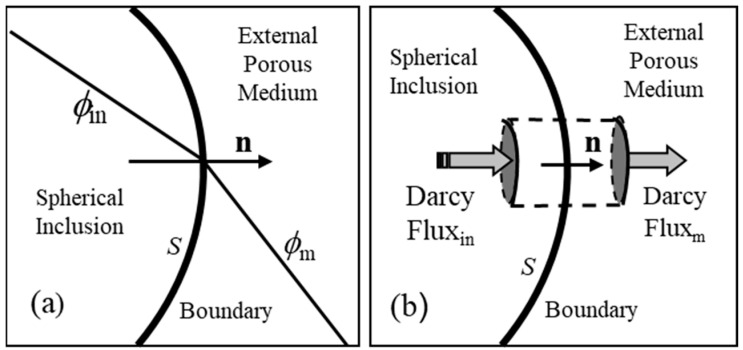 Figure 6
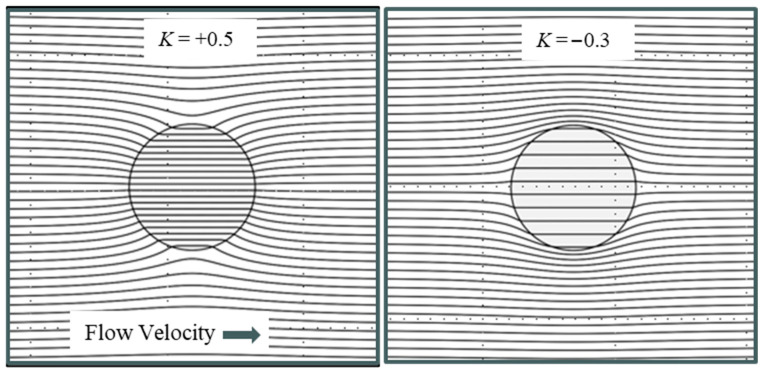 Figure 7
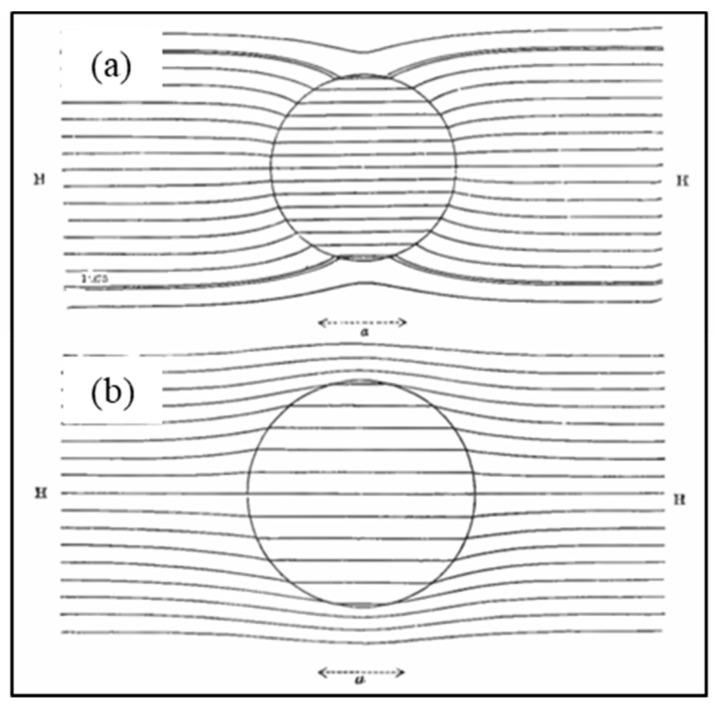 Figure 8
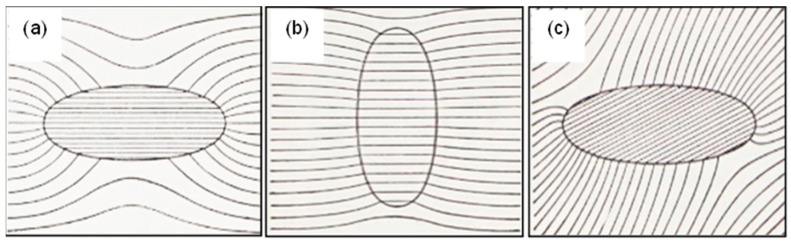 Figure 9
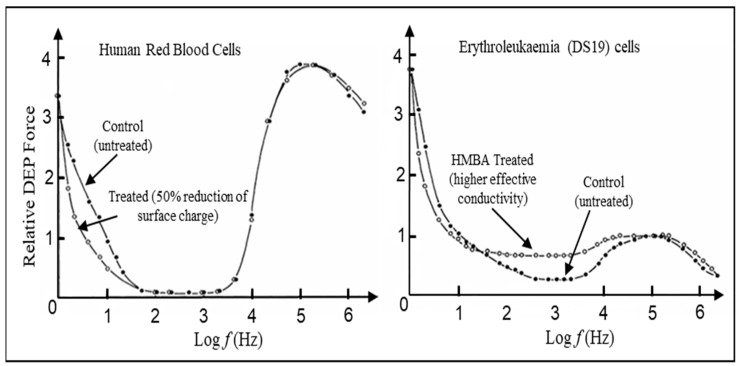 Figure 10
Peer Reviews
No public reviews on file for this paper yet. If you reviewed it on a platform where reviews are public (OpenReview, ICLR, NeurIPS, ICML), you can paste yours below so the community can read it here.
Videos
No videos yet. Explain this paper in a talk, walkthrough, or lecture? Add one.
Taxonomy
TopicsMicrofluidic and Bio-sensing Technologies · Electrostatics and Colloid Interactions · Electrohydrodynamics and Fluid Dynamics