Polysaccharide Utilization and Adhesion Enable the Genome-Streamlined Opacimonas immobilis to Adapt to the Diatom Phycosphere
Xiaoyu Yang, Xuanru Lin, Jianmin Xie, Runlin Cai, Guanjing Cai, Hui Wang

TL;DR
This study explores how a bacteria with a small genome adapts to the nutrient-rich environment around diatoms by using specialized genes for attachment and polysaccharide metabolism.
Contribution
The study reveals how genome streamlining in Opacimonas immobilis supports adaptation to the phycosphere through enhanced adhesion and metabolic specialization.
Findings
LMIT016T forms dense attachments on diatom surfaces and promotes mutual growth with its host microalgae.
The genome of LMIT016T contains genes for EPS biosynthesis, adhesion, and polysaccharide utilization, which support long-term attachment and biofilm formation.
Genome streamlining in LMIT016T involves loss of motility and c-di-GMP signaling genes but retention of nutrient acquisition and stress response pathways.
Abstract
Heterotrophic bacteria and microalgae are key regulators of marine biogeochemical cycles. The phycosphere, a nutrient-rich microenvironment surrounding microalgae, serves as a crucial interface for bacterial–algal interactions. Our previous work identified Opacimonas immobilis LMIT016T, a phycosphere isolate from the diatom Actinocyclus curvatulus that possesses the smallest genome within the Alteromonadaceae family. However, its adaptation mechanisms to the phycosphere remain unclear, particularly given its extensive genome streamlining, a process involving the selective loss of non-essential and energetically costly genes to enhance fitness in nutrient-specific niches. Here, the co-cultivation experiments demonstrated significant mutual growth promotion between LMIT016T and its host microalgae, with the bacterium forming dense attachments on diatom surfaces. Genomic analysis revealed…
Genes, proteins, chemicals, diseases, species, mutations and cell lines named across the full text — each resolved to its canonical identifier and authoritative record.
Click any figure to enlarge with its caption.
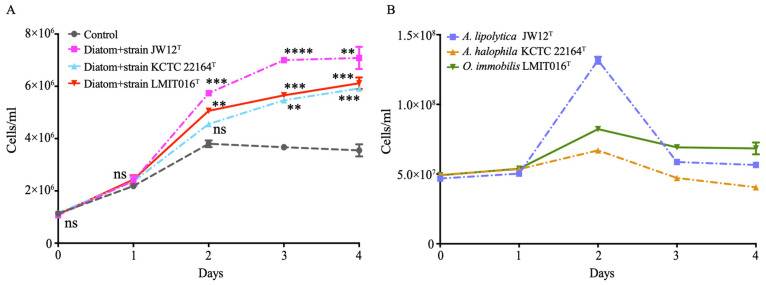 Figure 1
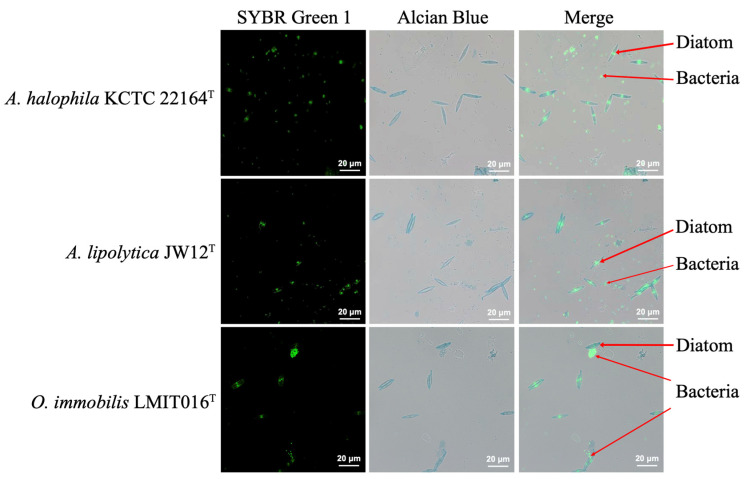 Figure 2
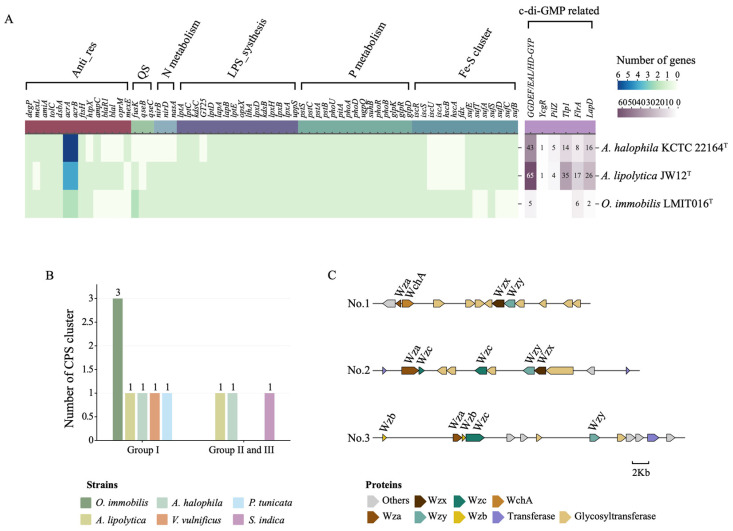 Figure 3
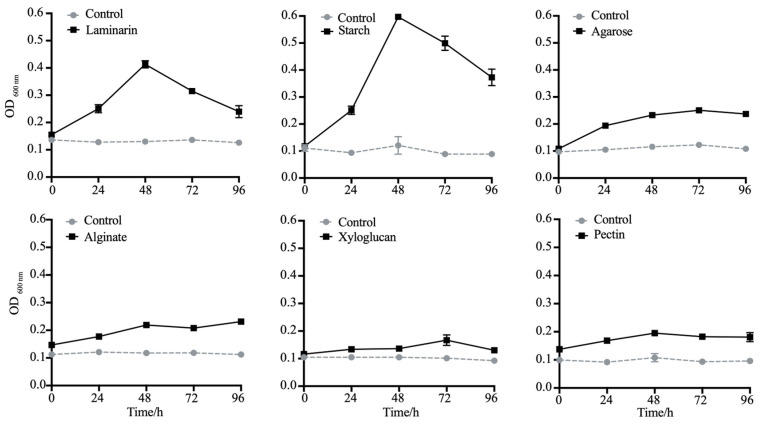 Figure 4
 Figure 5
Peer Reviews
No public reviews on file for this paper yet. If you reviewed it on a platform where reviews are public (OpenReview, ICLR, NeurIPS, ICML), you can paste yours below so the community can read it here.
Videos
No videos yet. Explain this paper in a talk, walkthrough, or lecture? Add one.
Taxonomy
TopicsAlgal biology and biofuel production · Diatoms and Algae Research · Microbial Community Ecology and Physiology