Urea-Mediated Biomineralization and Adsorption of Heavy-Metal Ions in Solution by the Urease-Producing Bacteria C7-12
Qian Yang, Xiaoyi Li, Junyi Cao, Siteng He, Chengzhong He, Chunlin Tu, Keyu Zhou, Xinran Liang, Fangdong Zhan

TL;DR
A urea-producing bacteria strain, C7-12, effectively removes heavy metals from solution through biomineralization and adsorption, offering potential for bioremediation.
Contribution
The study identifies a new Serratia marcescens strain with high heavy-metal removal efficiency via urea-mediated biomineralization and adsorption.
Findings
Serratia marcescens C7-12 achieved an 85% removal rate of cadmium in solution.
The bacteria form CdCO3 through biomineralization and adsorb heavy metals via functional groups.
The strain removes multiple heavy metals (Cd, Pb, Zn, Cu) with varying efficiencies.
Abstract
Urease-producing bacteria (UPB) have great potential for the bioremediation of heavy-metal pollution through biomineralization and adsorption. In this study, a strain of UPB, C7-12, was isolated from heavy-metal-contaminated soil in a lead–zinc mining area and identified as Serratia marcescens. The heavy-metal removal ability, influencing factors, and precipitation mode of this UPB strain in solution were investigated. The cadmium (Cd) removal rate in a Cd (1 mg/L) solution from C7-12 reached 85%, and pH was the main influencing factor. With urea mediation, S. marcescens C7-12 biomineralizes the Cd2+ in solution to form CdCO3 and removes it through extracellular precipitation and surface adsorption. Furthermore, the removal rates of Cd2+, Pb2+, Zn2+ and Cu2+ in solution by S. marcescens C7-12 were 33–65%, 28–32%, 22–49%, and 38–44%, respectively. The precipitation mode involves…
Genes, proteins, chemicals, diseases, species, mutations and cell lines named across the full text — each resolved to its canonical identifier and authoritative record.
Click any figure to enlarge with its caption.
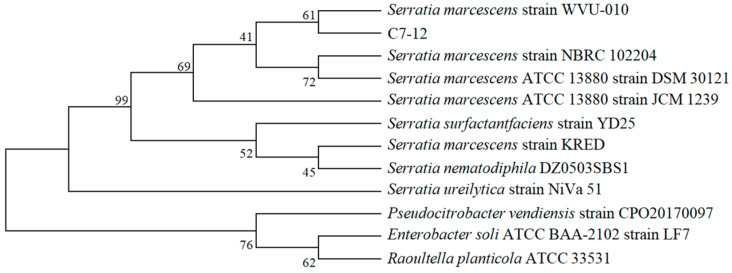 Figure 1
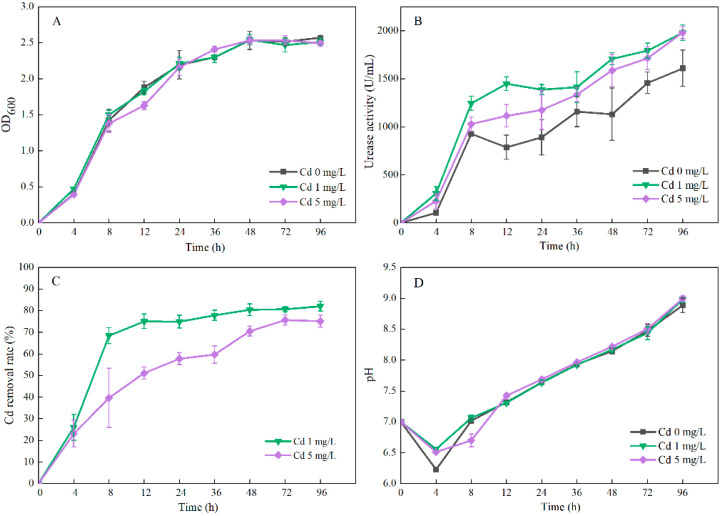 Figure 2
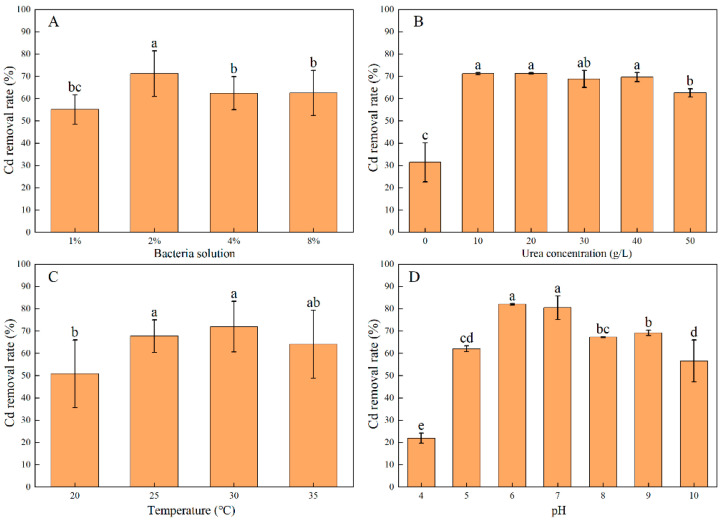 Figure 3
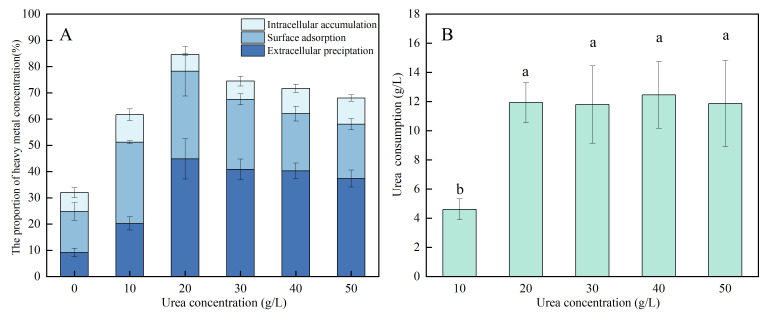 Figure 4
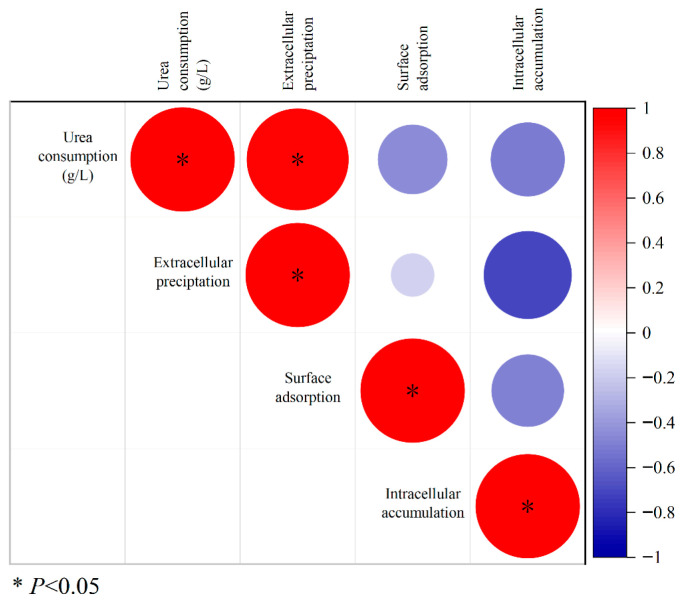 Figure 5
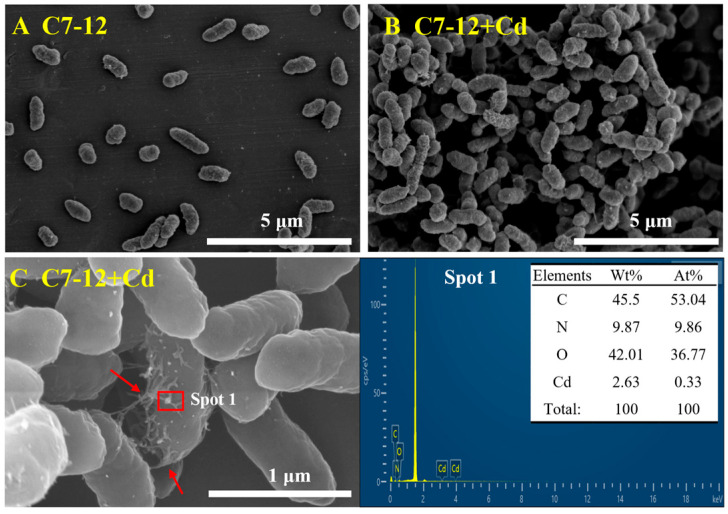 Figure 6
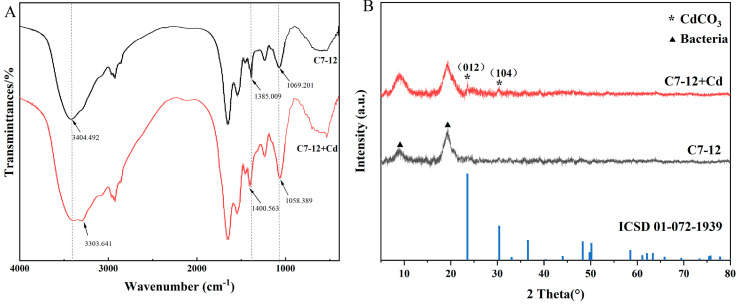 Figure 7
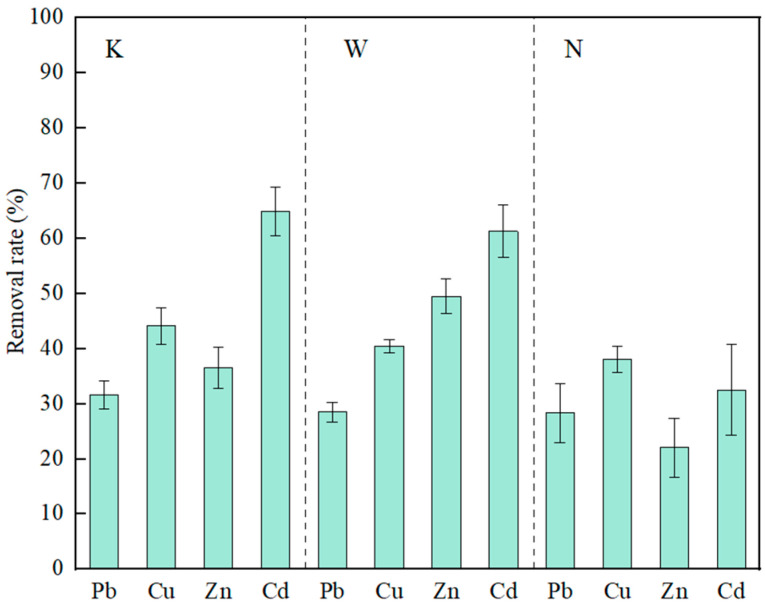 Figure 8
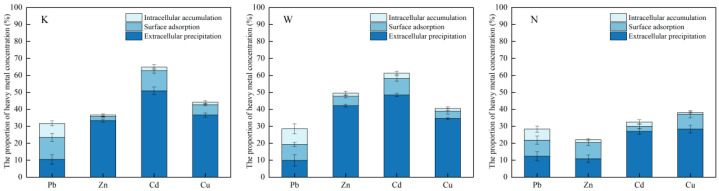 Figure 9
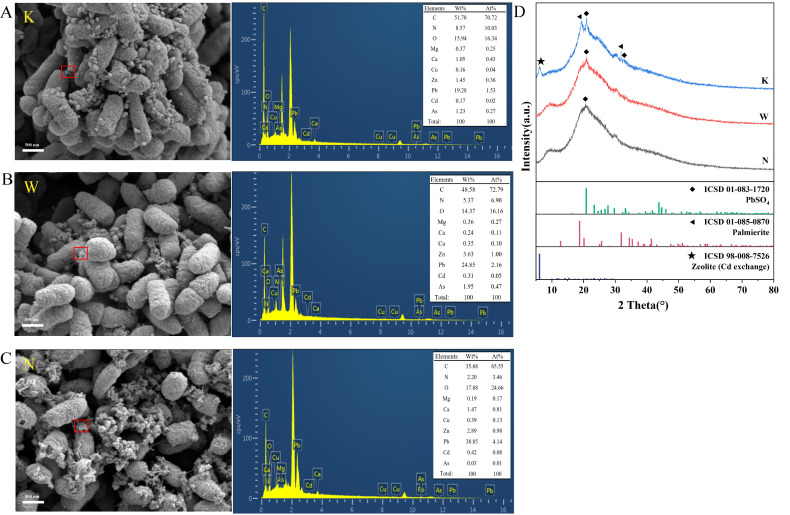 Figure 10
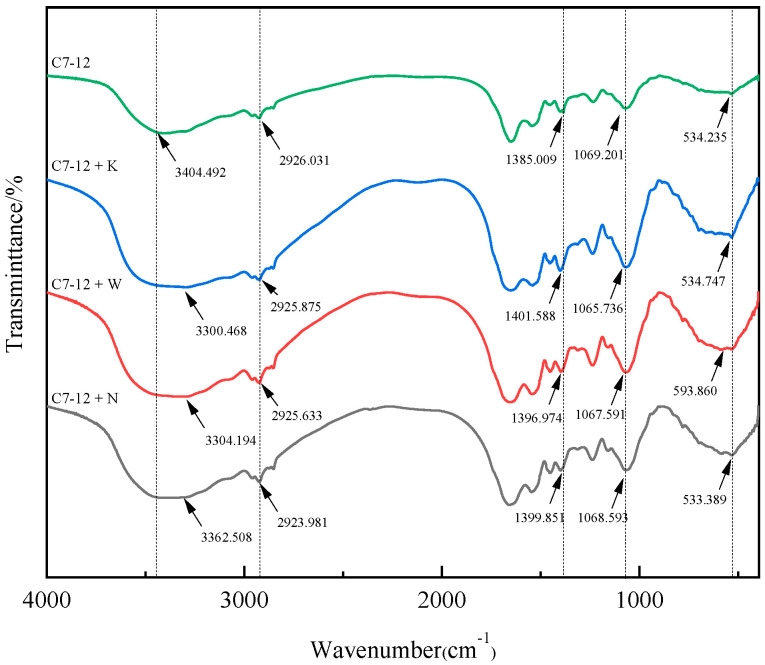 Figure 11
Peer Reviews
No public reviews on file for this paper yet. If you reviewed it on a platform where reviews are public (OpenReview, ICLR, NeurIPS, ICML), you can paste yours below so the community can read it here.
Videos
No videos yet. Explain this paper in a talk, walkthrough, or lecture? Add one.
Taxonomy
TopicsMicrobial Applications in Construction Materials · Chromium effects and bioremediation · Adsorption and biosorption for pollutant removal