Exploring the Role of the Head Rotation Sit-Up Test in Identifying Epley-Responsive, Non-Classical Presentations of BPPV
Ryo Yoneima, Kenji Nishio, Hiromasa Kawashima, Sota Sakamoto, Tomohiro Nakamura, Akihiro Sawa, Ayaka Kakiwaki, Hiroyuki Taguchi, Satoshi Senzaki, Nobushiro Nishimura, Hidetoshi Matsuoka, Shiro Ono, Masaki Matsubara, Noritaka Yada, Kiyomi Yoshimoto

TL;DR
A new test called HRST helps identify patients with non-classical BPPV symptoms who benefit from treatment, even when standard tests fail.
Contribution
The HRST is introduced as a complementary diagnostic maneuver for identifying Epley-responsive BPPV cases missed by the Dix–Hallpike test.
Findings
Group 1 (HRST positive/DHT negative) had a higher responder rate (90.3%) compared to Group 2 (65.3%).
Both groups showed significant symptom improvement after the Epley maneuver.
Group 2 subgroups (DHT positive with HRST positive or negative) had similar outcomes.
Abstract
Background and Objectives: The Dix–Hallpike test (DHT) is the standard diagnostic maneuver for posterior semicircular canal benign paroxysmal positional vertigo (BPPV). However, some patients present with positional symptoms compatible with BPPV yet show no observable nystagmus on the DHT. We introduced the Head Rotation Sit-up Test (HRST) as a symptom-based maneuver and hypothesized that it would identify DHT-negative patients who nonetheless benefit from canalith repositioning. This study aimed to explore the potential role of the HRST. It was introduced as a complementary, symptom-based maneuver for evaluating non-classical vertigo presentations. Materials and Methods: We retrospectively reviewed patients clinically suspected of having BPPV by the attending physicians at Nara Medical University Hospital (August 2018–July 2022). All underwent both the DHT and HRST; those positive on…
Genes, proteins, chemicals, diseases, species, mutations and cell lines named across the full text — each resolved to its canonical identifier and authoritative record.
Click any figure to enlarge with its caption.
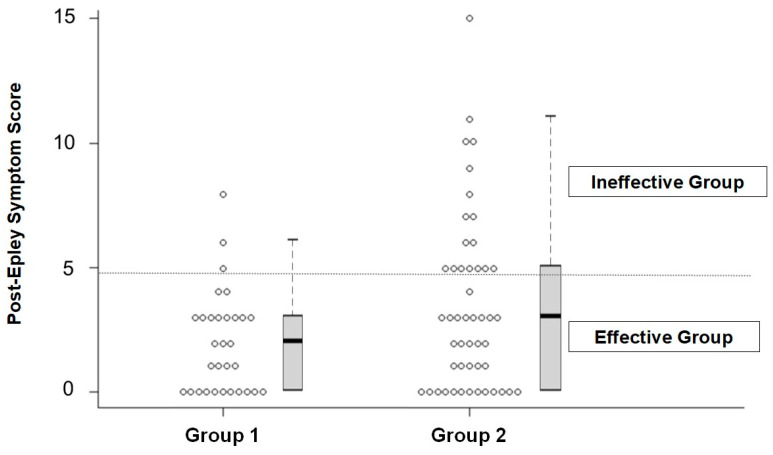 Figure 1
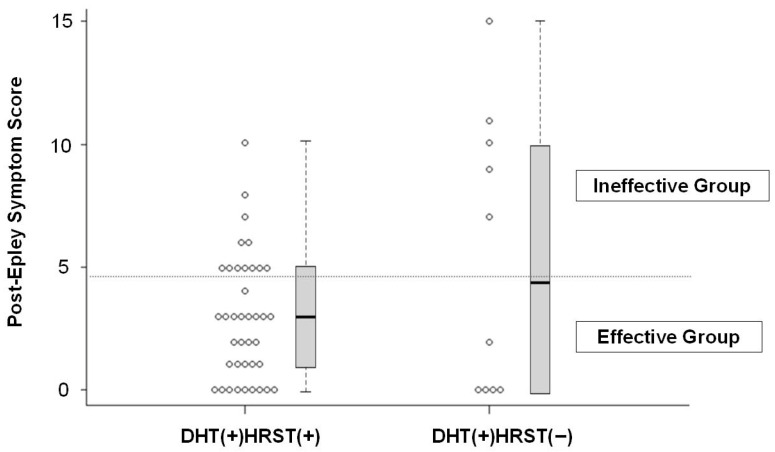 Figure 2
Peer Reviews
No public reviews on file for this paper yet. If you reviewed it on a platform where reviews are public (OpenReview, ICLR, NeurIPS, ICML), you can paste yours below so the community can read it here.
Videos
No videos yet. Explain this paper in a talk, walkthrough, or lecture? Add one.
Taxonomy
TopicsVestibular and auditory disorders · Spatial Neglect and Hemispheric Dysfunction · Hemispheric Asymmetry in Neuroscience