Synthesis of Hydroxyaromatic Carboxylic Acids via Homogeneous Kolbe-Schmitt Carboxylation of Phenoxides
Dmitriy A. Merzliakov, Michael S. Alexeev, Maxim A. Topchiy, Dmitry G. Yakhvarov, Nikolai Yu. Kuznetsov, Anton L. Maximov, Irina P. Beletskaya

TL;DR
This paper presents a mild and efficient method for synthesizing hydroxyaromatic carboxylic acids using phenoxide carboxylation under homogeneous conditions.
Contribution
The study identifies optimal cations, solvents, and additives for high-yield and regioselective carboxylation of phenoxides.
Findings
DMSO directs CO2 attack to the para-position of phenoxide, while DMF provides higher overall yields.
Mesitolate salt addition can drive the reaction to completion with up to 98% yields.
Gasometry and NMR experiments reveal insights into carbonate complex stability and reactivity.
Abstract
Homogeneous Kolbe-Schmitt carboxylation of phenoxides offers a mild and effective alternative to the classical high-temperature solid-phase Kolbe-Schmitt reaction. To develop this into a practical synthetic approach, we investigated several fundamental dependencies, particularly the impact of cations (Na, K, Li, Cs, and Rb), phenoxide concentration, and solvents (DMSO or DMF) on the yield and regioisomeric ratio of hydroxyaromatic carboxylic acids (HACAs). We identified optimal conditions for the effective carboxylation of different phenoxides, including a chiral Ellman’s sulfinamide derived from ortho-vanillin. Both solvents and cations were found to be crucial in the carboxylation of phenoxides. Due to solvation effects, DMSO directs CO2 attack to the para-position of phenoxide, while DMF, although less selective, generally affords higher HACA yields. The addition of equiv. amounts of…
Genes, proteins, chemicals, diseases, species, mutations and cell lines named across the full text — each resolved to its canonical identifier and authoritative record.
Click any figure to enlarge with its caption.
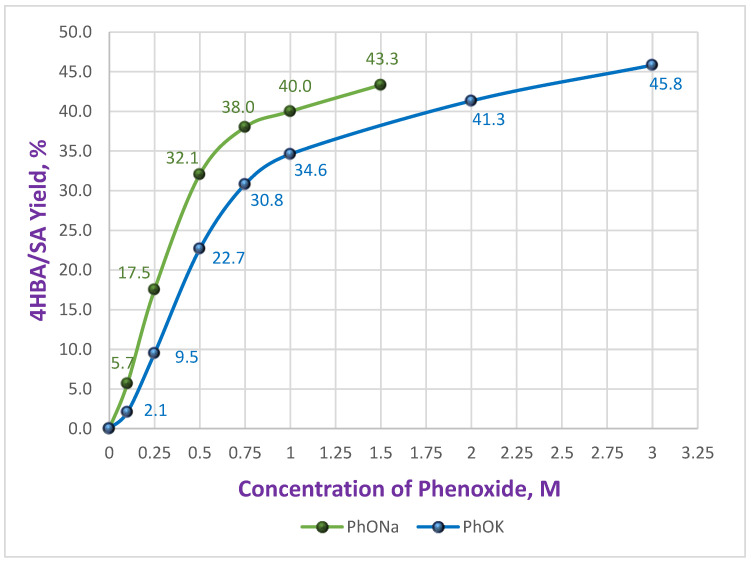 Figure 1
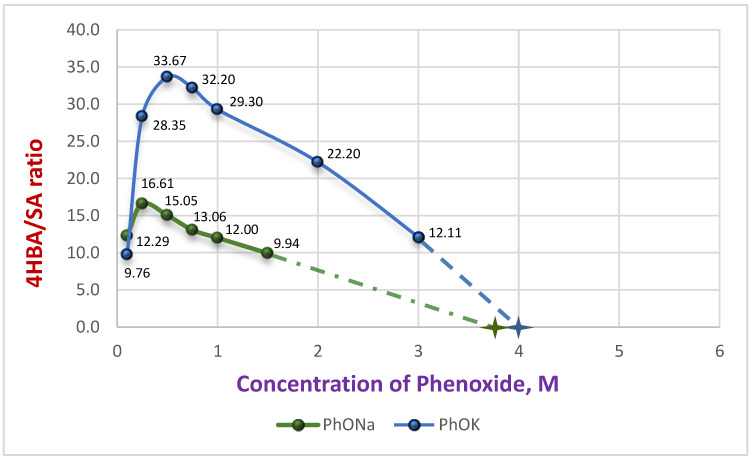 Figure 2
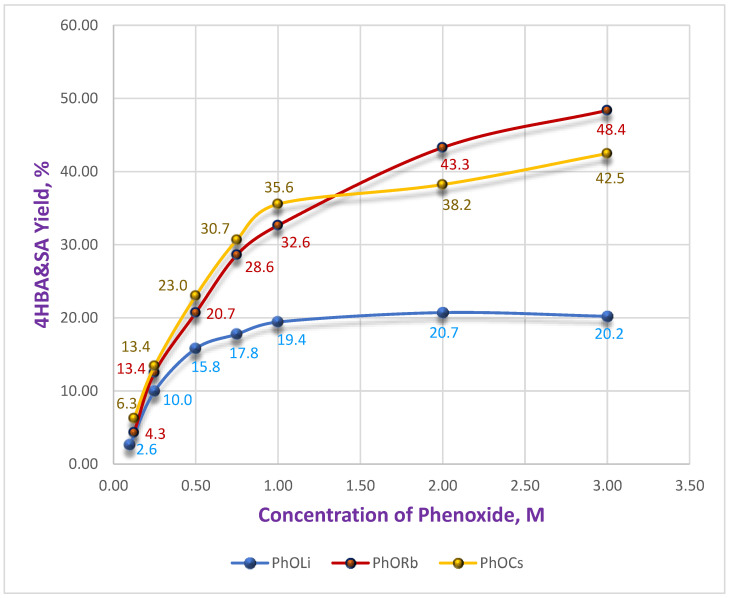 Figure 3
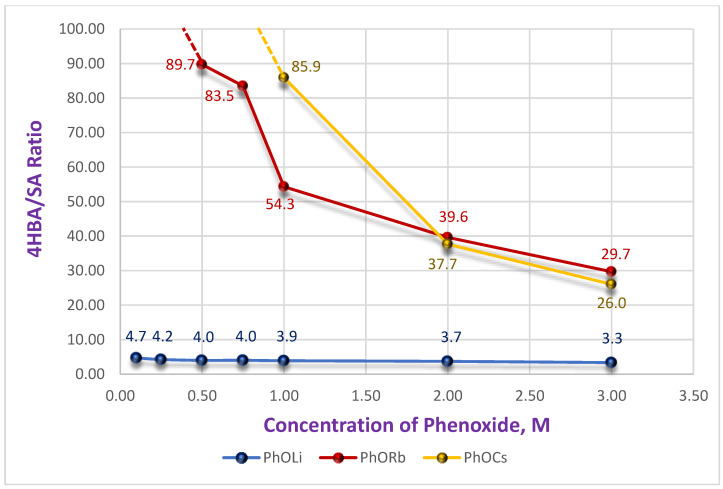 Figure 4
 Figure 5
 Figure 6
 Figure 7
 Figure 8
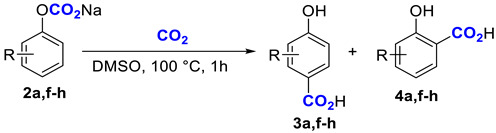 Figure 9
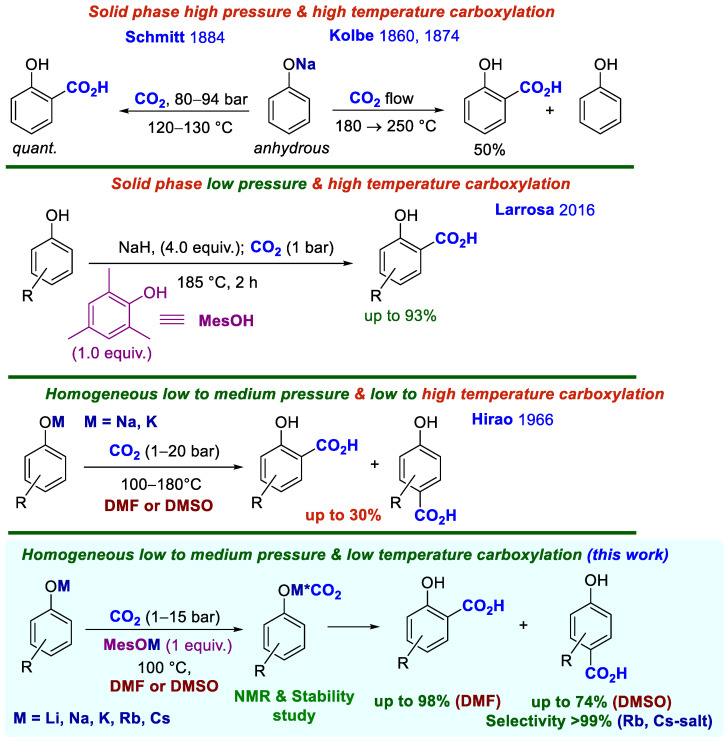 Figure 10
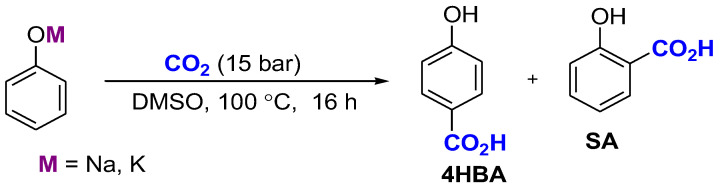 Figure 11
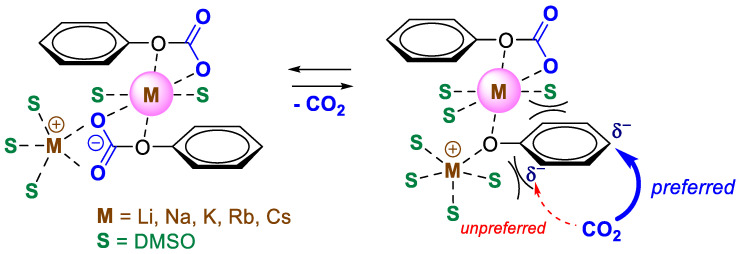 Figure 12
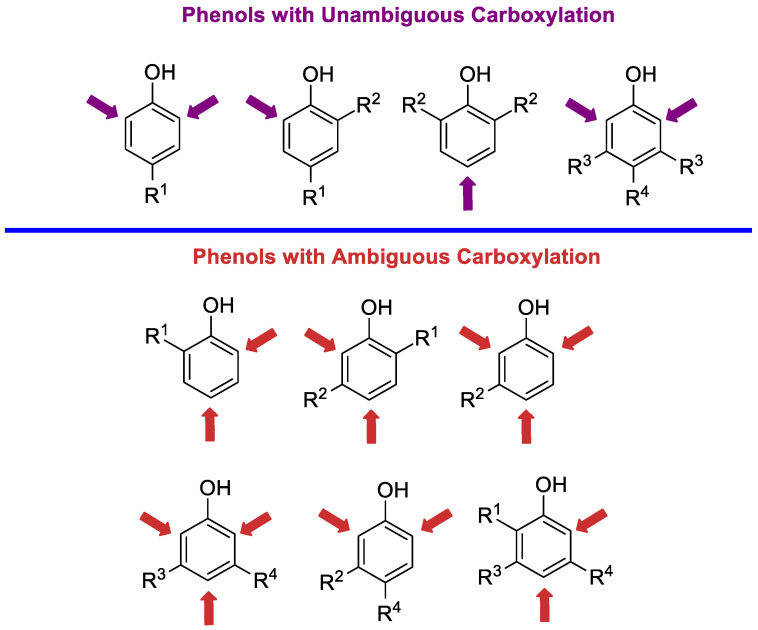 Figure 13
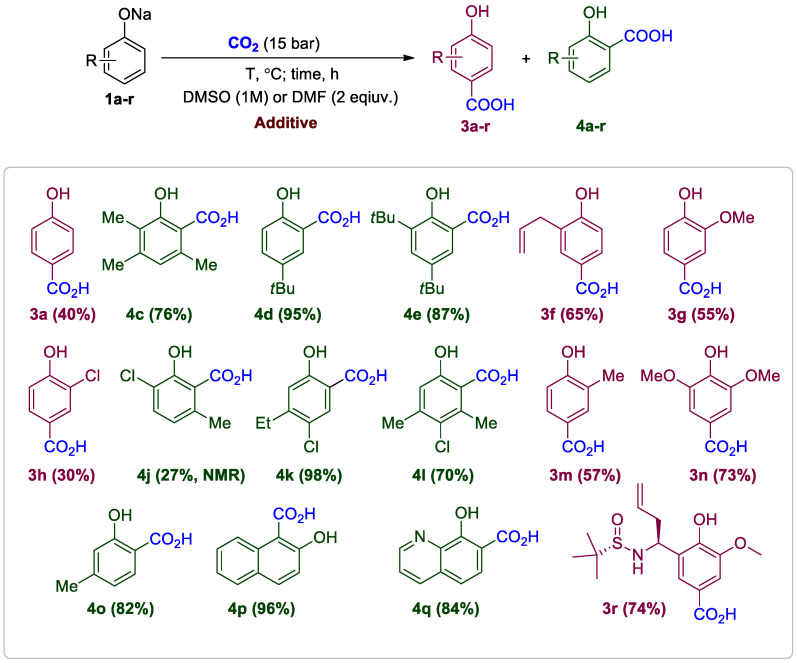 Figure 14
Peer Reviews
No public reviews on file for this paper yet. If you reviewed it on a platform where reviews are public (OpenReview, ICLR, NeurIPS, ICML), you can paste yours below so the community can read it here.
Videos
No videos yet. Explain this paper in a talk, walkthrough, or lecture? Add one.
Taxonomy
TopicsCarbon dioxide utilization in catalysis · Coordination Chemistry and Organometallics · Chemical Synthesis and Reactions