Beyond the Mortality Effect: Spodoptera frugiperda Multiple Nucleopolyhedrovirus Promotes Changes in Feeding and Inhibits Larval Growth and Weight Gain in Fall Armyworm
Bianca Marina Costa Nascimento, Anderson Delfino Mauricio Nunes, Silvio Lisboa de Souza Junior, Luiz Fernando de Santana Santos, Fabio Mielezrski, Carlos Henrique de Brito, Breno Álef Parnaíba Cândido, Isabel Lopes de Medeiros, Wanderlan Gonçalves Praxedes Júnior

TL;DR
This study shows that a virus infecting fall armyworm larvae not only kills them but also reduces their growth and feeding at low concentrations.
Contribution
The study reveals sublethal effects of SfMNPV on larval growth and feeding behavior in fall armyworm.
Findings
Low concentrations of SfMNPV inhibit larval weight gain and body growth.
Leaf consumption is reduced at low SfMNPV concentrations but increases at higher concentrations among surviving larvae.
The virus's impact on fall armyworm extends beyond mortality to include developmental and feeding dysfunctions.
Abstract
Infection by Spodoptera frugiperda multiple nucleopolyhedrovirus (SfMNPV) profoundly alters the physiology of S. frugiperda (Lepidoptera: Noctuidae), promoting molecular responses that activate genes related to cellular defense. These responses demand substantial energy and lead to feeding dysfunction. Knowledge about the effects of SfMNPV on weight gain and leaf consumption rate is still incipient; in this context, we evaluated the survival rate, weight gain, leaf consumption rate, and body size of S. frugiperda exposed to different concentrations of SfMNPV. A completely randomized design was used in the laboratory. Treatments consisted of SfMNPV from the commercial product Cartugen®, diluted at different concentrations and applied on a Petri dish: 9.00 × 10³, 1.80 × 10⁴, 3.75 × 10⁴, 7.50 × 10⁴, 1.35 × 10⁵, 2.25 × 10⁵, and 3.75 × 10⁵ occlusion bodies (OBs)/mL. Fifty first-instar larvae…
Genes, proteins, chemicals, diseases, species, mutations and cell lines named across the full text — each resolved to its canonical identifier and authoritative record.
Click any figure to enlarge with its caption.
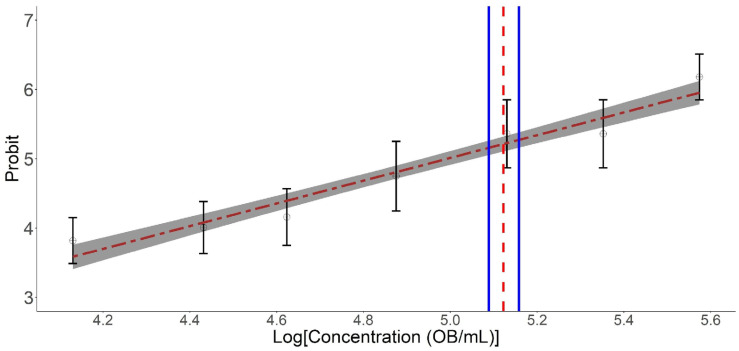 Figure 1
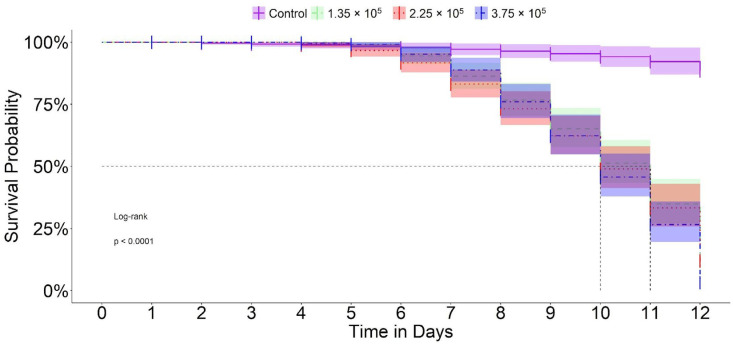 Figure 2
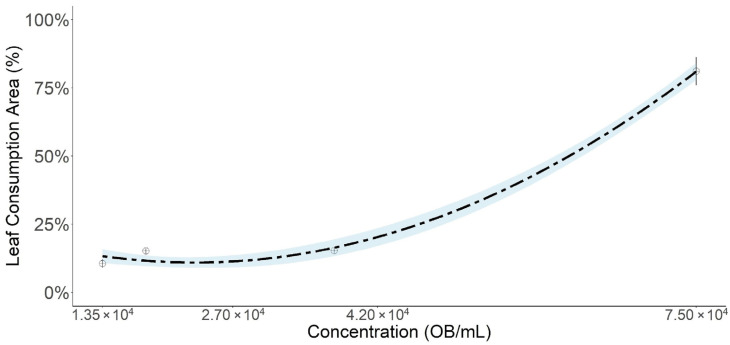 Figure 3
Peer Reviews
No public reviews on file for this paper yet. If you reviewed it on a platform where reviews are public (OpenReview, ICLR, NeurIPS, ICML), you can paste yours below so the community can read it here.
Videos
No videos yet. Explain this paper in a talk, walkthrough, or lecture? Add one.
Taxonomy
TopicsViral Infectious Diseases and Gene Expression in Insects · Insect Resistance and Genetics · Neurobiology and Insect Physiology Research