Whole-Genome Sequencing and Analysis Reveals Plant Growth-Promoting Properties and Biocontrol Potential of the Crotalaria retusa Endophytic Bacillus velezensis Strain G2T39
Evrad Sausthène Seka Ahoty, Zaka Ghislaine Claude Kouadjo-Zézé, Romain Kouakou Fossou, Anicet Théodore Ebou Ediman, Espérance Pierre-Marie Kéran Boga, Adolphe Zézé

TL;DR
A plant-friendly bacteria called Bacillus velezensis G2T39 was found to help plants grow and fight harmful fungi, making it a promising tool for sustainable agriculture.
Contribution
The study reveals the genetic basis for the biocontrol and plant growth-promoting traits of Bacillus velezensis G2T39 through whole-genome sequencing and analysis.
Findings
Bacillus velezensis G2T39 shows biocontrol activity against multiple crop pathogens like Colletotrichum gloeosporioides and Fusarium oxysporum f. sp. Vasinfectum.
The genome of G2T39 contains genes for secondary metabolite production and plant growth promotion, including nitrogen and phosphate metabolism.
The strain is closely related to known biocontrol strains like B. velezensis FZB42, as confirmed by phylogenetic and genomic analyses.
Abstract
Bacillus velezensis strain G2T39 is an endophytic bacterium previously isolated from Crotalaria retusa L., with evidenced biocontrol activity against Fusarium oxysporum f. sp. Cubense and Fusarium graminearum. In this study, it was shown that this strain also exhibited biocontrol activity against Colletotrichum gloeosporioides and Fusarium oxysporum f. sp. Vasinfectum, two important crop pathogens in tropical zones. Comprehensive phylogenetic and genomic analyses were performed to further characterize this strain. The genome of B. velezensis G2T39 consists of a single circular chromosome of 4,040,830 base pairs, with an average guanine–cytosine (GC) content of 46.35%. Both whole-genome-based phylogeny and average nucleotide identity (ANI) confirmed its identity as B. velezensis, being closely related to biocontrol and plant growth promotion Gram-positive model strains such as B.…
Genes, proteins, chemicals, diseases, species, mutations and cell lines named across the full text — each resolved to its canonical identifier and authoritative record.
Click any figure to enlarge with its caption.
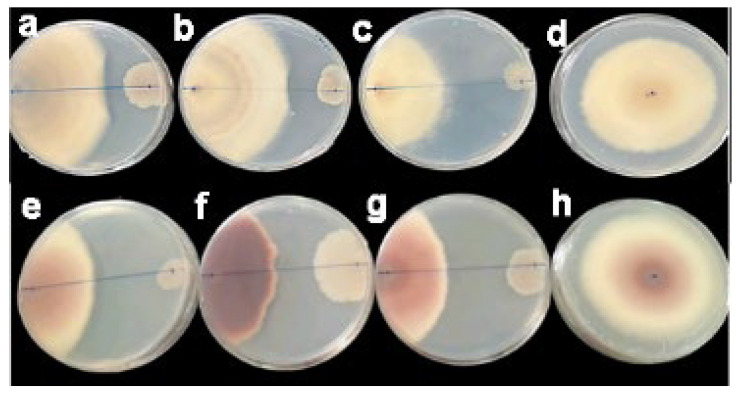 Figure 1
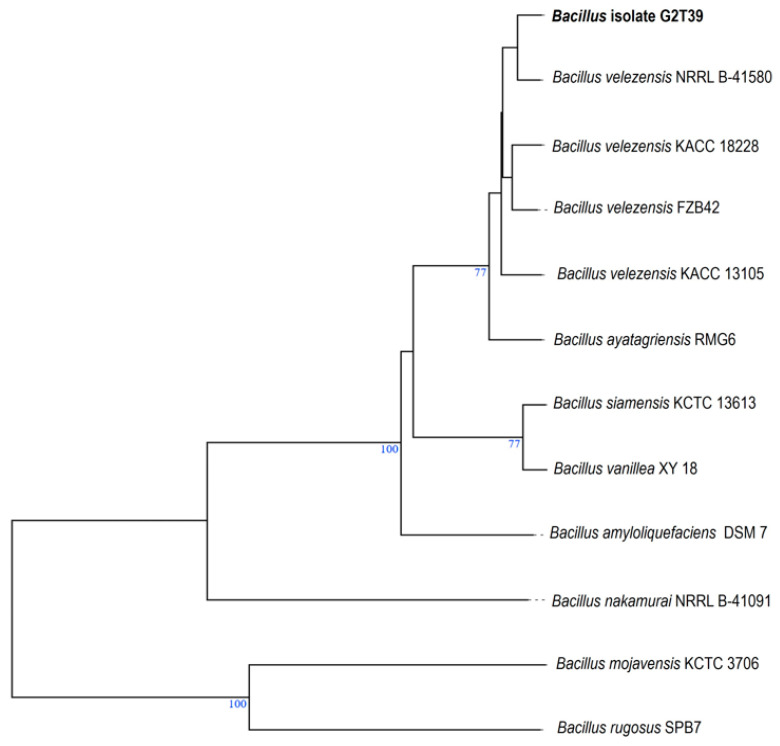 Figure 2
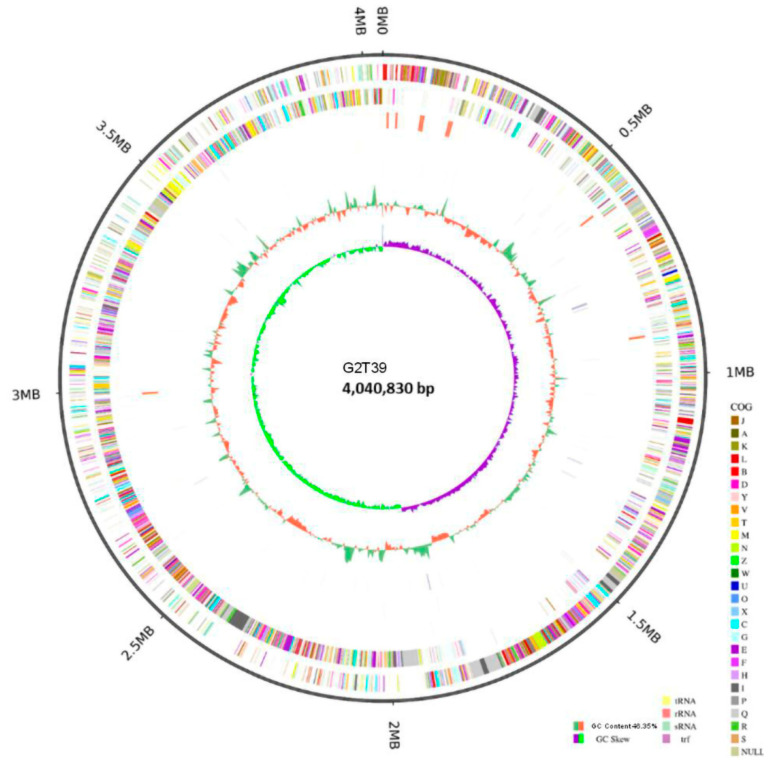 Figure 3
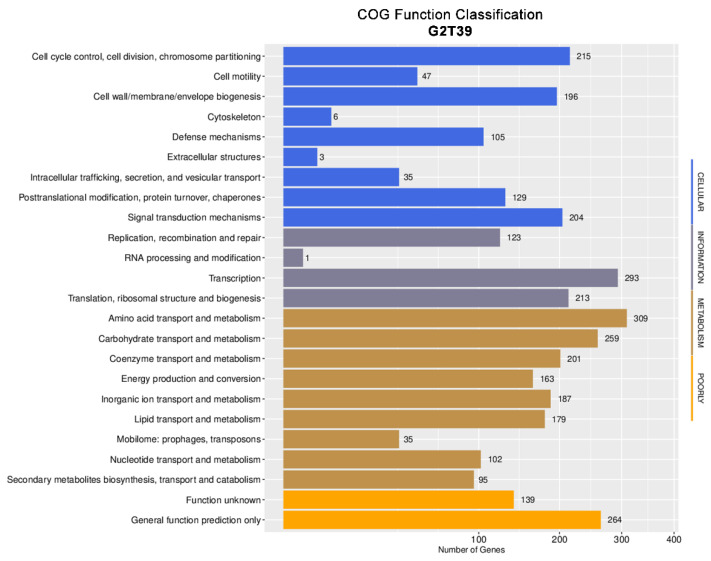 Figure 4
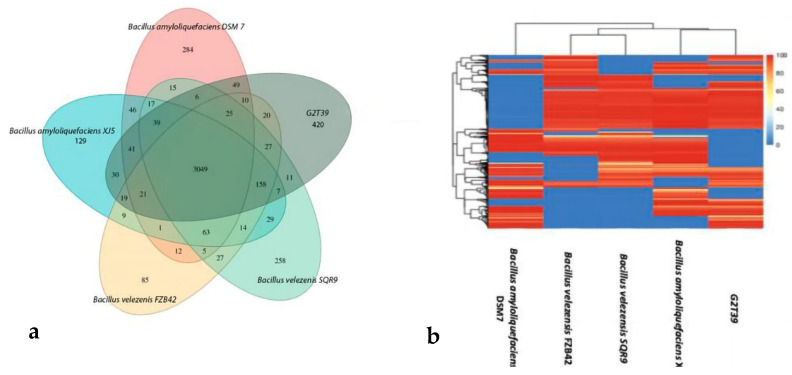 Figure 5
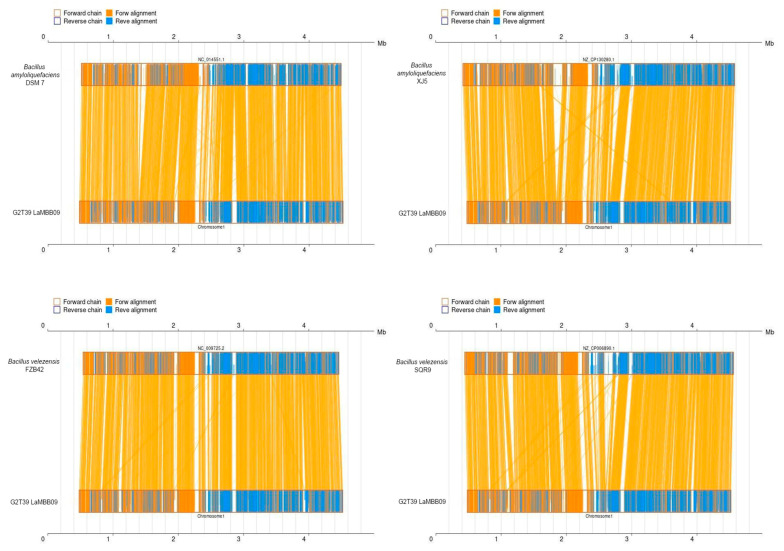 Figure 6
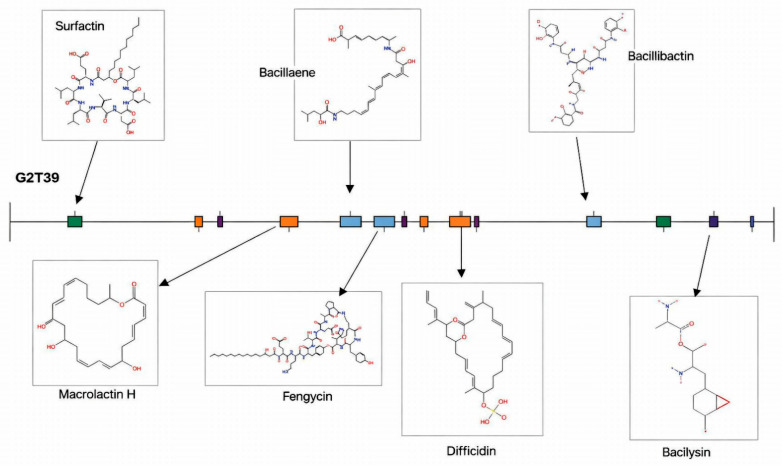 Figure 7
Peer Reviews
No public reviews on file for this paper yet. If you reviewed it on a platform where reviews are public (OpenReview, ICLR, NeurIPS, ICML), you can paste yours below so the community can read it here.
Videos
No videos yet. Explain this paper in a talk, walkthrough, or lecture? Add one.
Taxonomy
TopicsPlant-Microbe Interactions and Immunity · Microbial Natural Products and Biosynthesis · Genomics and Phylogenetic Studies