Species Identification, Virulence Factors, and Antifungal Resistance in Clinical Candida Isolates from ICU Patients
Paola Aparecida Alves Ferreira, Lucas Daniel Cibolli Roso, Daniel Almeida Freitas, Ana Paula Pereira Bressani, Paulo Henrique da Cruz Ferreira, Emerson Cotta Bodevan, Cristiane Rocha Fagundes Moura, Rosane Freitas Schwan, Vanessa Amaral Mendonça, Karina Teixeira Magalhães-Guedes

TL;DR
This study identifies and characterizes Candida species from ICU patients, highlighting their antifungal resistance and virulence traits.
Contribution
The study provides new insights into the prevalence and resistance patterns of Candida species in ICU settings, emphasizing their clinical significance.
Findings
C. albicans was the most prevalent Candida species among ICU isolates.
Over half of the isolates showed resistance to fluconazole, indicating a significant antifungal resistance issue.
Oral isolates showed higher resistance and virulence traits compared to tracheal isolates.
Abstract
Candida spp. are important opportunistic human fungal pathogens. This study aimed to identify and characterize Candida spp. obtained from patients admitted to an Intensive Care Unit (ICU), focusing on virulence attributes and susceptibility to antifungal agents. A total of 131 isolates from oral and tracheobronchial secretions of adult ICU patients were evaluated. Phenotypic identification was performed using chromogenic culture media for Candida, followed by MALDI-TOF mass spectrometry, with representative isolates confirmed by ITS sequencing. Antifungal susceptibility to fluconazole, ketoconazole, and amphotericin B was determined only by the agar disk diffusion method, and virulence was assessed through esterase, DNase, protease, and hemolytic activity assays. C. albicans was the prevalent species, followed by C. tropicalis, C. krusei, C. glabrata, C. parapsilosis, C. dubliniensis,…
Genes, proteins, chemicals, diseases, species, mutations and cell lines named across the full text — each resolved to its canonical identifier and authoritative record.
Click any figure to enlarge with its caption.
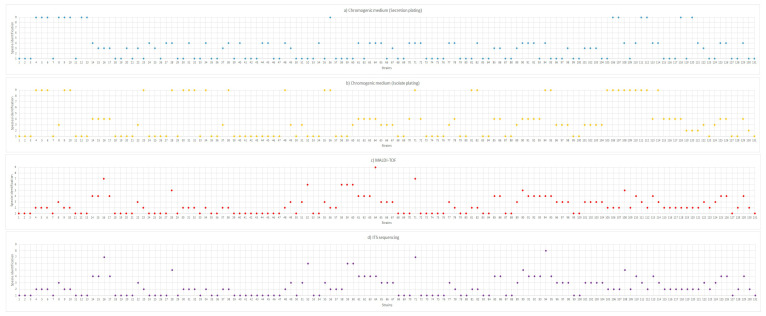 Figure 1
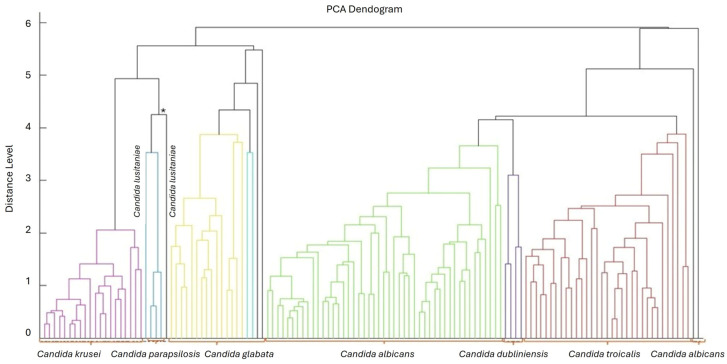 Figure 2
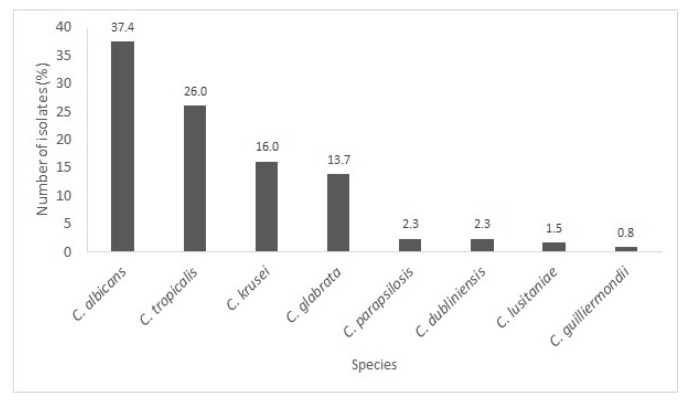 Figure 3
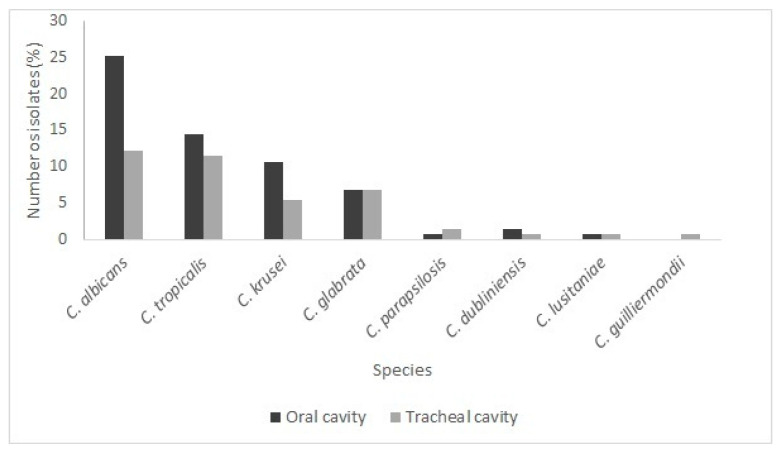 Figure 4
Peer Reviews
No public reviews on file for this paper yet. If you reviewed it on a platform where reviews are public (OpenReview, ICLR, NeurIPS, ICML), you can paste yours below so the community can read it here.
Videos
No videos yet. Explain this paper in a talk, walkthrough, or lecture? Add one.
Taxonomy
TopicsAntifungal resistance and susceptibility · Fungal Infections and Studies · Antibiotic Resistance in Bacteria