Paradoxical Effect of Obesity on Survival Outcomes in Prostate Cancer Patients Receiving Enzalutamide and Abiraterone
Bahattin Engin Kaya, Mehmet Zahid Koçak, Oğuzhan Yıldız, Talat Aykut, Ali Fuat Gürbüz, Ömer Genç, Melek Karakurt Eryılmaz, Murat Araz, Mehmet Artaç

TL;DR
This study finds that obesity may improve survival outcomes in prostate cancer patients depending on the disease stage and treatment phase.
Contribution
The study reveals a phase-dependent obesity paradox in metastatic prostate cancer patients receiving androgen receptor-targeted therapies.
Findings
Obese patients with castration-sensitive prostate cancer had longer progression-free survival compared to normal-weight patients.
Obese patients with castration-resistant prostate cancer showed improved overall survival compared to normal-weight patients.
Obesity was identified as a protective factor for progression-free survival in castration-sensitive disease.
Abstract
Background and Objectives: Overweight and obesity is defined as a Body Mass Index (BMI) of 25.0–29.9 kg/m2 and ≥30.0 kg/m2. The prognostic significance of obesity in metastatic prostate cancer is still unclear, especially between the castration-sensitive (CSPC) and castration-resistant (CRPC) disease states. New evidence suggests that obese patients who get androgen receptor–targeted therapies may have an unexpected survival advantage. This study examined the correlation between body mass index (BMI) and survival outcomes in patients administered androgen receptor pathway inhibitors. Materials and Methods: A retrospective analysis was conducted on a cohort of 167 patients with metastatic prostate cancer treated between 2015 and 2024. BMI was analyzed as both a continuous variable and a categorical variable, which was classified as normal weight, overweight or obese. The primary goal of…
Genes, proteins, chemicals, diseases, species, mutations and cell lines named across the full text — each resolved to its canonical identifier and authoritative record.
Click any figure to enlarge with its caption.
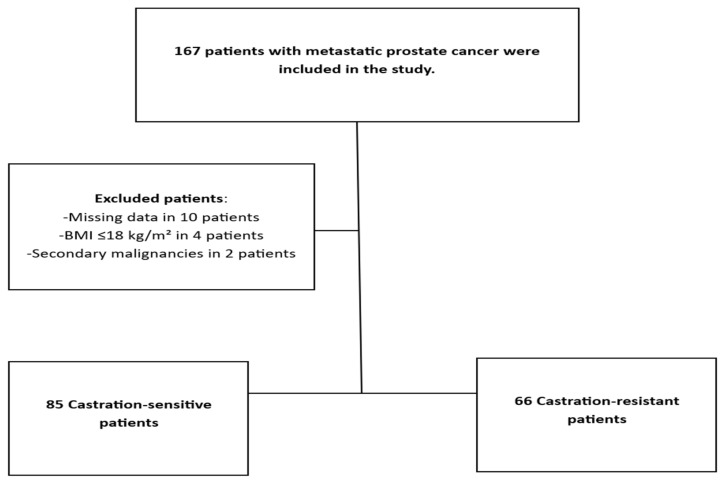 Figure 1
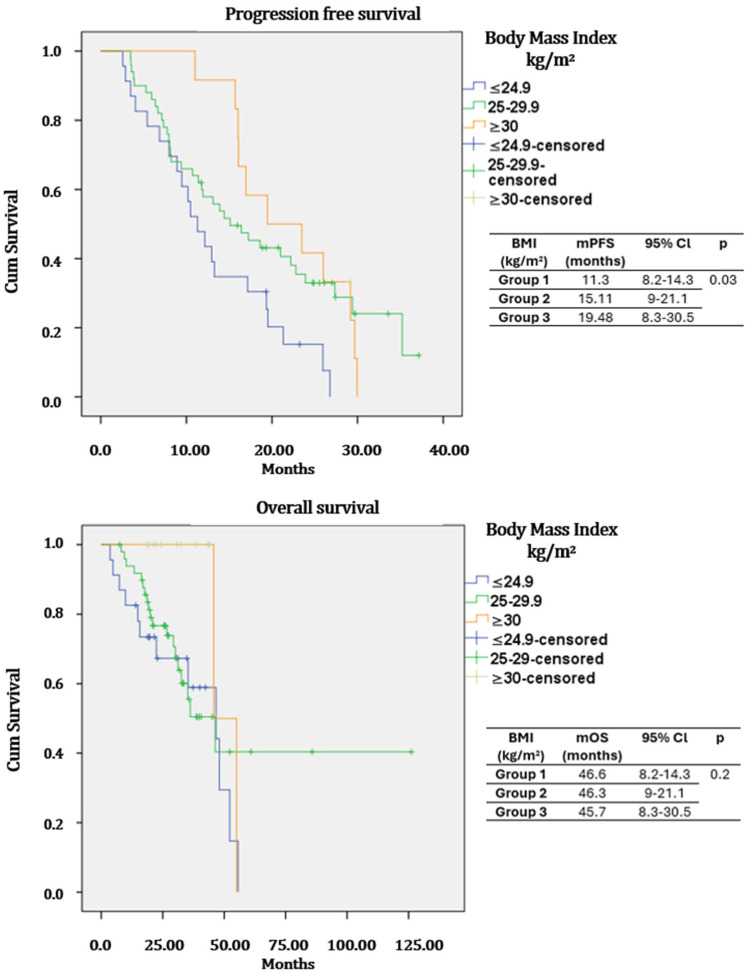 Figure 2
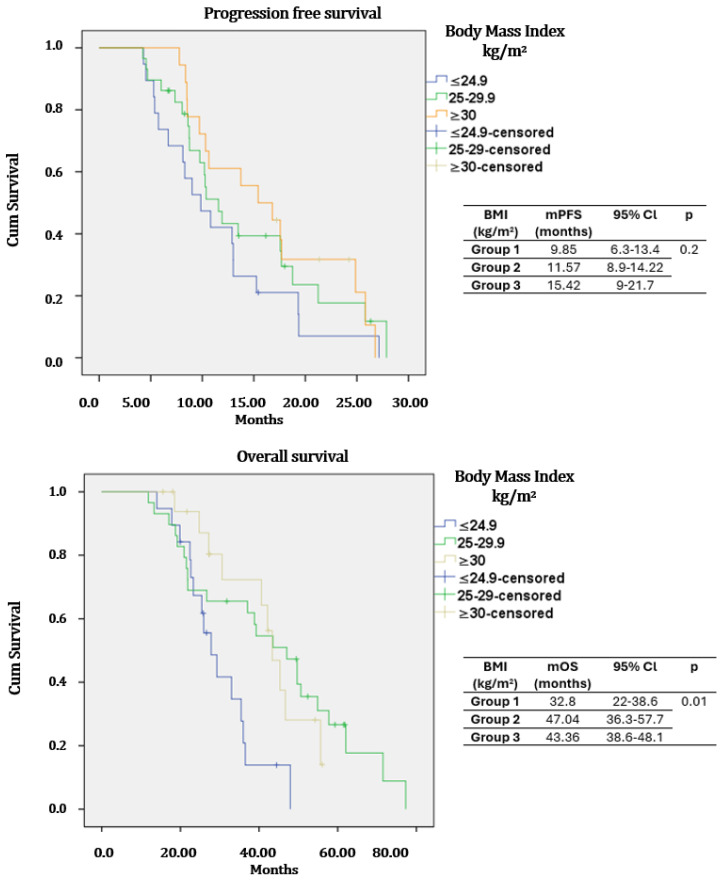 Figure 3
Peer Reviews
No public reviews on file for this paper yet. If you reviewed it on a platform where reviews are public (OpenReview, ICLR, NeurIPS, ICML), you can paste yours below so the community can read it here.
Videos
No videos yet. Explain this paper in a talk, walkthrough, or lecture? Add one.
Taxonomy
TopicsProstate Cancer Treatment and Research · Prostate Cancer Diagnosis and Treatment · Cancer Risks and Factors