Distribution and Quantification of Infectious and Parasitic Agents in Managed Honeybees in Central Italy, the Republic of Kosovo, and Albania
Franca Rossi, Martina Iannitto, Beqe Hulaj, Luciano Ricchiuti, Ani Vodica, Patrizia Tucci, Franco Mutinelli, Anna Granato

TL;DR
This study examined infectious and parasitic agents in managed honeybees from Italy, Kosovo, and Albania to assess bee health and identify regional differences in contamination levels.
Contribution
The study provides a comparative analysis of infectious and parasitic agents in honeybees across three regions, highlighting geographic variations in contamination and co-occurrence patterns.
Findings
Higher contamination levels of V. ceranae, P. larvae, and DWV-B were found in Kosovo and Albania compared to Italy.
M. plutonius, CBPV, DWV-A, and parasitoid flies were more prevalent in Central Italy.
Co-occurrence of infectious agents varied between regions, possibly due to epidemiological and environmental factors.
Abstract
This study aimed to determine the presence of relevant infectious and parasitic agents (IPAs) in managed honeybees from Central Italy and the Republic of Kosovo and Albania to assess the overall health status of local apiaries by determining the contamination levels and co-occurrence. Therefore, pathogens and parasites such as Paenibacillus larvae, Melissococcus plutonius, Vairimorpha apis, V. ceranae, the acute bee paralysis virus (ABPV), black queen cell virus (BQCV), chronic bee paralysis virus (CBPV), deformed wing virus variants DWV-A and DWV-B, and the parasitoid flies Megaselia scalaris and Senotainia tricuspis were detected by quantitative polymerase chain reaction (qPCR) and reverse transcriptase qPCR (RT-qPCR) in clinically healthy adult honeybees collected from 187 apiaries in the Abruzzo and Molise regions of Central Italy, 206 apiaries in the Republic of Kosovo in 2022 and…
Genes, proteins, chemicals, diseases, species, mutations and cell lines named across the full text — each resolved to its canonical identifier and authoritative record.
Click any figure to enlarge with its caption.
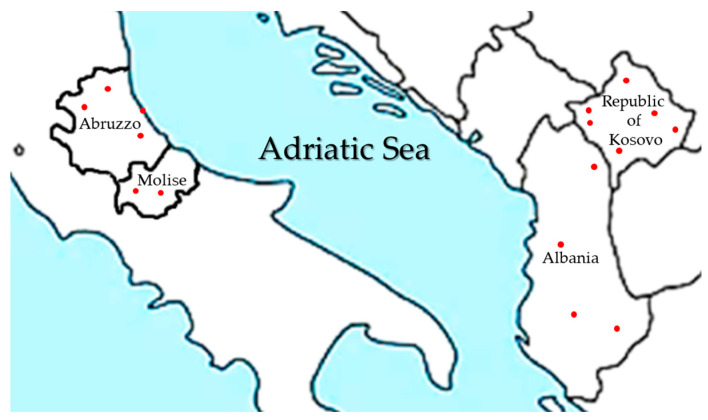 Figure 1
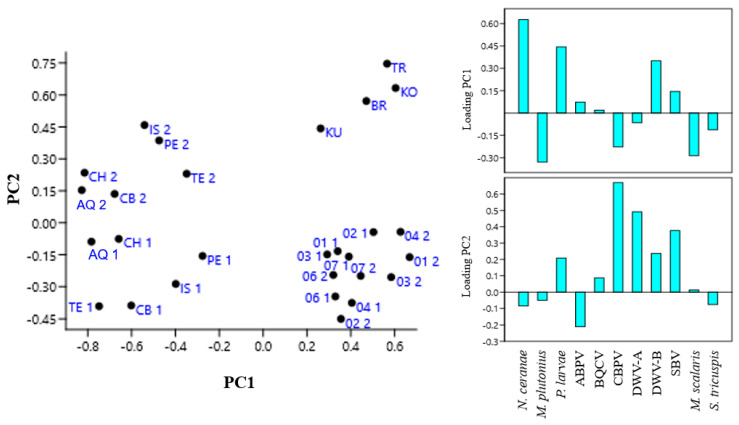 Figure 2
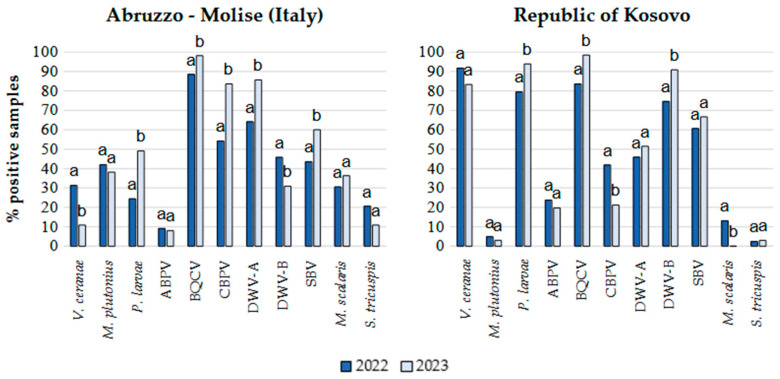 Figure 3
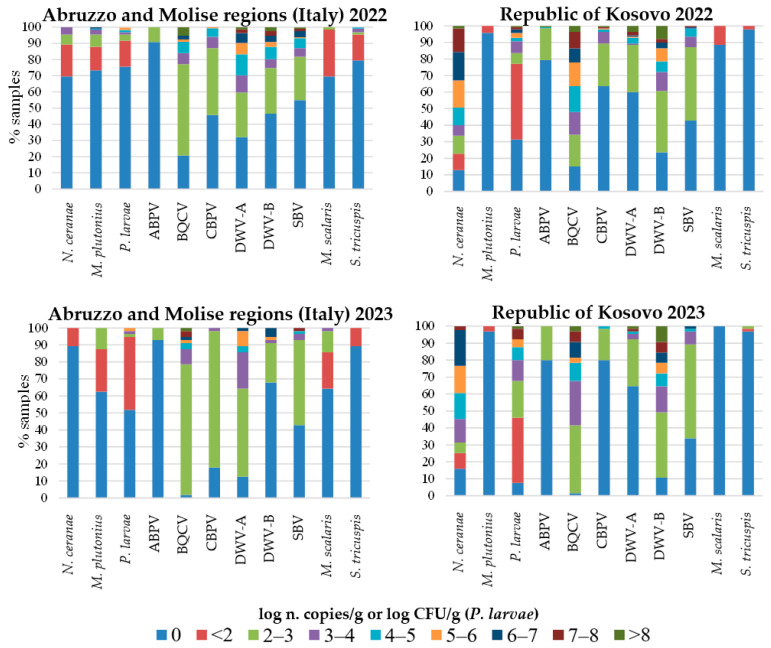 Figure 4
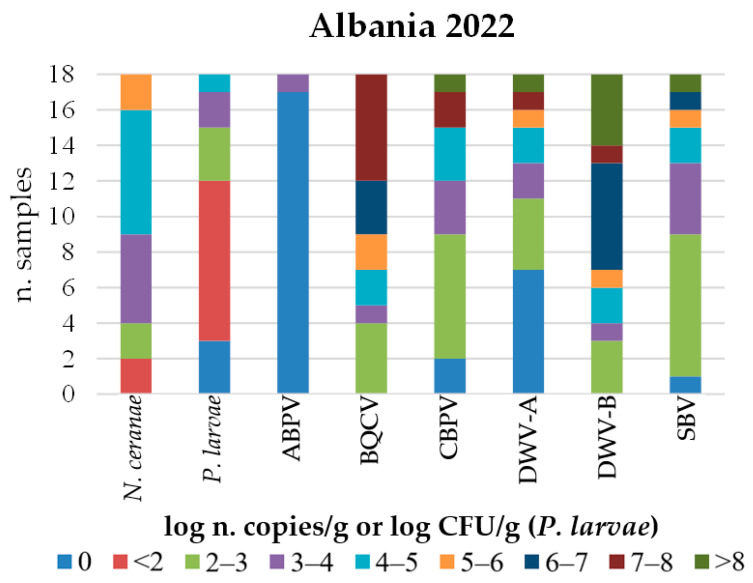 Figure 5
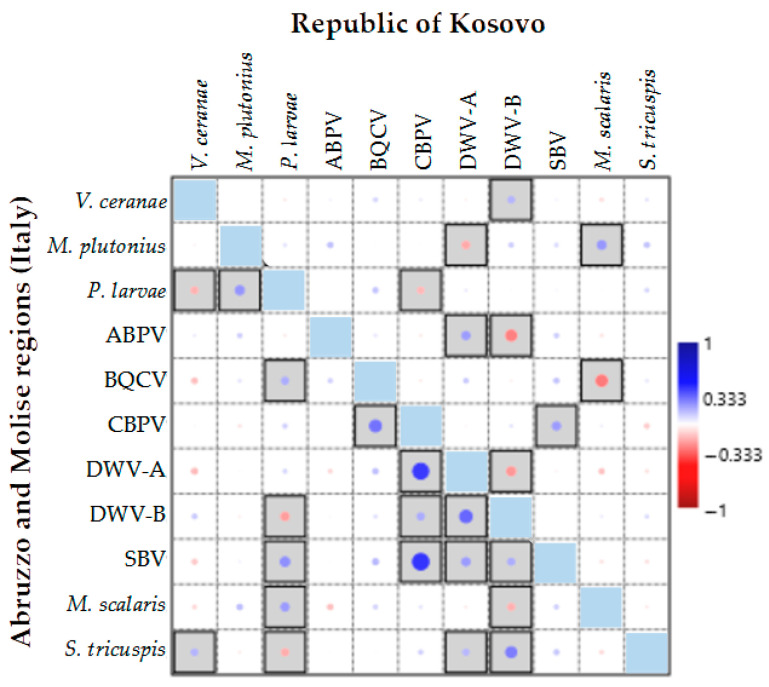 Figure 6
Peer Reviews
No public reviews on file for this paper yet. If you reviewed it on a platform where reviews are public (OpenReview, ICLR, NeurIPS, ICML), you can paste yours below so the community can read it here.
Videos
No videos yet. Explain this paper in a talk, walkthrough, or lecture? Add one.
Taxonomy
TopicsInsect and Pesticide Research · Bee Products Chemical Analysis · Insect and Arachnid Ecology and Behavior