Cationic and Non-Ionic Surfactant–Assisted Morphological Engineering of CoMoO4 for High-Performance Asymmetric Supercapacitors
Pritam J. Morankar, Aviraj M. Teli, Chan-Wook Jeon

TL;DR
This study shows how using specific surfactants can improve the structure of cobalt molybdate, leading to better performance in supercapacitors.
Contribution
The novel use of cationic and non-ionic surfactants to engineer CoMoO4 morphology for enhanced supercapacitor performance.
Findings
CoMo-CTAB/PEG electrode achieved 10.321 F cm−2 areal capacitance at 10 mA cm−2.
The electrode retained 63.64% capacitance at 50 mA cm−2 and 83% after 12,000 cycles.
An asymmetric pouch-type device showed robust cycling stability with the optimized electrode.
Abstract
Precise morphology engineering is essential for enhancing the charge-storage capabilities of cobalt molybdate (CoMoO4). In this study, cobalt molybdate (CoMoO4, abbreviated as CoMo), cobalt molybdate–cetyltrimethylammonium bromide (CoMo-CTAB), and cobalt molybdate–cetyltrimethylammonium bromide/polyethylene glycol (CoMo-CTAB/PEG) electrodes were synthesized through a cationic–nonionic surfactant-assisted hydrothermal route. he introduction of CTAB promoted the formation of well-defined nanoflake structures, whereas the synergistic CTAB/PEG system produced a highly porous and interconnected nanosheet architecture, enabling enhanced electrolyte diffusion and redox accessibility. As a result, the CoMo-CTAB/PEG electrode delivered a high areal capacitance of 10.321 F cm−2 at 10 mA cm−2, markedly outperforming CoMo-CTAB and pristine CoMo electrodes. It also exhibited good rate capability,…
Genes, proteins, chemicals, diseases, species, mutations and cell lines named across the full text — each resolved to its canonical identifier and authoritative record.
Click any figure to enlarge with its caption.
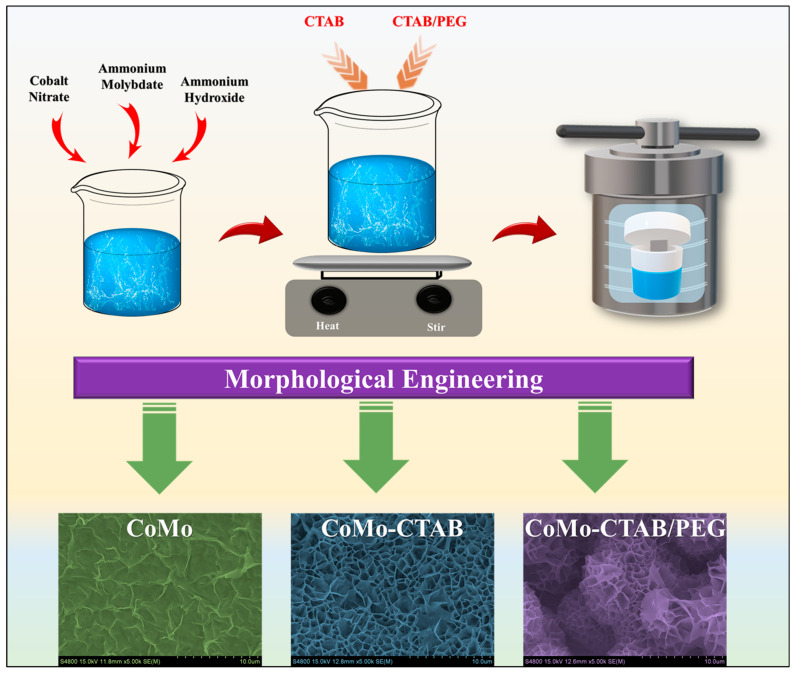 Figure 1
 Figure 2
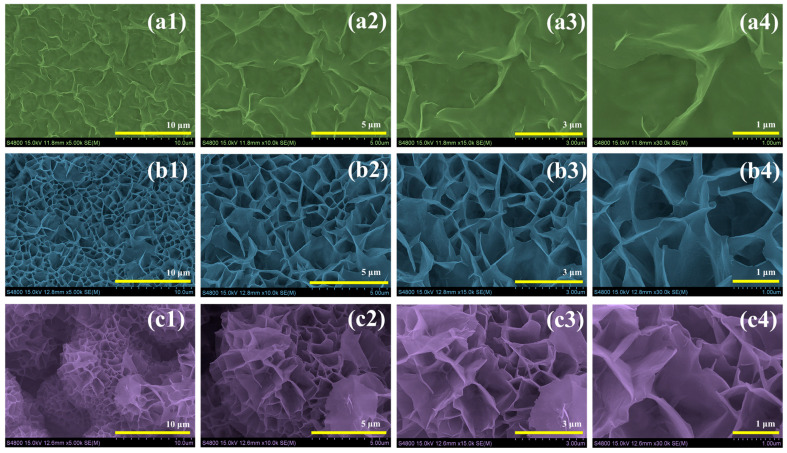 Figure 3
 Figure 4
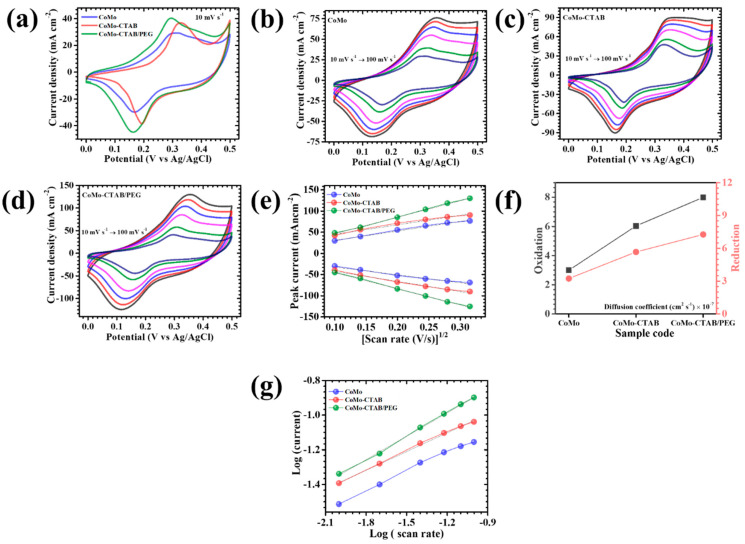 Figure 5
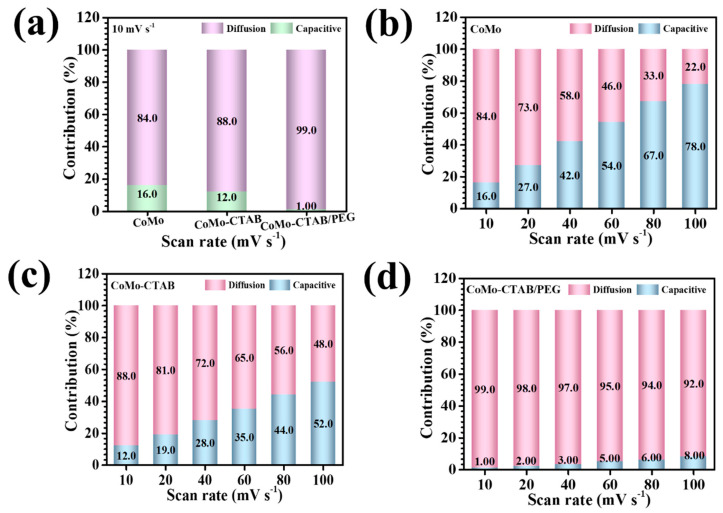 Figure 6
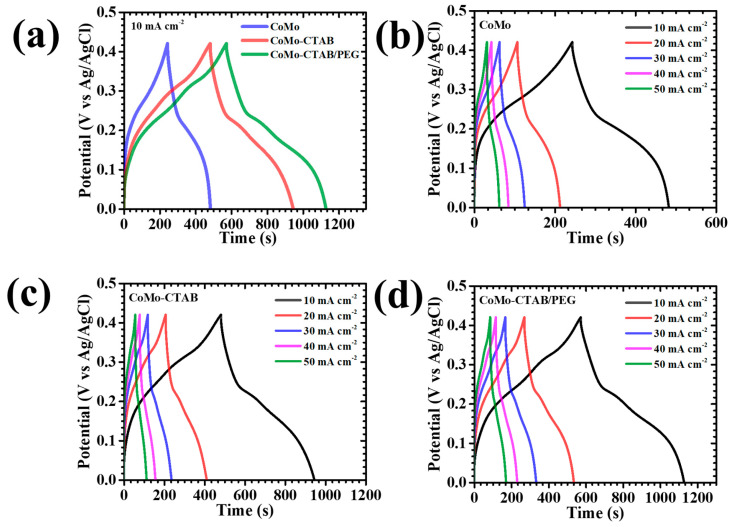 Figure 7
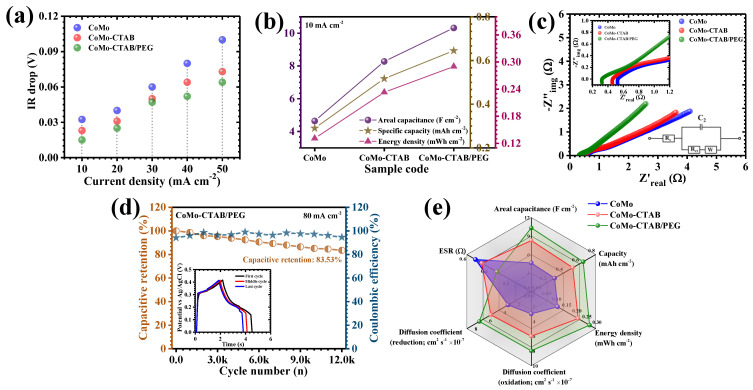 Figure 8
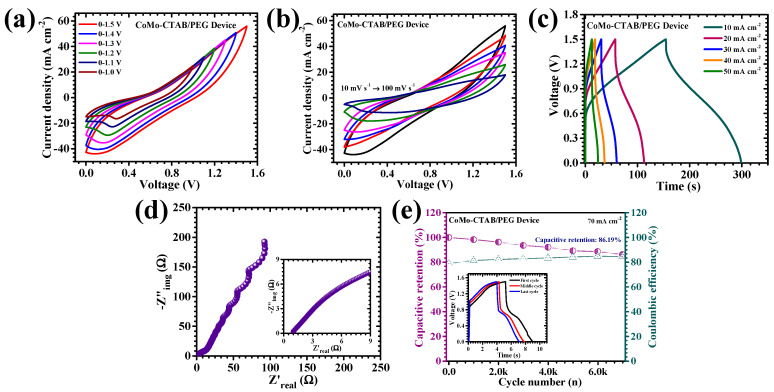 Figure 9
Peer Reviews
No public reviews on file for this paper yet. If you reviewed it on a platform where reviews are public (OpenReview, ICLR, NeurIPS, ICML), you can paste yours below so the community can read it here.
Videos
No videos yet. Explain this paper in a talk, walkthrough, or lecture? Add one.
Taxonomy
TopicsSupercapacitor Materials and Fabrication · Catalysis for Biomass Conversion · Electrocatalysts for Energy Conversion