Physicochemical and Functional Characterizations of Biosurfactants Produced by Pseudomonas aeruginosa N33 for Oil Removal
Xinyue Zhao, Meiyu Jiang, Tiantian Du, Xuannuo Liu, Junjia Luo, Yixiang Guo, Xueyu Li, Hongyi Wang, Shiping Wei, Libo Yu

TL;DR
A biosurfactant from Pseudomonas aeruginosa N33 effectively removes various oils, showing promise as an eco-friendly cleaning agent.
Contribution
Identification of a glycolipid biosurfactant from P. aeruginosa N33 with high oil-removal efficacy.
Findings
The biosurfactant achieved oil-displacing ring diameters of 6.3 cm for vegetable oil and 3.8 cm for crude oil.
It reduced contact angles of oils on glass slides from over 90° to below 20°, significantly improving wettability.
Capillary oil removal assays confirmed its ability to strip oil films efficiently.
Abstract
Bacterial biosurfactants have potential applications in green cleaning due to their environmental friendliness. Among all isolated bacterial strains in this study, strain N33 exhibited the most potent oil-displacing activity and was identified as Pseudomonas aeruginosa. Its biosurfactant yield was approximately 550 mg/L, and structural characterization revealed it to be a glycolipid-type biosurfactant. The oil-displacing ring diameters of the biosurfactant against vegetable oil, paraffin oil, and crude oil reached 6.3 ± 0.3 cm, 5.8 ± 0.2 cm, and 3.8 ± 0.5 cm, respectively. Its critical micelle concentration (CMC) was determined to be 150 mg/L, with a corresponding surface tension of 39.55 mN/m. Notably, this bacterial biosurfactant significantly improved interfacial wettability, reducing the contact angles of vegetable oil, paraffin oil, and crude oil on oil-wetted glass slides from…
Genes, proteins, chemicals, diseases, species, mutations and cell lines named across the full text — each resolved to its canonical identifier and authoritative record.
Click any figure to enlarge with its caption.
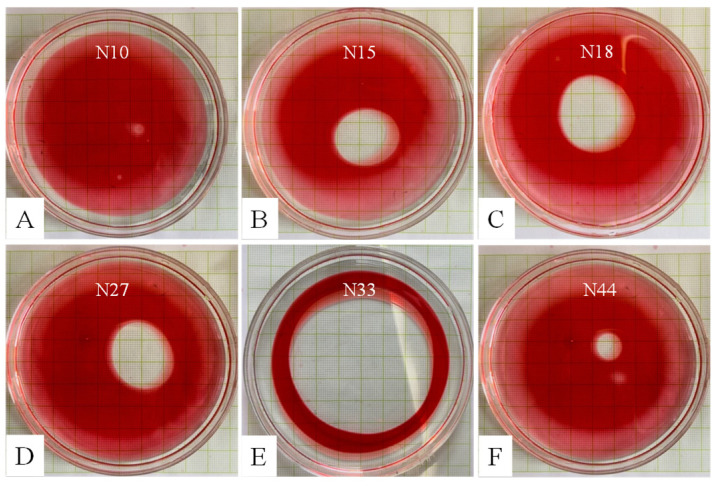 Figure 1
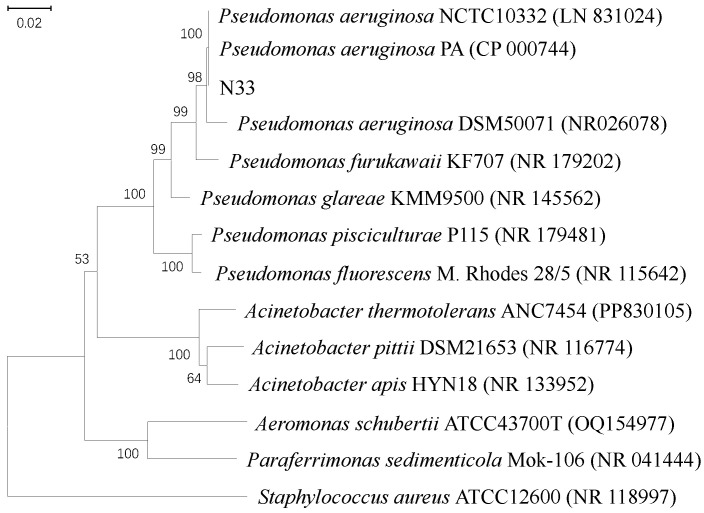 Figure 2
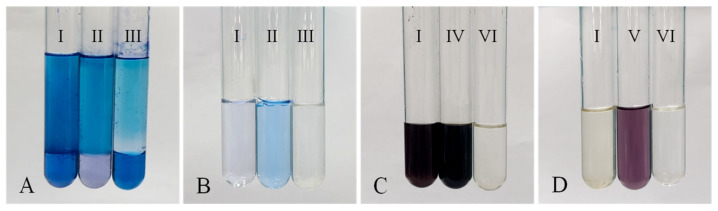 Figure 3
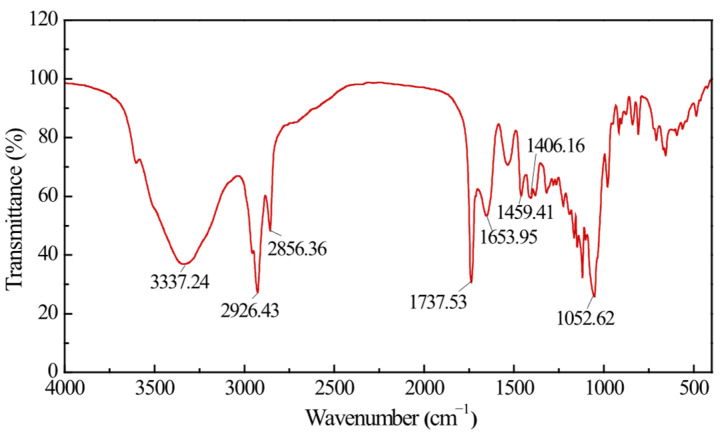 Figure 4
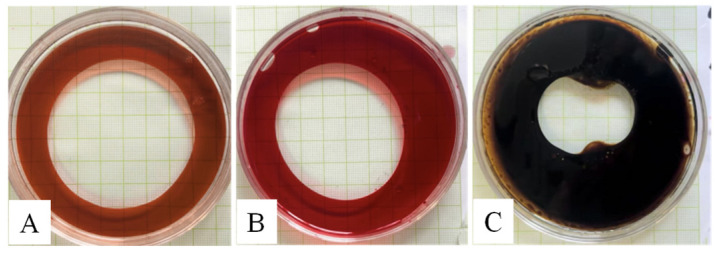 Figure 5
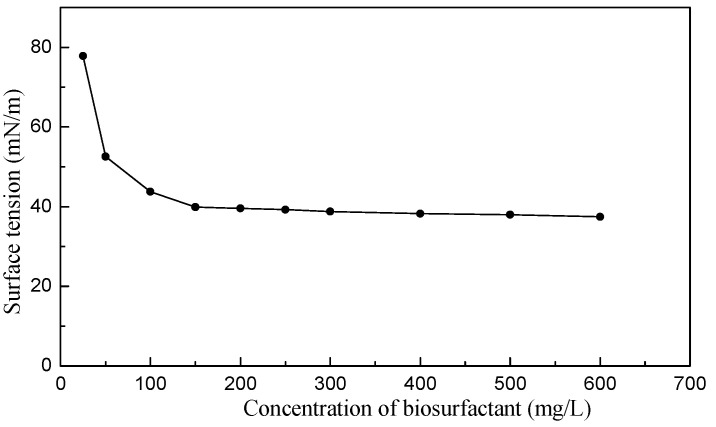 Figure 6
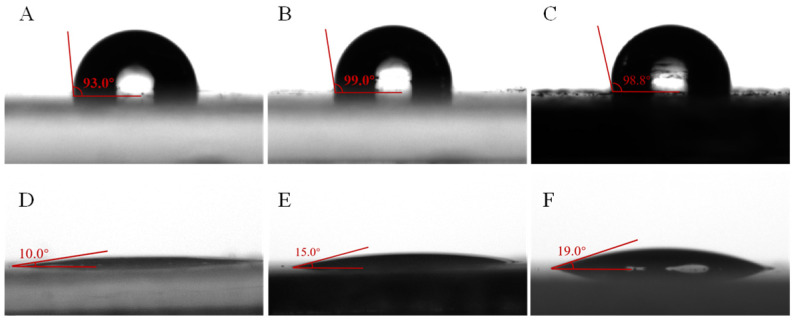 Figure 7
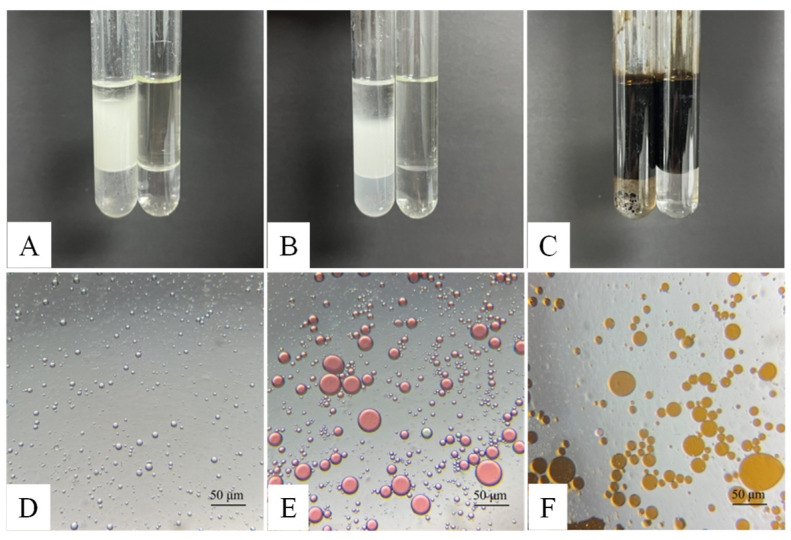 Figure 8
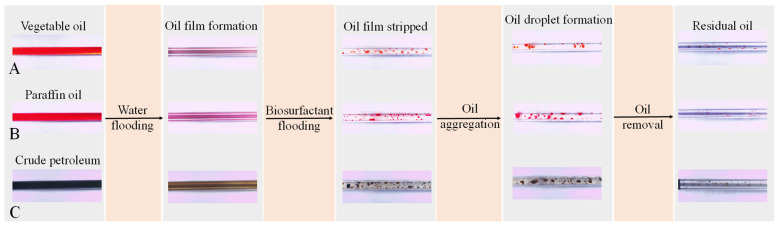 Figure 9
Peer Reviews
No public reviews on file for this paper yet. If you reviewed it on a platform where reviews are public (OpenReview, ICLR, NeurIPS, ICML), you can paste yours below so the community can read it here.
Videos
No videos yet. Explain this paper in a talk, walkthrough, or lecture? Add one.
Taxonomy
TopicsMicrobial bioremediation and biosurfactants · Environmental Chemistry and Analysis · Odor and Emission Control Technologies