Uniqueness of Companion Animal Fecal Microbiota: Convergence Patterns Between Giant Pandas, Red Pandas, and Domesticated Animals
Shuting Liu, Hairong He, Han Han, Hong Zhou, Yuxiang Chen, Huawei Tian, Shibu Qubi, Minghua Chen, Yonggang Nie, Wei Wei

TL;DR
This study compares the gut microbes of giant pandas, red pandas, and domestic animals, finding unique patterns linked to their ecological niches.
Contribution
The study reveals distinct microbial convergence patterns in giant pandas and red pandas, offering new insights into wildlife conservation through microbial interactions.
Findings
Giant pandas have low microbial diversity and a unique bacterial composition dominated by Proteobacteria and Pseudomonas.
Domesticated animals show the highest microbial diversity with Firmicutes and UCG-005 as dominant bacteria.
Sympatric wildlife exhibit significant ecological divergence in their microbial communities compared to pandas.
Abstract
To investigate the influence of host ecological niche on fecal microbial community composition, this investigation employed high-throughput sequencing to characterize the microbiota composition in fecal samples. Giant pandas (GP), red pandas (RP), sympatric wildlife (SA), and domesticated animals (HA) in the Meigu Dafengding National Nature Reserve were used in the research. The research has found that GP bacteria are mainly composed of Proteobacteria and Pseudomonas, RP is enriched in Proteobacteria and Arthrobacter, SA is characterized by Firmicutes and Bacillus, and HA is dominated by Firmicutes and UCG-005 (uncultured Lachnospiraceae). In terms of fungi, GP and RP are mainly dominated by Ascomycota, enriched in Mrakia and Thelebolus, respectively, while SA is dominated by Ascomycota and Thelebolus, and HA is dominated by Chytridiomycota and Geotrichum. The assessment of alpha…
Genes, proteins, chemicals, diseases, species, mutations and cell lines named across the full text — each resolved to its canonical identifier and authoritative record.
Click any figure to enlarge with its caption.
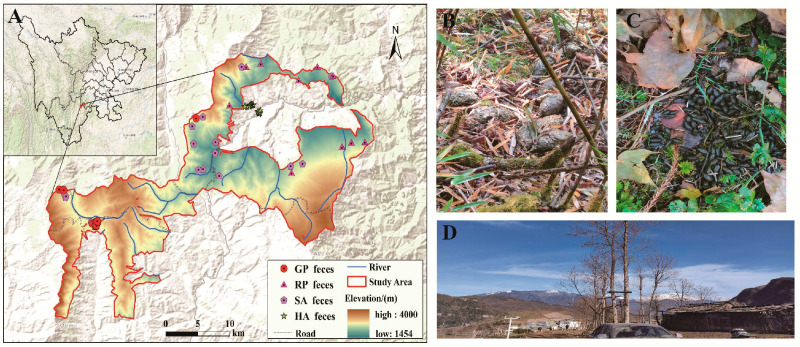 Figure 1
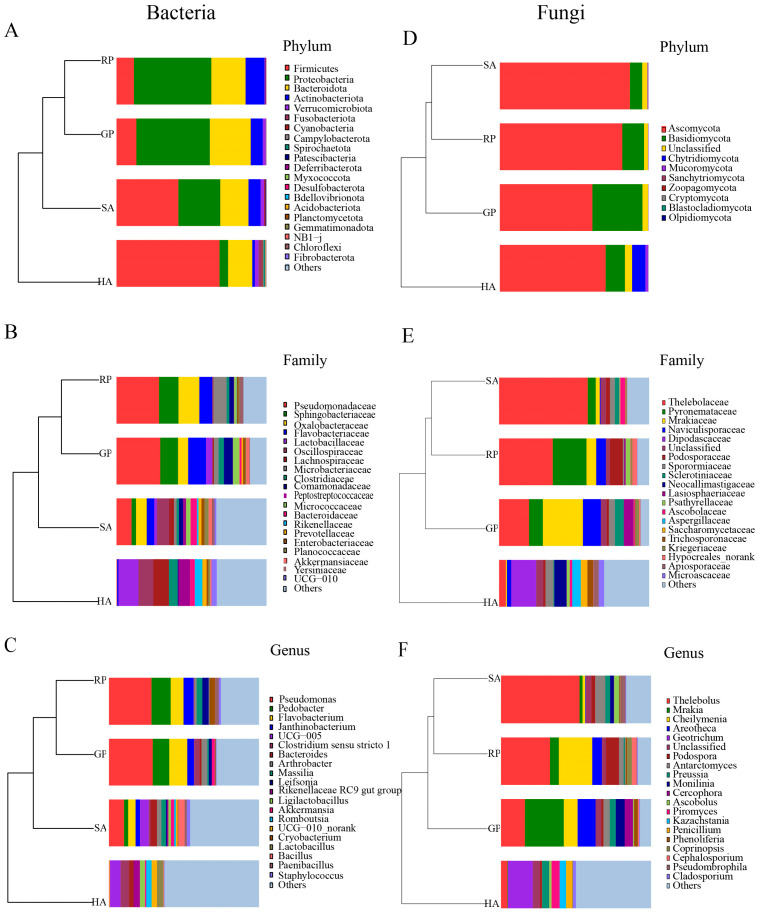 Figure 2
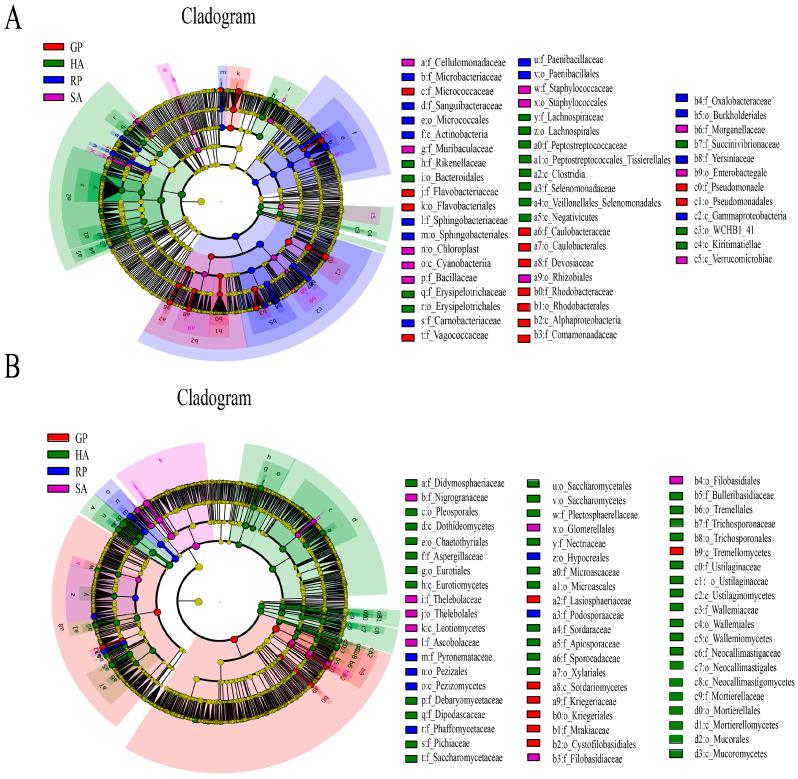 Figure 3
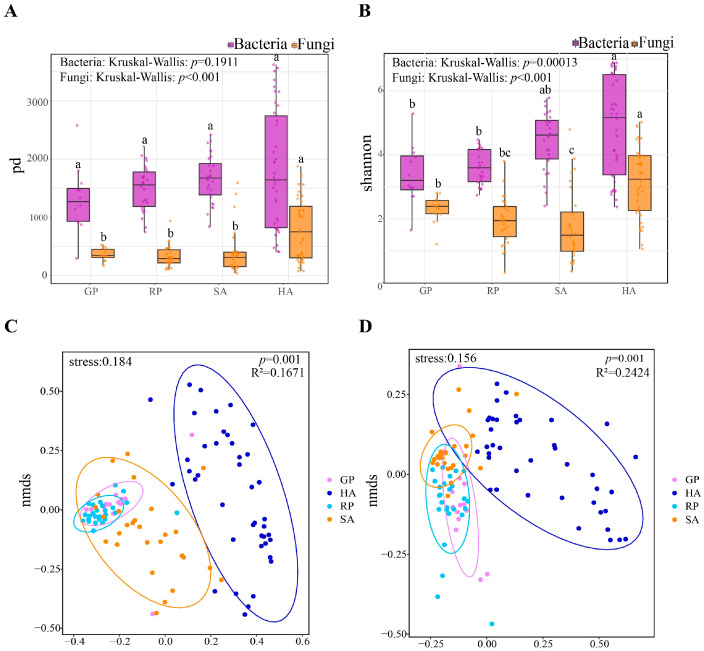 Figure 4
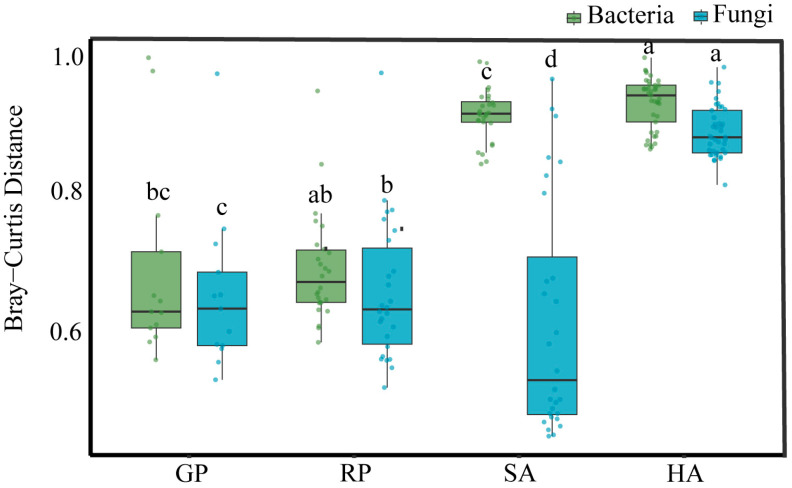 Figure 5
Peer Reviews
No public reviews on file for this paper yet. If you reviewed it on a platform where reviews are public (OpenReview, ICLR, NeurIPS, ICML), you can paste yours below so the community can read it here.
Videos
No videos yet. Explain this paper in a talk, walkthrough, or lecture? Add one.
Taxonomy
TopicsGut microbiota and health · Microbial Community Ecology and Physiology · Fecal contamination and water quality