Comparison of Commercial Lateral Flow Immunochromatography with Phenotypic and Genotypic Assays for the Detection of Carbapenemase-Producing Gram-Negative Bacteria at Tanta University Hospitals
Marwa S. Taha, Basant Mostafa Gabr, Wafaa Abd Elaziz, Ahmed Mostafa Elgohary, Bsant S. Kasem, Reham M. Elkolaly, Hytham I. S. Elatrozy, Marwa N. Emam, Asmaa S. Essawy, Heba E. M. Sharaf Eldin, Rehab A. Mohamed, Mahmoud Z. Elkadeem, Sherif Abdelbaky, Mona Abd El-Aziz Gadallah

TL;DR
This study compares a fast lateral flow test with traditional methods for detecting antibiotic-resistant bacteria in hospital settings.
Contribution
The study evaluates the accuracy of lateral flow immunoassays as a rapid alternative to phenotypic and genotypic methods for detecting carbapenemase-producing bacteria.
Findings
Lateral flow immunoassays showed high sensitivity and specificity for detecting specific carbapenemase genes.
The LFIA had an overall accuracy of 92-94% when compared to molecular assays.
blaNDM was the most frequently detected gene, while blaIMP was the least.
Abstract
It is crucial to identify Enterobacterales that produce carbapenemase to treat and manage hospital infections. The suggested techniques for their identification need a lengthy wait, technical knowledge, and training. Lateral flow immunoassays (LFIAs) provide a solution to these requirements. Thus, this study compared LFIA with phenotypic and genotypic tests for carbapenemase-producing bacteria. Fifty clinical isolates of carbapenem-resistant superbugs were examined. KPC, VIM, NDM, IMP, and OXA-48-like enzymes were evaluated and compared with phenotypic tests and LFIA. Regarding the phenotypic characteristics, the mCIM was positive in 37/50 (74%), and the eCIM was positive in 21/50 (42%). Regarding using LFIA, 41 out of the total isolates (82%) gave a positive red line with one or more of the tested genes. The most frequently detected gene was blaNDM (27/50 (54%)), and the least detected…
Genes, proteins, chemicals, diseases, species, mutations and cell lines named across the full text — each resolved to its canonical identifier and authoritative record.
Click any figure to enlarge with its caption.
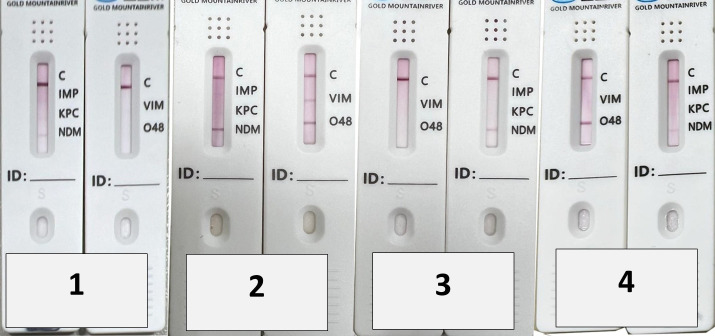 Figure 1
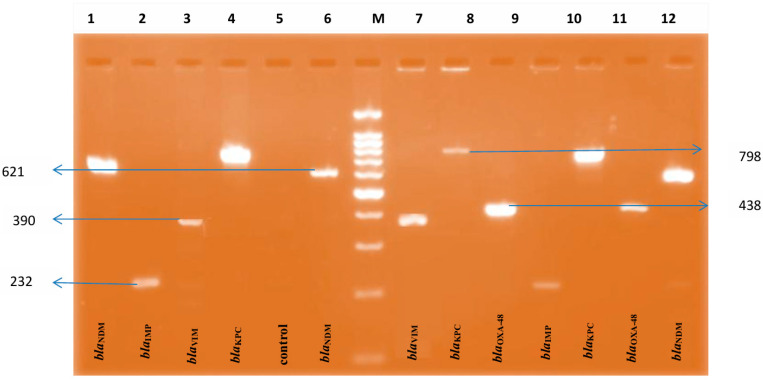 Figure 2
Peer Reviews
No public reviews on file for this paper yet. If you reviewed it on a platform where reviews are public (OpenReview, ICLR, NeurIPS, ICML), you can paste yours below so the community can read it here.
Videos
No videos yet. Explain this paper in a talk, walkthrough, or lecture? Add one.
Taxonomy
TopicsAntibiotic Resistance in Bacteria · Bacterial Identification and Susceptibility Testing · Vibrio bacteria research studies