The Unique Roles of Microbial Abundant and Rare Taxa in Regulating Pathogen Dynamics in Wastewater Bioaerosols
Zhiruo Zhang, Ying Zhang, Qiyu Zhu, Baiheng Qian, Fanyu Ge, Yang Huo

TL;DR
This study explores how common and rare microbes in wastewater bioaerosols influence pathogen spread, revealing distinct roles for each.
Contribution
The study identifies the contrasting regulatory roles of abundant and rare microbial taxa in shaping pathogen dynamics in bioaerosols.
Findings
Rare taxa showed higher diversity and deterministic community assembly.
Abundant taxa had higher spatial consistency and followed stochastic processes.
Rare taxa negatively impacted pathogen abundance, while abundant taxa had a positive effect.
Abstract
Bioaerosols emitted from wastewater treatment plants (WWTPs) are key vectors for airborne microbial transmission, yet the mechanisms by which abundant and rare microbial taxa regulate pathogen dynamics remain unclear. This study explored the ecological roles of abundant and rare taxa through a comprehensive analysis of bioaerosols from two full-scale WWTPs, integrating high-throughput sequencing of bacterial and fungal communities. Results showed that the rare taxa exhibited higher alpha diversity, and their community construction was dominated by deterministic processes. While the abundant taxa showed higher spatial homogeneity, and their distribution was more consistent with the neutral model, suggesting the dominance of stochastic processes. Network analysis revealed that rare taxa held keystone topological roles within the microbial networks. Moreover, partial least squares path…
Click any figure to enlarge with its caption.
 Figure 1
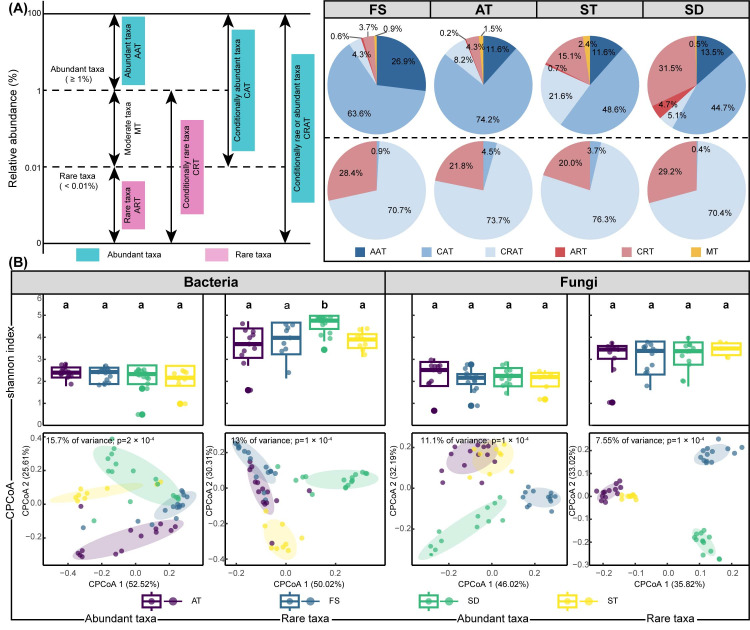 Figure 2
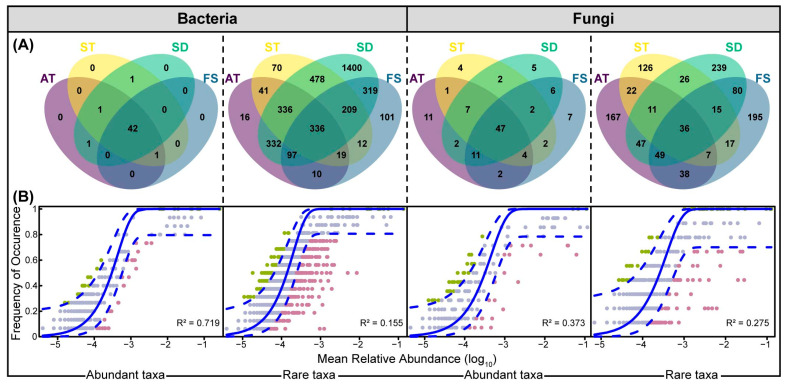 Figure 3
 Figure 4
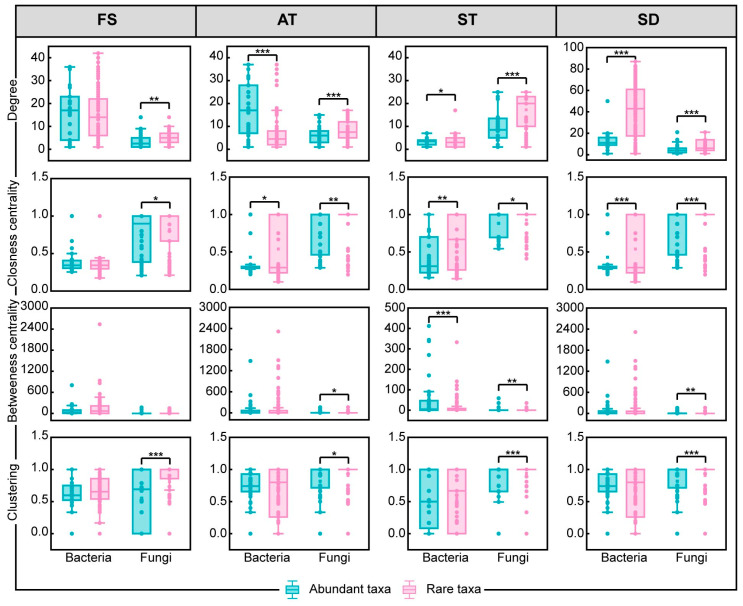 Figure 5
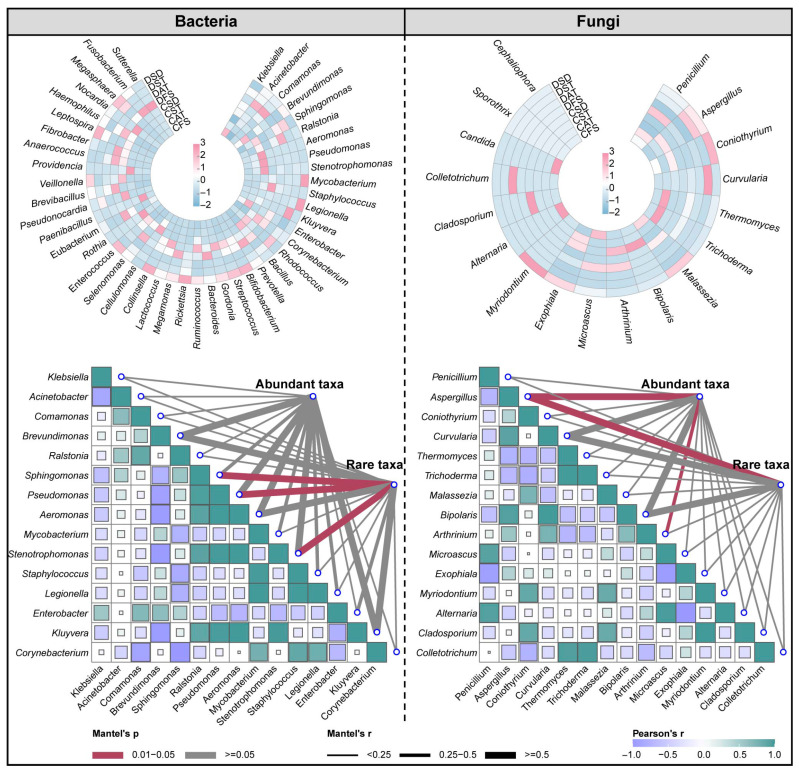 Figure 6
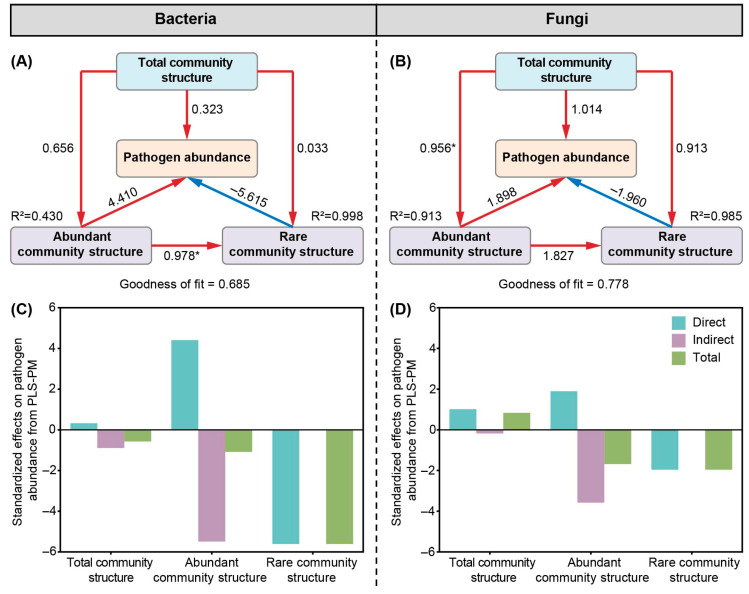 Figure 7
Peer Reviews
No public reviews on file for this paper yet. If you reviewed it on a platform where reviews are public (OpenReview, ICLR, NeurIPS, ICML), you can paste yours below so the community can read it here.
Videos
No videos yet. Explain this paper in a talk, walkthrough, or lecture? Add one.
Taxonomy
TopicsIndoor Air Quality and Microbial Exposure · Water Treatment and Disinfection · Microbial Community Ecology and Physiology