Ultraviolet light and polyethylene glycol as environmental cleaning agents to reduce contamination of Pseudogymnoascus destructans in bat hibernacula
Alyssa J. Stulberg, Tina L. Cheng, Katy L. Parise, Kaleigh J.O. Norquay, Quinn E. Fletcher, Rebecca L. Mau, Daniel L. Lindner, Jeffrey T. Foster, Barrie E. Overton, Winifred F. Frick, Craig K.R. Willis

TL;DR
This study tested ultraviolet light and polyethylene glycol to reduce a deadly fungus in bat caves, but found mixed results.
Contribution
The study evaluates two environmental treatments for reducing Pseudogymnoascus destructans in bat hibernacula.
Findings
Treatments did not consistently reduce P. destructans prevalence or load across sites.
Non-target fungi and bacteria were not negatively impacted by the treatments.
Site-specific management may be necessary due to observed among-site variation.
Abstract
Pathogens that persist in an environmental reservoir can drive host populations to extinction because host abundance does not limit pathogen survival or reproduction. Fungal pathogens are of particular conservation concern because many fungi are generalists that persist in the environment. One example is Pseudogymnoascus destructans, the causative agent of white-nose syndrome (WNS), which has caused severe declines in hibernating bat populations across North America. Treatment of environmental reservoirs could help reduce transmission of P. destructans, and thus, reduce bat population declines from WNS. We tested the efficacy of two environmental cleaning agents, ultraviolet-C radiation and polyethylene glycol, in three mines where P. destructans established an environmental reservoir and caused declines in winter colony size of hibernating bats in Ontario, Alabama, and Arkansas. We…
Genes, proteins, chemicals, diseases, species, mutations and cell lines named across the full text — each resolved to its canonical identifier and authoritative record.
Click any figure to enlarge with its caption.
 Figure 1
 Figure 2
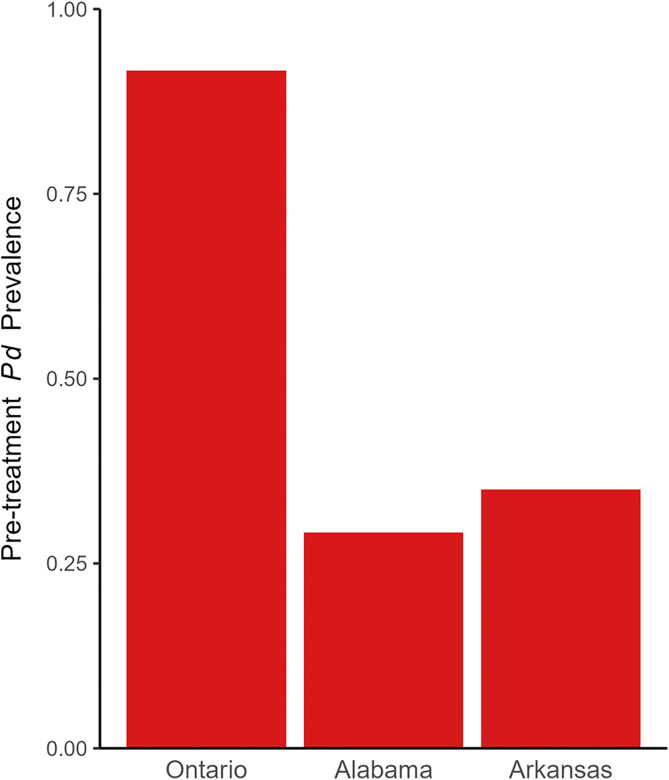 Figure 3
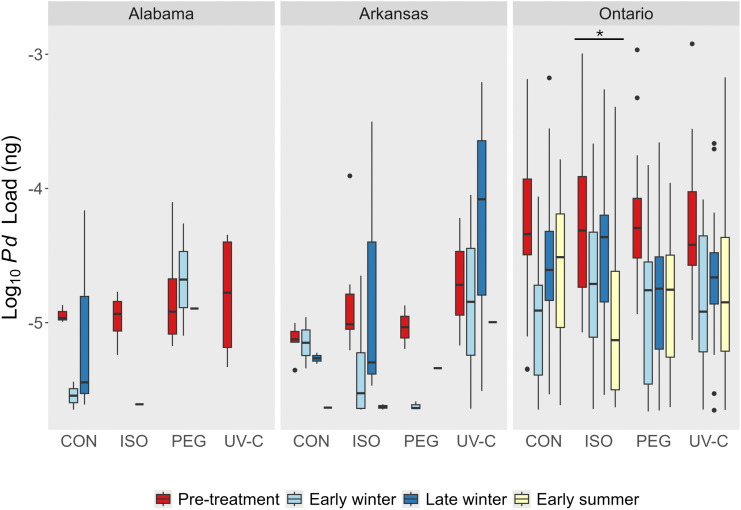 Figure 4
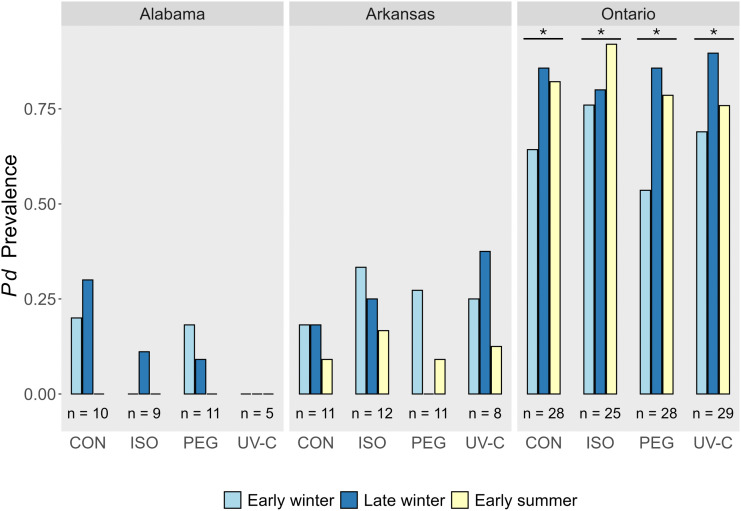 Figure 5
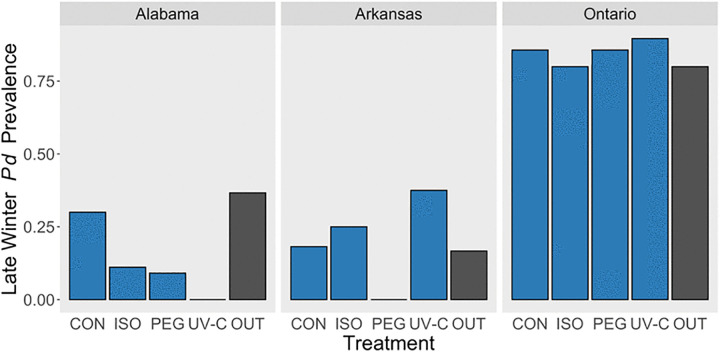 Figure 6
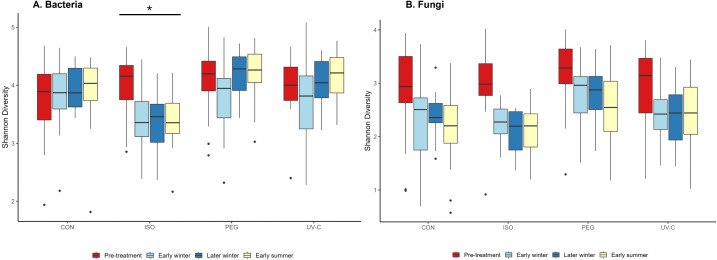 Figure 7
Peer Reviews
No public reviews on file for this paper yet. If you reviewed it on a platform where reviews are public (OpenReview, ICLR, NeurIPS, ICML), you can paste yours below so the community can read it here.
Videos
No videos yet. Explain this paper in a talk, walkthrough, or lecture? Add one.
Taxonomy
TopicsBat Biology and Ecology Studies · Rabies epidemiology and control · Animal Ecology and Behavior Studies