Effectiveness of immersive virtual reality and exercise on clinical, clinimetric and biomarker variables in rotator cuff-related shoulder pain patients: A study protocol for a multicentre randomized clinical trial (IVR- RCRSP-Rehab)
Alberto Roldán-Ruiz, Claudio Villagrán-Soto, Gabriele Bertotti, Miguel López-Moreno, Sandra Sánchez-Jorge, Vicente Fernández-Ruiz, Manuel Rodríguez-Aragón, Javier Guerra-Armas

TL;DR
This study will test if adding immersive virtual reality to exercise therapy improves outcomes for people with chronic shoulder pain linked to rotator cuff issues.
Contribution
The study introduces a novel combination of immersive virtual reality and exercise for rehabilitating chronic rotator cuff-related shoulder pain.
Findings
The trial will compare IVR plus exercise to exercise alone on clinical and biomarker outcomes.
Results may reveal how IVR influences pain, function, and biological markers in shoulder pain patients.
Findings could guide future rehabilitation strategies for musculoskeletal conditions.
Abstract
Shoulder pain is a common reason for physiotherapy consultations, and the high prevalence of rotator cuff-related shoulder pain (RCRSP) calls for novel approaches. Immersive virtual reality (IVR) offers an innovative treatment option to reduce pain, improve mobility and function in RCRSP. This study aims to compare the effectiveness of combining IVR with standard treatment versus standard treatment alone on clinical variables, clinimetric measures, and biomarkers in individuals with chronic RCRSP. A single-blind, multicentre randomized clinical trial will be conducted. Participants will be randomly assigned to two groups: the control group will undergo a three-month exercise program, while the intervention group will receive an IVR program for the first month, followed by the same exercise program for the control group during second and third months. Clinical, clinimetric, and…
Genes, proteins, chemicals, diseases, species, mutations and cell lines named across the full text — each resolved to its canonical identifier and authoritative record.
Click any figure to enlarge with its caption.
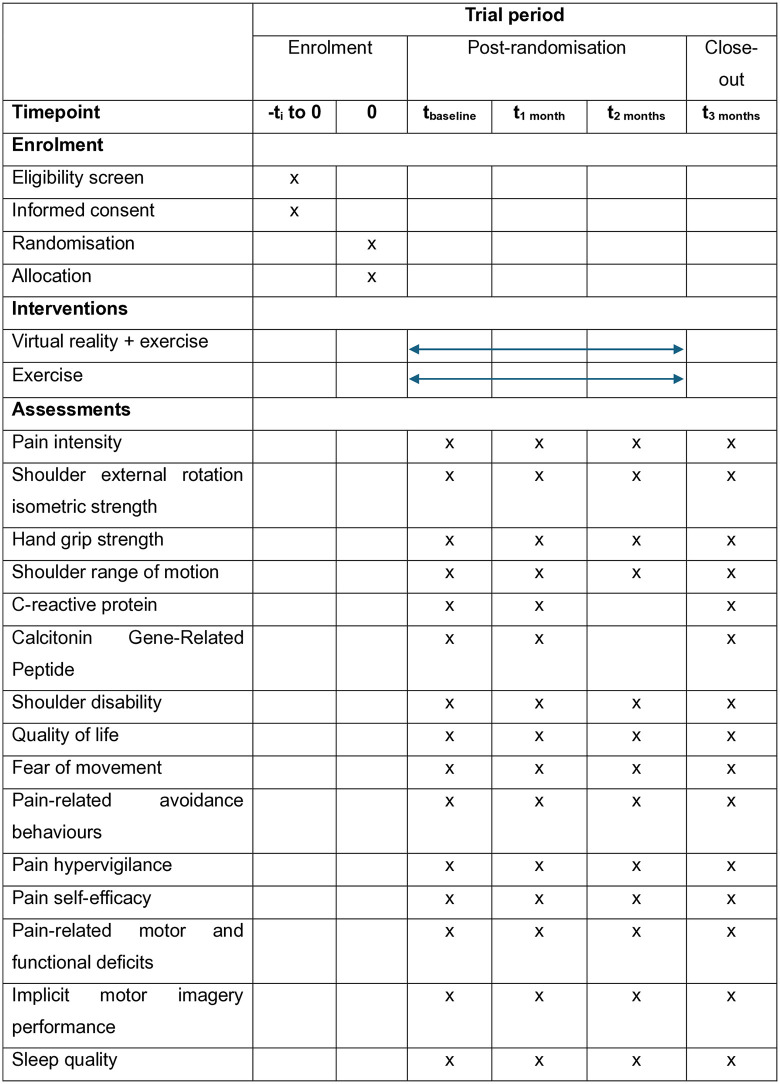 Figure 1
 Figure 2
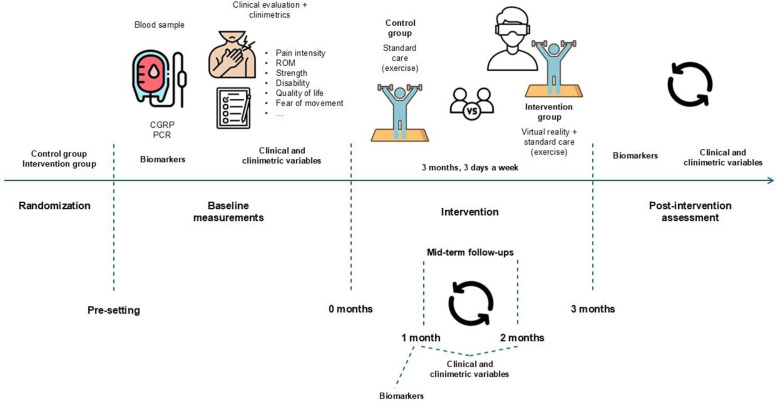 Figure 3
Peer Reviews
No public reviews on file for this paper yet. If you reviewed it on a platform where reviews are public (OpenReview, ICLR, NeurIPS, ICML), you can paste yours below so the community can read it here.
Videos
No videos yet. Explain this paper in a talk, walkthrough, or lecture? Add one.
Taxonomy
TopicsShoulder Injury and Treatment · Pediatric Pain Management Techniques · Anesthesia and Pain Management