Nutrient gaps are prevalent among women experiencing infertility, a cross-sectional analysis of the National Health and Nutrition Examination Survey (NHANES), 2013–2020
Rachel A. Murphy, Carroll A. Reider, Ryan W. Grant, Susan Hazels Mitmesser

TL;DR
Women with infertility have lower intakes of key nutrients like vitamins A, E, and K, suggesting diet may play a role in reproductive health.
Contribution
This study identifies specific nutrient gaps in women with infertility using a large national dataset.
Findings
Women with infertility had significantly lower intakes of vitamins A, E, K, and lutein+zeaxanthin compared to those without infertility.
Over 50% of infertile women were below the EAR/AI for vitamins A, C, E, and minerals like magnesium and potassium.
Nutrient inadequacies were more pronounced in women aged 35–44 years with infertility.
Abstract
Adequate nutrient intake is important for supporting reproductive health. Few studies have examined the role of nutrients for fertility among women, resulting in a critical evidence gap. The aim of this study was to explore the usual intake and prevalence of nutrient inadequacies from foods only and foods plus dietary supplements among women of child bearing age with and without infertility. This cross-sectional study used data from the National Health and Nutrition Examination Survey (NHANES), a national survey in the United States. Participants included women aged 18–44 years from 2013–2020 with or without infertility (difficulty trying to conceive for at least one-year). The mean usual intakes and prevalence of inadequacy (% < EAR/AI) of key nutrients- vitamins A, B1, B2, niacin, B6, B12, C, D, E, K, lycopene, lutein + zeaxanthin, folate, choline, zinc, selenium, iron, calcium,…
Genes, proteins, chemicals, diseases, species, mutations and cell lines named across the full text — each resolved to its canonical identifier and authoritative record.
Click any figure to enlarge with its caption.
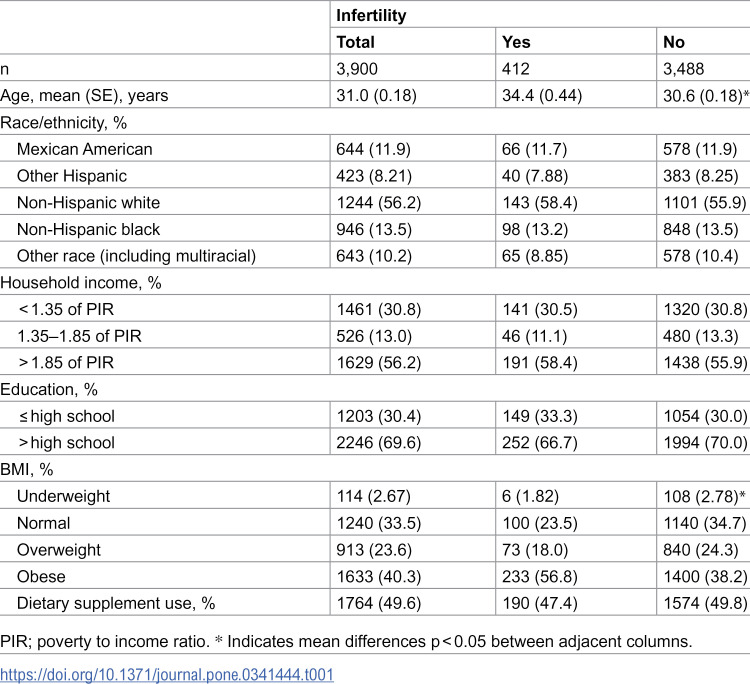 Figure 1
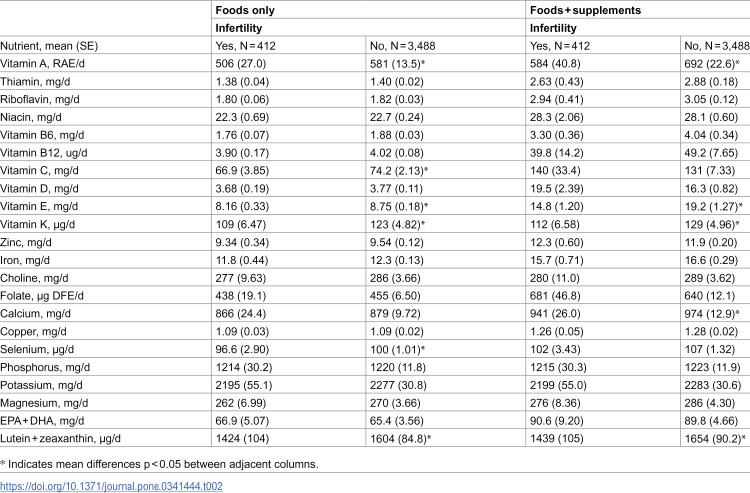 Figure 2
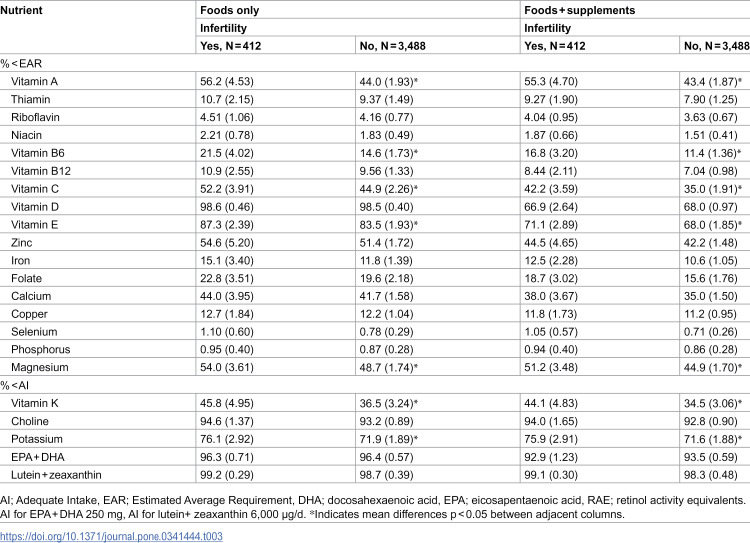 Figure 3
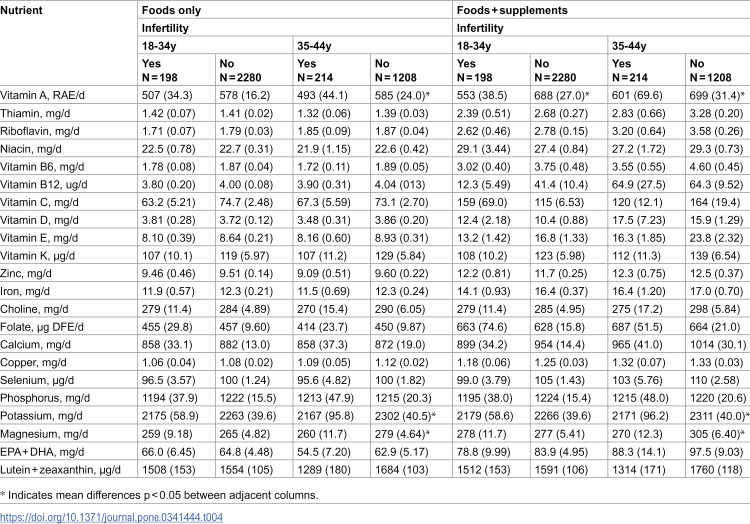 Figure 4
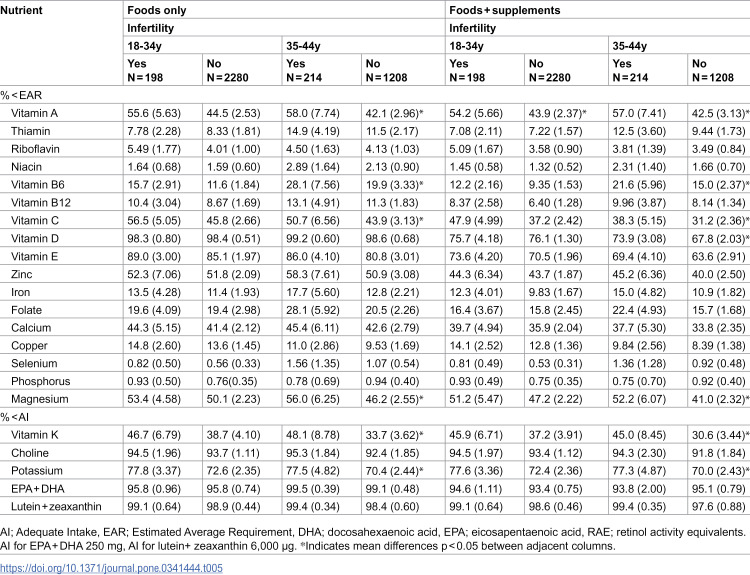 Figure 5
Peer Reviews
No public reviews on file for this paper yet. If you reviewed it on a platform where reviews are public (OpenReview, ICLR, NeurIPS, ICML), you can paste yours below so the community can read it here.
Videos
No videos yet. Explain this paper in a talk, walkthrough, or lecture? Add one.
Taxonomy
TopicsOvarian function and disorders · Sperm and Testicular Function · Reproductive Biology and Fertility