Mating suppresses sperm-dependent male avoidance in C. elegans hermaphrodites
Satoshi Suo, Myeongwoo Lee, Myeongwoo Lee, Myeongwoo Lee

TL;DR
This study explores how C. elegans hermaphrodites avoid males, and how this behavior changes after mating or when self-sperm is depleted.
Contribution
The study reveals that male avoidance in C. elegans hermaphrodites is regulated by the presence of self-sperm and is suppressed after mating.
Findings
Wildtype C. elegans hermaphrodites increase locomotion speed when in contact with males, indicating active avoidance.
Sperm-deficient or aged hermaphrodites, and gonochoristic C. elegans species, show reduced or no male avoidance.
Previously mated hermaphrodites exhibit reduced male avoidance, likely due to male sperm outcompeting self-sperm.
Abstract
In many sexually reproducing animals, females incur higher reproductive costs and therefore tend to be more selective in accepting mates. In Caenorhabditis elegans, self-fertilizing hermaphrodites produce a limited number of self-sperm, and previous studies have suggested that hermaphrodites avoid males. However, the behavioral dynamics of this male-avoidance behavior remain largely unexplored and its underlying mechanisms are not well-understood. Here, I quantitatively analyzed male-avoidance behavior in C. elegans hermaphrodites by measuring locomotor speed in the presence of males. Automated image analysis revealed that wildtype hermaphrodites increased speed when in contact with males, indicating active avoidance behavior. In contrast, avoidance was significantly reduced in sperm-deficient mutant hermaphrodites and aged hermaphrodites that had exhausted self-sperm. Similarly,…
Genes, proteins, chemicals, diseases, species, mutations and cell lines named across the full text — each resolved to its canonical identifier and authoritative record.
Click any figure to enlarge with its caption.
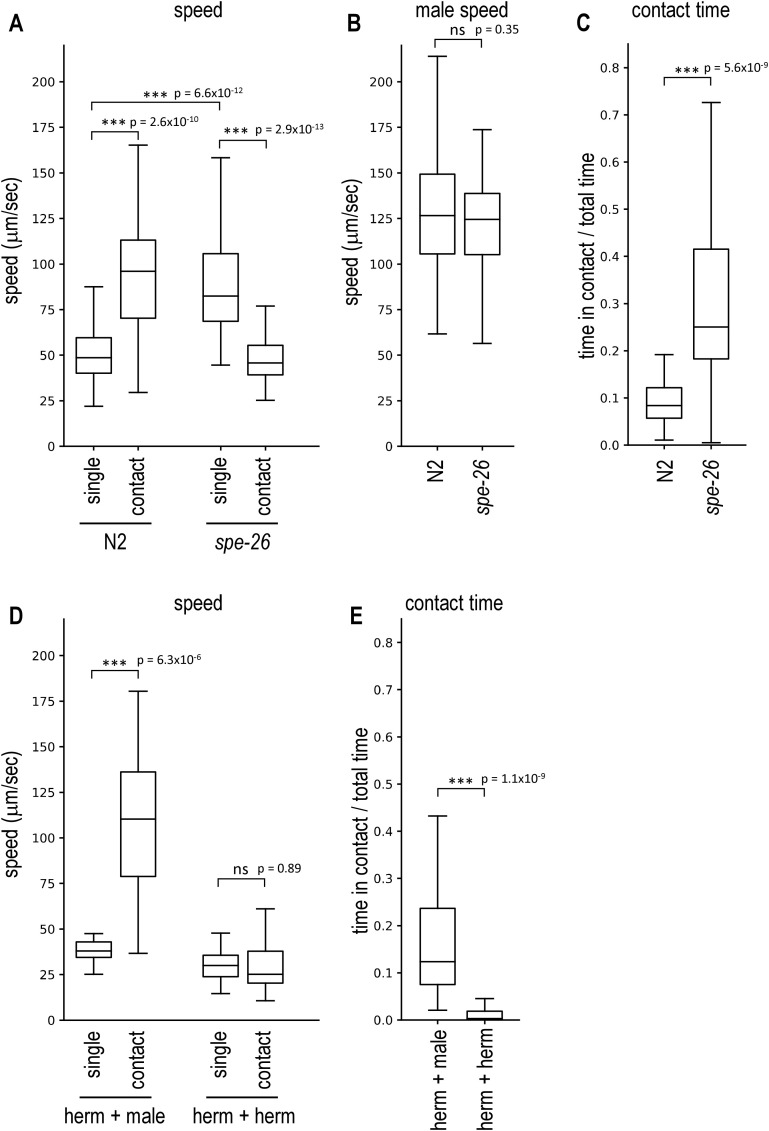 Figure 1
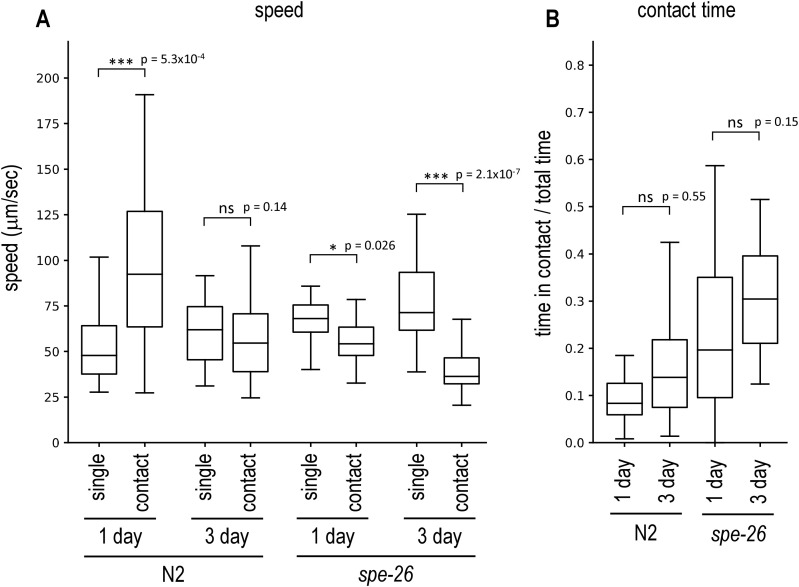 Figure 2
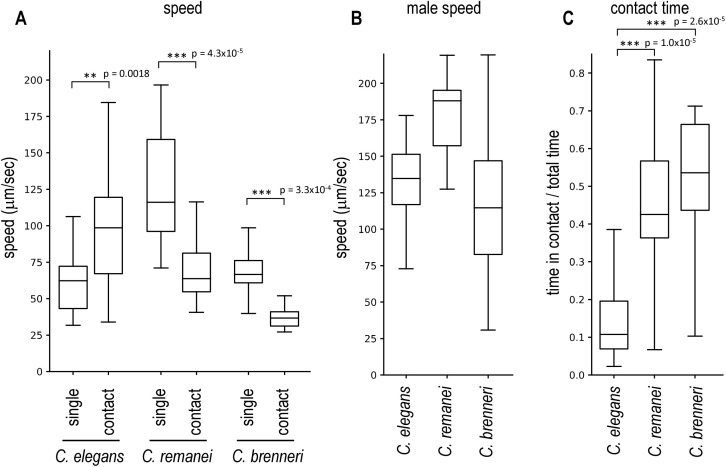 Figure 3
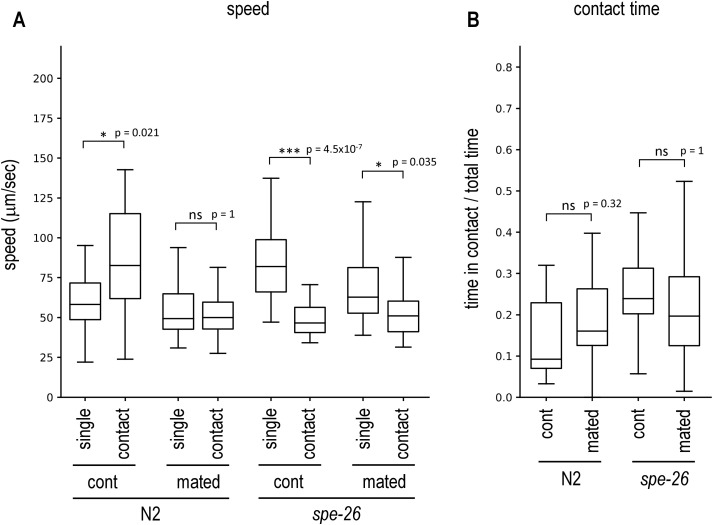 Figure 4
Peer Reviews
No public reviews on file for this paper yet. If you reviewed it on a platform where reviews are public (OpenReview, ICLR, NeurIPS, ICML), you can paste yours below so the community can read it here.
Videos
No videos yet. Explain this paper in a talk, walkthrough, or lecture? Add one.
Taxonomy
TopicsGenetics, Aging, and Longevity in Model Organisms · Evolution and Genetic Dynamics · Evolutionary Game Theory and Cooperation