Illness explanatory models of depression among young people in low-resource settings: A qualitative study in Ghana and Zimbabwe
Denford Gudyanga, Rebecca Jopling, Moses Kumwenda, Franklin Glozah, Rufaro Mushonga, Edith Dambayi, Christopher Ayuure, Suzanne Dodd, Dzifa Attah, Arnold Maramba, Maria Anyorikeya, Lucy Owusu, Gloria Tawiah, Kenneth Adde, Fabian Achana, Raymond Aborigio, Andrea Danese

TL;DR
This study explores how young people in Ghana and Zimbabwe understand and explain depression, highlighting the role of cultural beliefs and socio-economic factors in shaping their help-seeking behaviors.
Contribution
The study provides a culturally grounded analysis of depression explanatory models among young people in low-resource settings, integrating emic and etic perspectives.
Findings
Young people's understanding of depression is influenced by local idioms, spiritual beliefs, and socio-economic stressors.
Help-seeking behaviors often involve spiritual leaders and school-based resources before formal healthcare.
Integrating traditional beliefs with evidence-based approaches is critical for effective depression interventions.
Abstract
Depression among young people is a global public health issue, particularly common in low-resource settings like Ghana and Zimbabwe. Affecting around 10% of young people, depression often emerges between ages 15 and 24 and remains largely untreated due to stigma, limited resources, and cultural beliefs. This study explored the explanatory models of depression among Ghanaian and Zimbabwean young people, from the perspectives of young people, caregivers, healthcare workers, teachers, and community leaders, including policymakers, traditional and faith-based healers, to inform culturally relevant interventions. Qualitative interviews were conducted in Ghana and Zimbabwe. Using purposive sampling, 133 semi-structured interviews and six focus group discussions were conducted with 53 participants, including young people aged 15–24 with lived experience of depression, high school students,…
Genes, proteins, chemicals, diseases, species, mutations and cell lines named across the full text — each resolved to its canonical identifier and authoritative record.
Click any figure to enlarge with its caption.
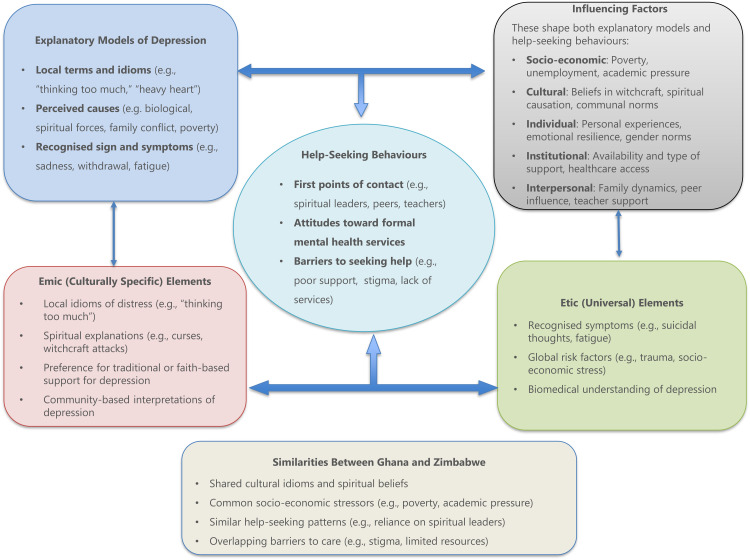 Figure 1
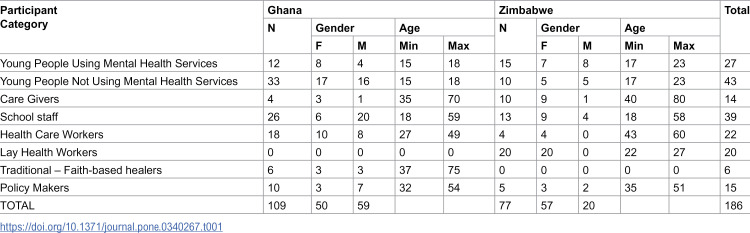 Figure 2
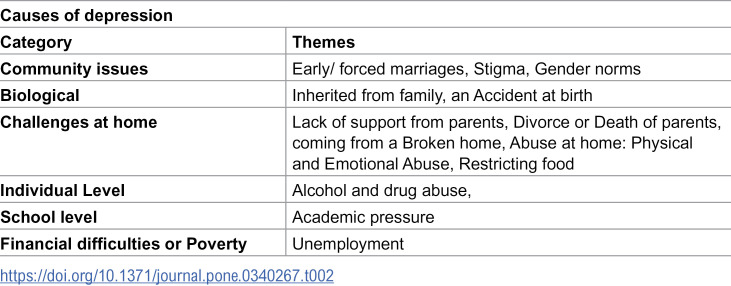 Figure 3
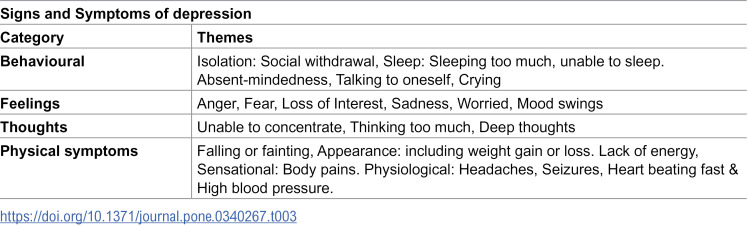 Figure 4
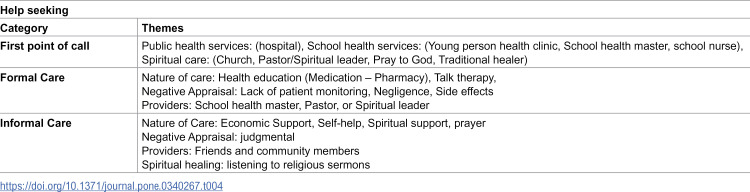 Figure 5
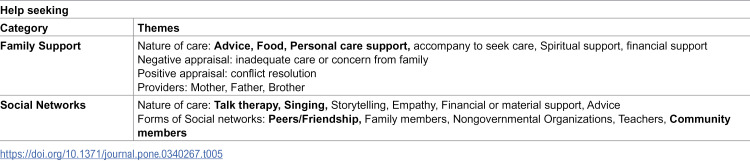 Figure 6
Peer Reviews
No public reviews on file for this paper yet. If you reviewed it on a platform where reviews are public (OpenReview, ICLR, NeurIPS, ICML), you can paste yours below so the community can read it here.
Videos
No videos yet. Explain this paper in a talk, walkthrough, or lecture? Add one.
Taxonomy
TopicsMental Health Treatment and Access · Child and Adolescent Psychosocial and Emotional Development · Adolescent Sexual and Reproductive Health