Protective Effects of Chitosan and Rosuvastatin on Renal Structure and Lipid Metabolism in Rabbits Fed a High-Fat Diet
Carlos Alberto Araujo Chagas, Lucas Alves Sarmento Pires, Beatriz Correa Rodriguez, Bruna Fernanda De Souza Ribeiro, Albino Fonseca Junior, Marcio Antonio Babinski

TL;DR
This study found that both chitosan and rosuvastatin helped improve kidney health and lipid levels in rabbits on a high-fat diet, with rosuvastatin being more effective.
Contribution
The study compares the protective effects of chitosan and rosuvastatin on kidney structure and lipid metabolism in rabbits fed a high-fat diet.
Findings
Rosuvastatin significantly reduced total cholesterol and triglyceride levels in hyperlipidic rabbits.
Both chitosan and rosuvastatin reduced creatinine and glucose levels compared to the hyperlipidic group.
Treatment with chitosan or rosuvastatin ameliorated kidney morphological changes caused by a high-fat diet.
Abstract
Background and Objectives: This study compared the effects of rosuvastatin and chitosan on the kidneys of rabbits fed a high-fat diet. Materials and Methods: In total, 28 New Zealand White rabbits (Oryctolagus cuniculus) were randomly divided into four groups of 7 rabbits: a control group (CG) fed a regular diet; a hyperlipidic group (HG) fed the regular diet and 20 mL of egg yolk daily; and the third (RG) and fourth (ChiG) groups fed the HG diet plus rosuvastatin and chitosan, respectively. Cholesterol, triglyceride, glucose, creatinine, and urea levels were analyzed. After kidney excision, glomerular height and length were analyzed and stereological analysis was conducted. The Kruskal–Wallis and Dunn multiple comparison tests were used for statistical analysis, and a p value of <0.05 was considered significant. Results: The chicken egg yolk diet was successful in inducing a…
Genes, proteins, chemicals, diseases, species, mutations and cell lines named across the full text — each resolved to its canonical identifier and authoritative record.
Click any figure to enlarge with its caption.
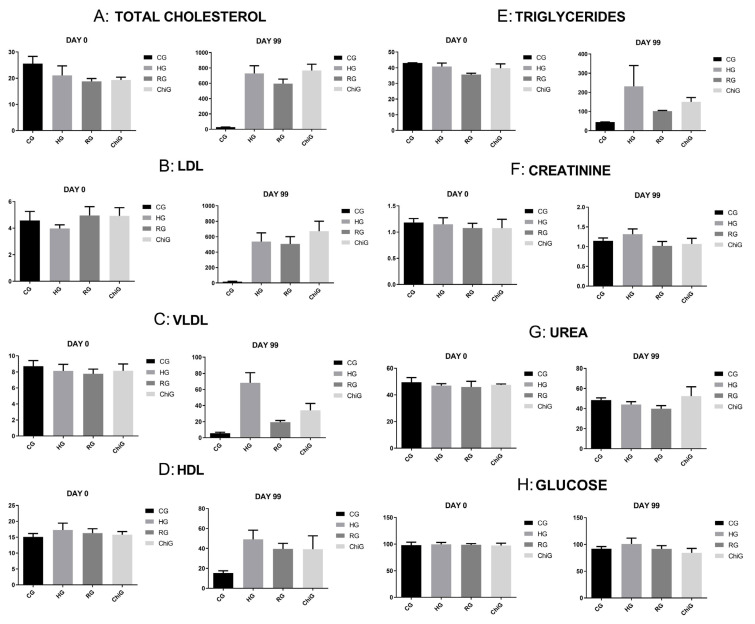 Figure 1
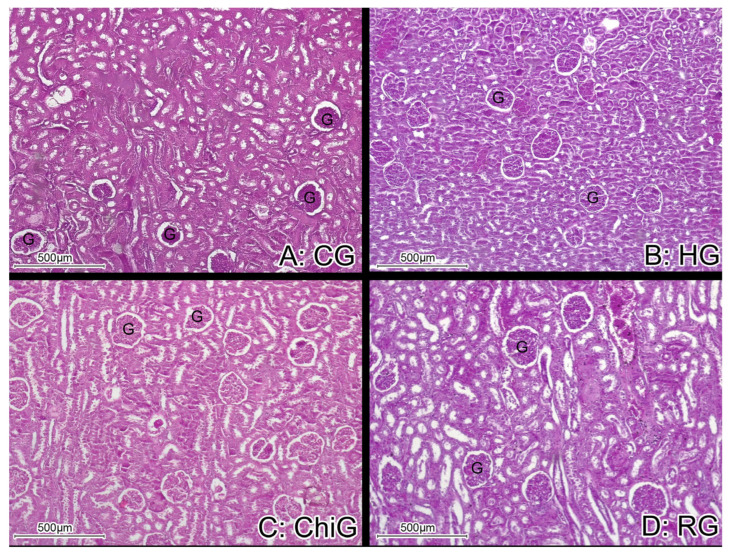 Figure 2
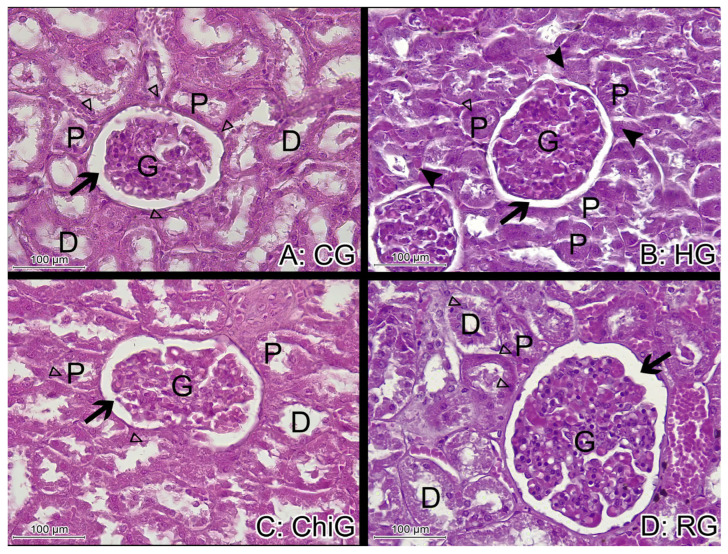 Figure 3
Peer Reviews
No public reviews on file for this paper yet. If you reviewed it on a platform where reviews are public (OpenReview, ICLR, NeurIPS, ICML), you can paste yours below so the community can read it here.
Videos
No videos yet. Explain this paper in a talk, walkthrough, or lecture? Add one.
Taxonomy
TopicsAnimal Nutrition and Physiology · Lipoproteins and Cardiovascular Health · Peroxisome Proliferator-Activated Receptors