Symbiosis Among Naematelia aurantialba, Stereum hirsutum, and Their Associated Microbiome in the Composition of a Cultivated Mushroom Complex JinEr
Kaixuan Zhang, Yingli Cai, Xiaofei Shi, Zhuyue Yan, Qiuchen Huang, Jesus Perez-Moreno, Dong Liu, Zhenyan Yang, Chengmo Yang, Fuqiang Yu, Wei Liu

TL;DR
This study explores the complex symbiotic relationships between two fungi and their microbiome in the JinEr mushroom, revealing key bacterial players and their potential roles in cultivation.
Contribution
The study identifies specific bacterial genera and their interactions with the JinEr mushroom fungi, establishing a culture repository for future cultivation improvements.
Findings
N. aurantialba constitutes less than 20% of the fungal biomass in JinEr basidiomata, with S. hirsutum making up the majority.
Delftia and Sphingomonas are the dominant bacterial genera in the JinEr mushroom, comprising 85.42% of prokaryotic sequences.
Eight bacterial strains showed compatible growth with both host fungi, while one Enterobacteriaceae strain was antagonistic.
Abstract
The JinEr mushroom (“Golden Ear”), a globally rare edible and medicinal macrofungus, comprises a symbiotic complex formed by the symbiotic association of Naematelia aurantialba (Tremellomycetes) and Stereum hirsutum (Agaricomycetes). However, the interactions between these fungi and their associated microbiome remain poorly understood. This study employed high-throughput amplicon sequencing, in situ microbial isolation and culture, and microbial confrontation assays to analyze microbial diversity, community structure, and potential functional roles of the endomycotic bacterial community within JinEr basidiomata and its cultivation substrate. Molecular analysis confirmed the heterogenous composition of the basidiomata, revealing N. aurantialba constitutes less than 20% of the fungal biomass, while S. hirsutum predominates, accounting for approximately 80%. Endomycotic fungi accounted for…
Genes, proteins, chemicals, diseases, species, mutations and cell lines named across the full text — each resolved to its canonical identifier and authoritative record.
Click any figure to enlarge with its caption.
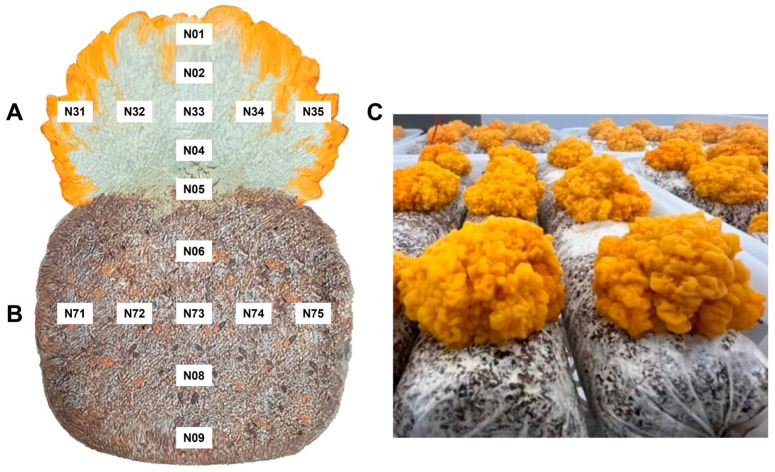 Figure 1
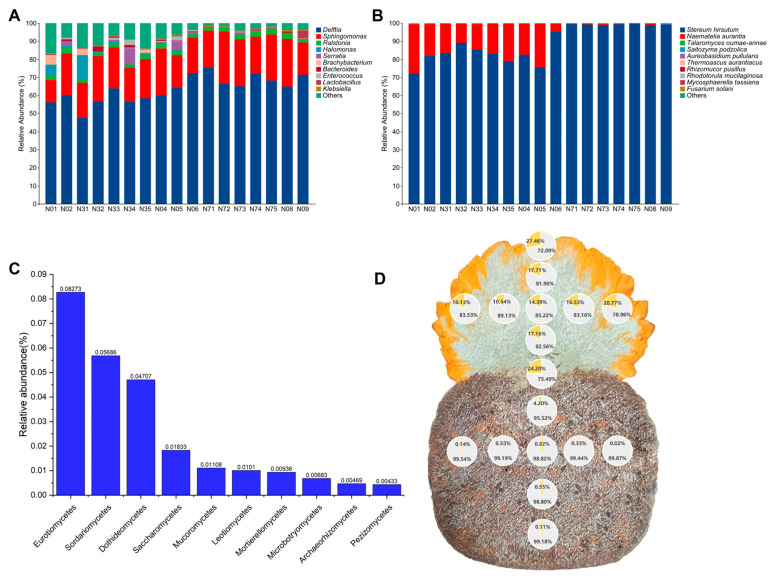 Figure 2
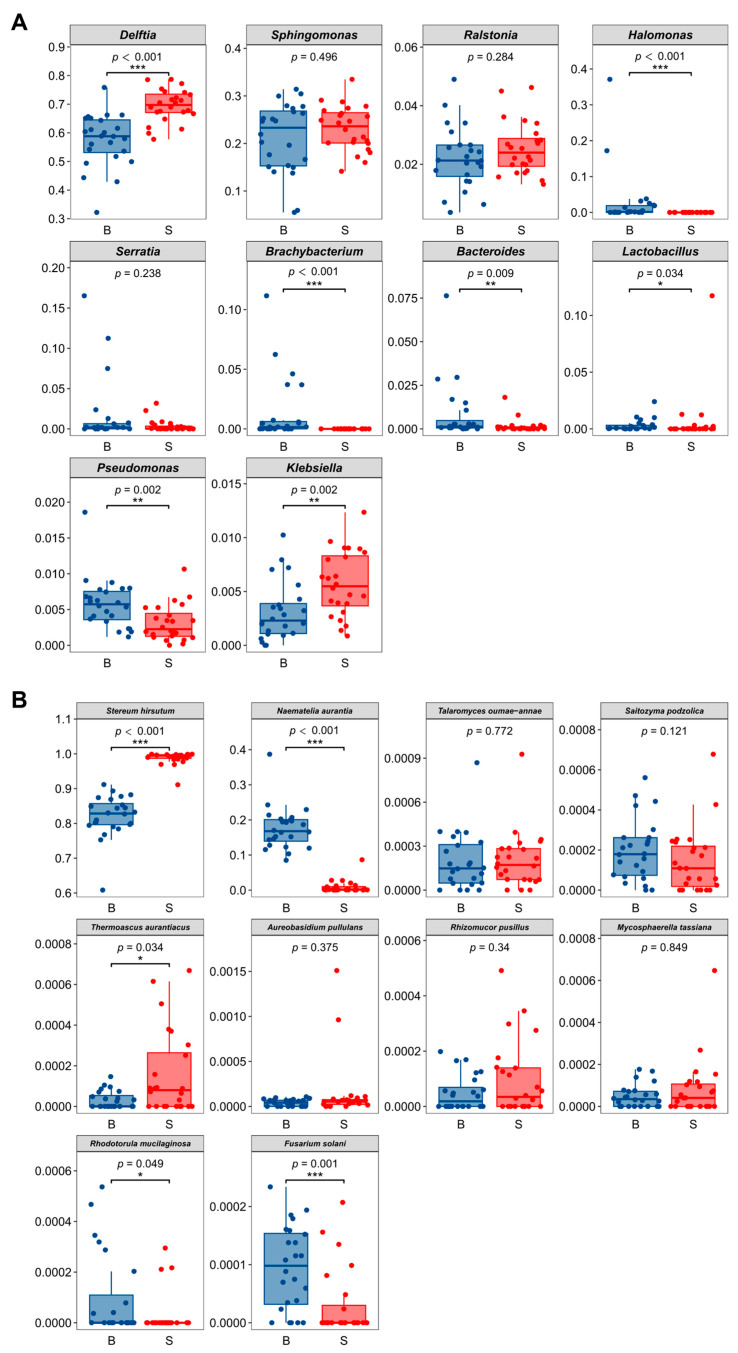 Figure 3
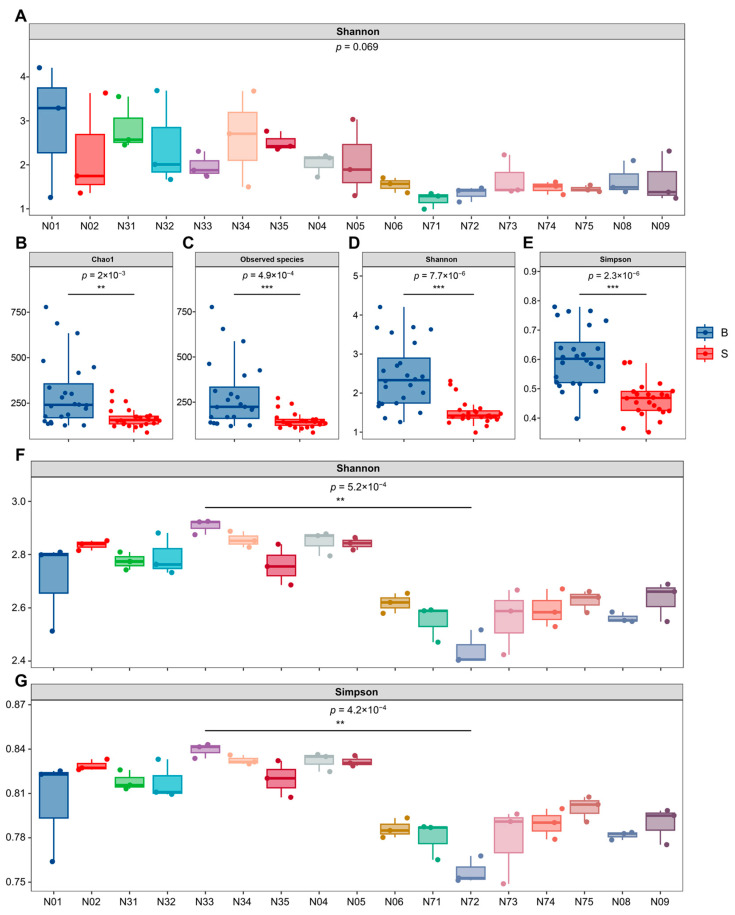 Figure 4
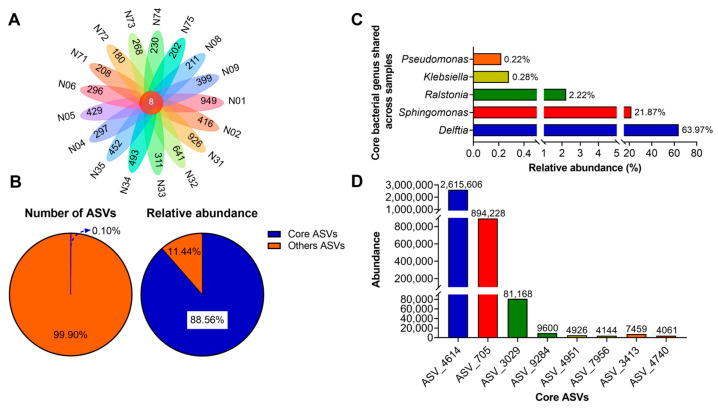 Figure 5
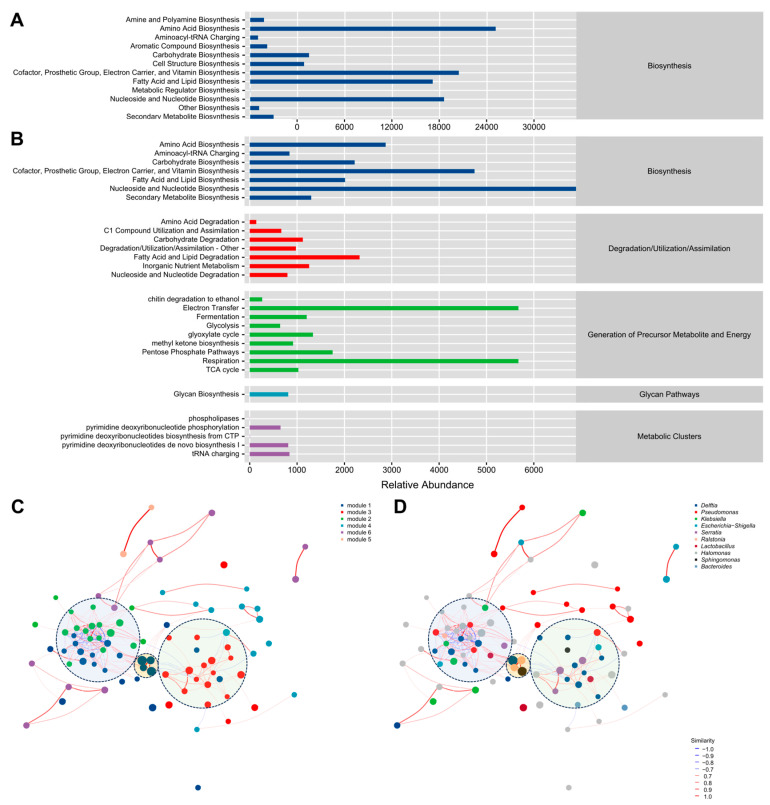 Figure 6
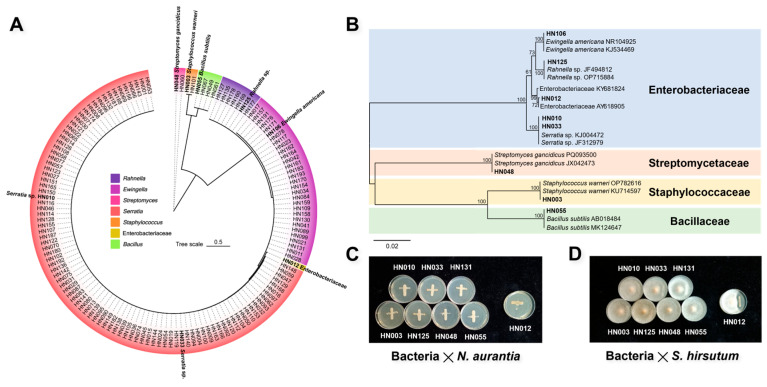 Figure 7
Peer Reviews
No public reviews on file for this paper yet. If you reviewed it on a platform where reviews are public (OpenReview, ICLR, NeurIPS, ICML), you can paste yours below so the community can read it here.
Videos
No videos yet. Explain this paper in a talk, walkthrough, or lecture? Add one.
Taxonomy
TopicsFungal Biology and Applications · Mycorrhizal Fungi and Plant Interactions · Fungal and yeast genetics research