Systematic Review: Exploring Inter-Species Variability in Diabetes Mellitus for Translational Medicine
Luminița Diana Hrițcu, Vasile Boghian, Geta Pavel, Teodor Daniel Hrițcu, Florin Nechifor, Alexandru Spataru, Alexandra Andreea Cherșunaru, Alexandru Munteanu, Manuela Ciocoiu, Mihaela-Claudia Spataru

TL;DR
This systematic review compares how diabetes differs across species to improve the translation of research findings to human medicine.
Contribution
The study provides a comprehensive comparison of diabetes features across species to guide translational research model selection.
Findings
Spontaneous diabetes in dogs closely resembles human type 1 diabetes.
Feline obesity-associated diabetes mirrors key features of human type 2 diabetes.
Non-human primates show the highest physiological similarity to humans for diabetes research.
Abstract
Interspecies variability in diabetes mellitus (DM) represents a critical challenge for translational medicine, as metabolic pathways, pancreatic architecture, and therapeutic responses differ substantially across animal models. This systematic review, conducted according to PRISMA 2020 guidelines, synthesized evidence from 86 eligible studies published between 2001 and 2025. Comparative data from rodents, dogs, cats, pigs, non-human primates, and humans were analyzed to identify species-specific patterns in insulin secretion, insulin resistance (IR), β-cell dysfunction, microbiota–metabolism interactions, and susceptibility to diabetic complications. Results indicate that spontaneous diabetes in dogs closely mirrors human type 1 diabetes (T1DM), whereas feline obesity-associated diabetes reflects key features of human type 2 diabetes (T2DM). Rodent models remain essential for…
Genes, proteins, chemicals, diseases, species, mutations and cell lines named across the full text — each resolved to its canonical identifier and authoritative record.
Click any figure to enlarge with its caption.
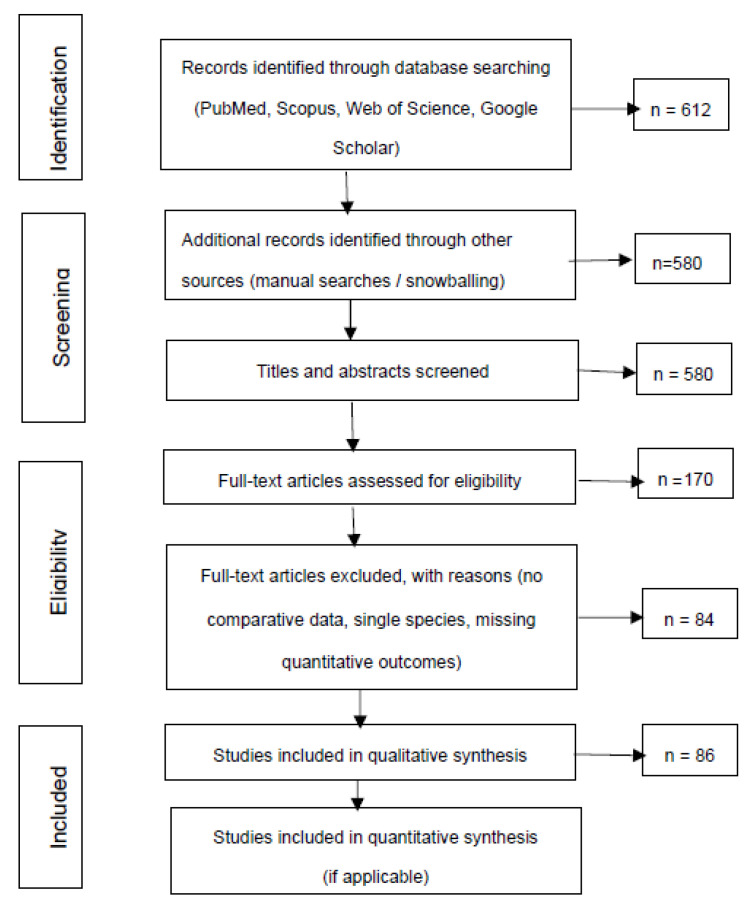 Figure 1
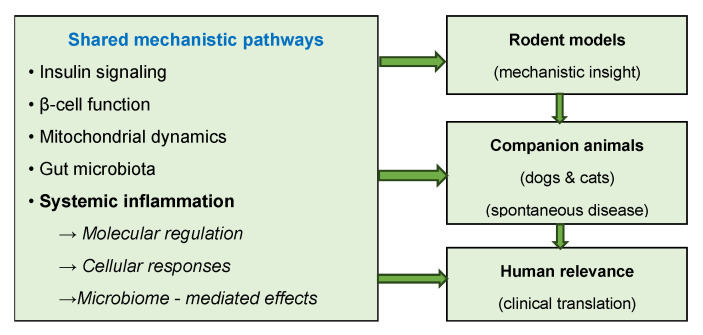 Figure 2
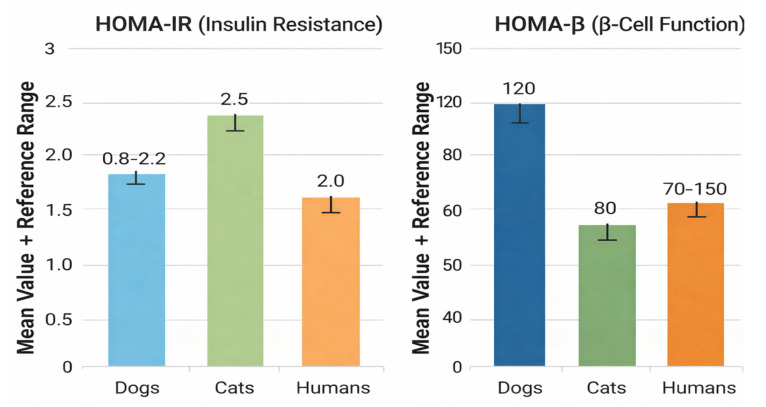 Figure 3
 Figure 4
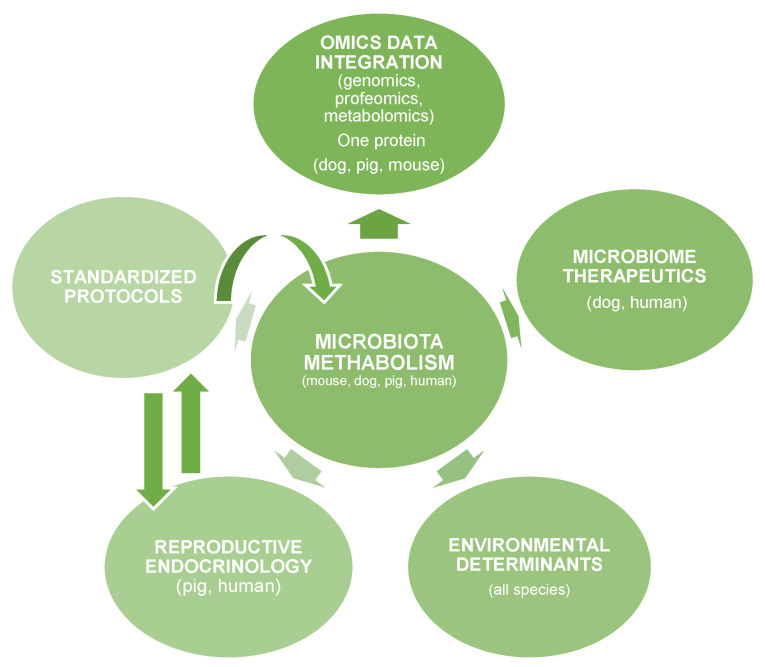 Figure 5
Peer Reviews
No public reviews on file for this paper yet. If you reviewed it on a platform where reviews are public (OpenReview, ICLR, NeurIPS, ICML), you can paste yours below so the community can read it here.
Videos
No videos yet. Explain this paper in a talk, walkthrough, or lecture? Add one.
Taxonomy
TopicsPancreatic function and diabetes · Diabetes and associated disorders · Natural Antidiabetic Agents Studies