Comparison of Clinical Characteristics Between Hereditary Angioedema Patients Aged 65 Years and Older and Those Under 65: A Perspective on Elderly Patients
Gülseren Tuncay, Ebru Damadoglu, Gül Karakaya, Ali Fuat Kalyoncu

TL;DR
This study compares the clinical features of older and younger patients with hereditary angioedema, highlighting differences in diagnosis, treatment, and disease control.
Contribution
The study provides new insights into the clinical management and disease expression of hereditary angioedema in elderly patients compared to younger individuals.
Findings
Elderly patients had a higher median age at diagnosis and a significant delay in diagnosis.
Elderly patients had lower angioedema control in the last three months despite similar annual attack rates.
Short-term prophylaxis use was higher in elderly patients compared to younger ones.
Abstract
Background: This study aimed to comprehensively define the clinical profile of elderly patients with hereditary angioedema (HAE) caused by C1 esterase inhibitor (C1INH) deficiency and/or dysfunction (HAE-C1INH). Furthermore, it sought to reveal age-related differences in disease expression and management by comparing these patients with their younger counterparts. Methods: In this retrospective study, seventy-six patients were included. All patients had been diagnosed with HAE-C1INH. Results: A total of 9 (12%) patients were ≥65 years, 7 (77%) of whom were female. The median age at the time of diagnosis was higher in the elderly group, whereas the median age at the first symptom was similar. There was a significant delay in diagnosis time in the elderly group. Hypertension was the most frequent comorbidity among elderly patients. The median number of angioedema attacks in the last year…
Genes, proteins, chemicals, diseases, species, mutations and cell lines named across the full text — each resolved to its canonical identifier and authoritative record.
Click any figure to enlarge with its caption.
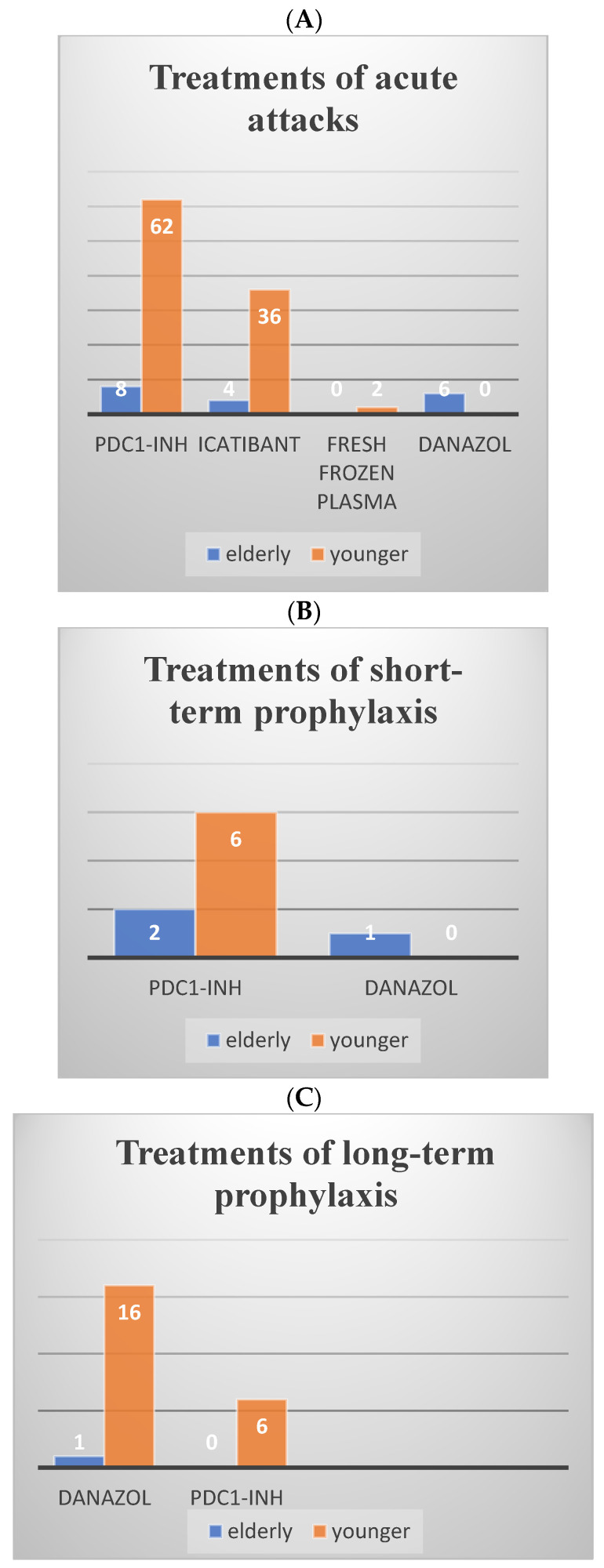 Figure 1
Peer Reviews
No public reviews on file for this paper yet. If you reviewed it on a platform where reviews are public (OpenReview, ICLR, NeurIPS, ICML), you can paste yours below so the community can read it here.
Videos
No videos yet. Explain this paper in a talk, walkthrough, or lecture? Add one.
Taxonomy
TopicsCoagulation, Bradykinin, Polyphosphates, and Angioedema · Hemophilia Treatment and Research · Complement system in diseases