The Influence of Sunflower Seed Hull Content on the Mechanical, Thermal, and Functional Properties of PHBV-Based Biocomposites
Grzegorz Janowski, Marta Wójcik, Irena Krešić, Wiesław Frącz, Łukasz Bąk, Ivan Gajdoš, Emil Spišák

TL;DR
This study explores using sunflower seed hulls in biocomposites to improve mechanical and thermal properties for technical applications.
Contribution
The novel use of sunflower seed hulls as a filler in PHBV biocomposites is demonstrated, showing enhanced dimensional stability and stiffness.
Findings
Adding 45 wt% SSH increased the tensile modulus to 4.5 GPa, significantly improving stiffness.
High SSH content reduced crystallization during cooling due to the confinement effect.
Biocomposites with 15–30 wt% SSH showed the best balance of stiffness, hardness, and dimensional accuracy.
Abstract
This paper presents the potential use of sunflower seed hulls (SSH) as a sustainable filler for poly(3-hydroxybutyrate-co-3-hydroxyvalerate) (PHBV) biocomposites. Ground SSH were incorporated into the PHBV matrix at loadings of 15, 30, and 45 wt% via extrusion and injection molding. The Fourier Transform Infrared Spectroscopy (FTIR) analysis indicated the presence of possible interactions between the filler and the matrix. Mechanical testing revealed a significant increase in stiffness, with the tensile modulus increasing from 2.6 GPa for pure PHBV to approximately 4.5 GPa for the composite containing 45 wt% SSH. However, the tensile strength decreased by approximately 10–40%, while elongation at break dropped to 1.0–1.5%, depending on the SSH dosage, respectively. The thermal analysis indicated that high filler contents suppress crystallization during cooling under laboratory…
Genes, proteins, chemicals, diseases, species, mutations and cell lines named across the full text — each resolved to its canonical identifier and authoritative record.
Click any figure to enlarge with its caption.
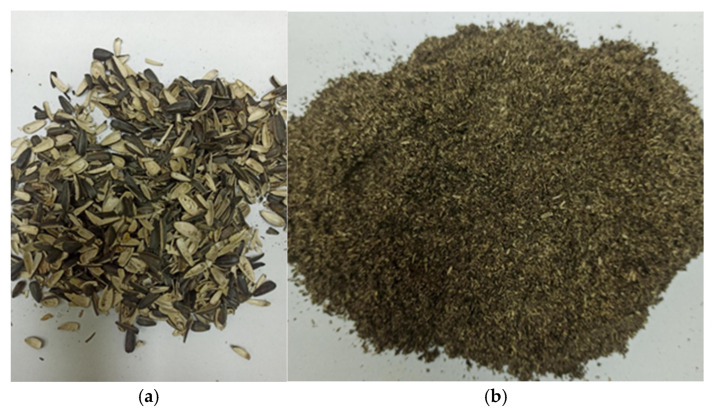 Figure 1
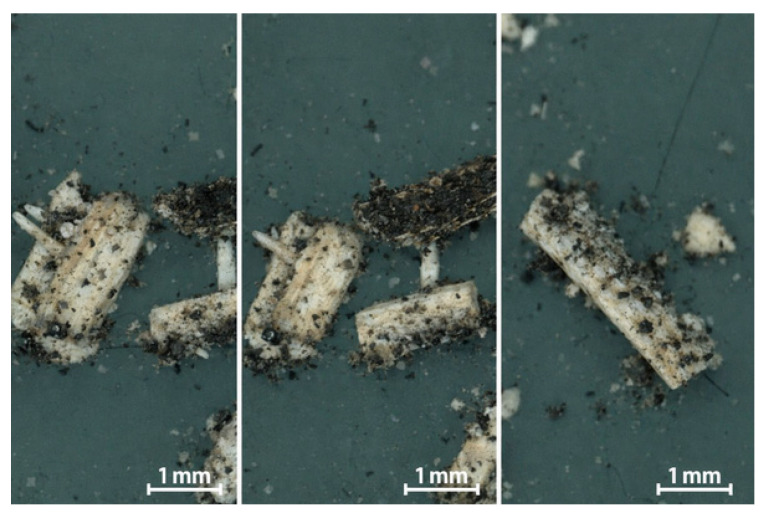 Figure 2
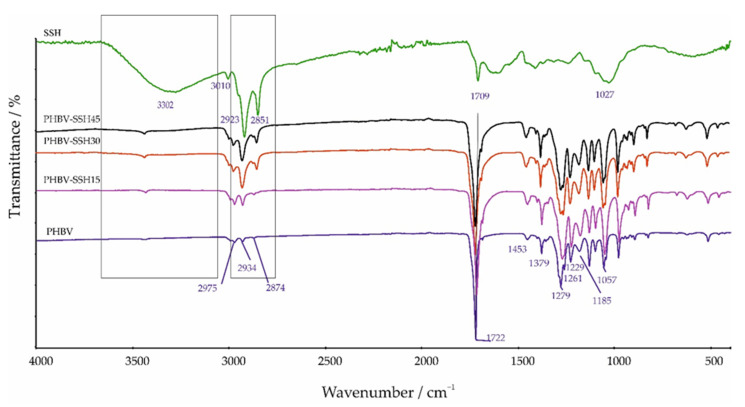 Figure 3
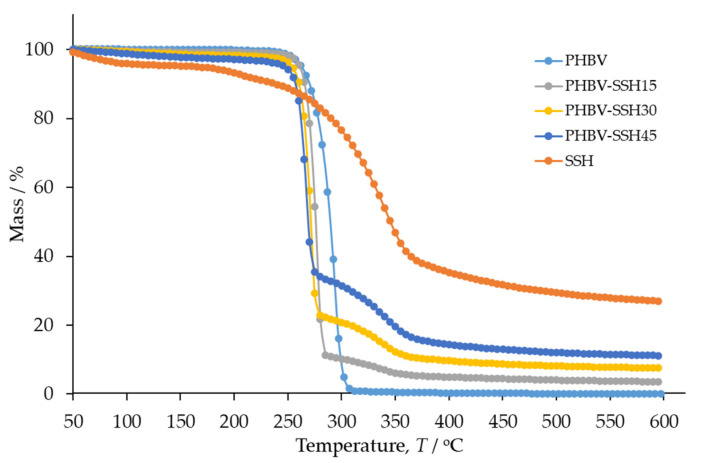 Figure 4
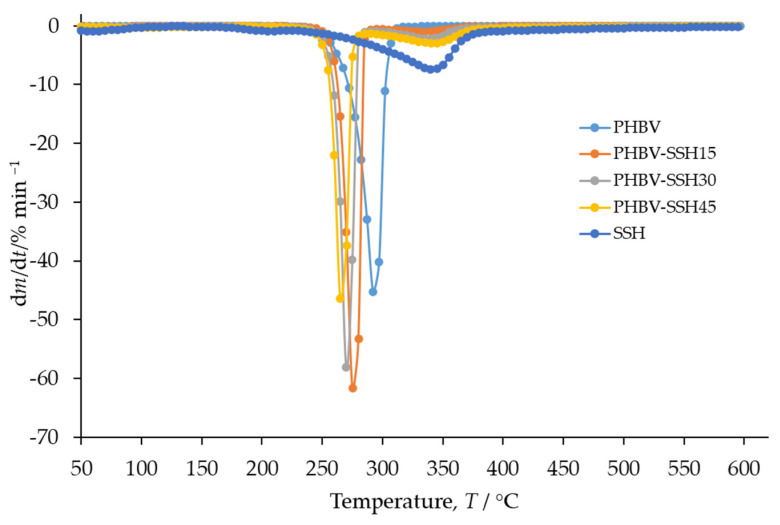 Figure 5
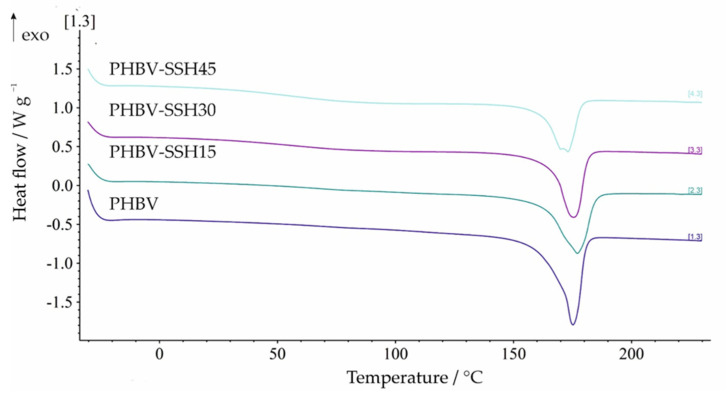 Figure 6
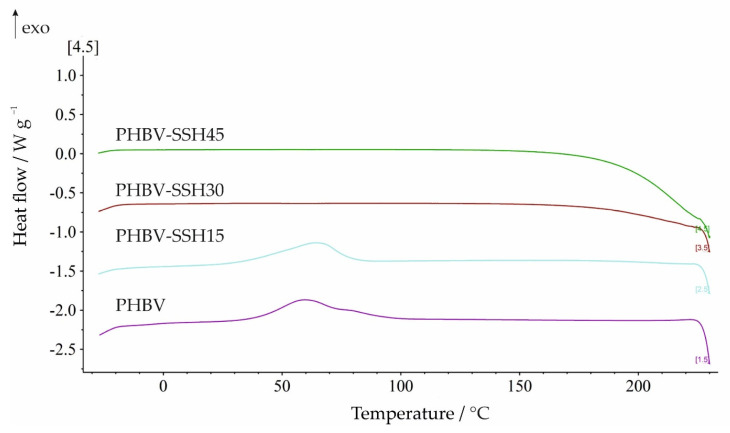 Figure 7
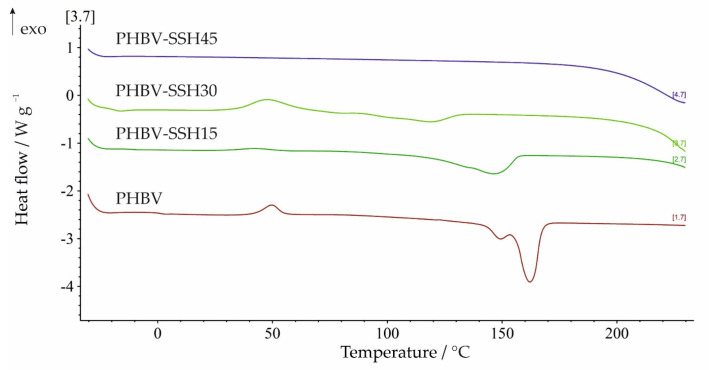 Figure 8
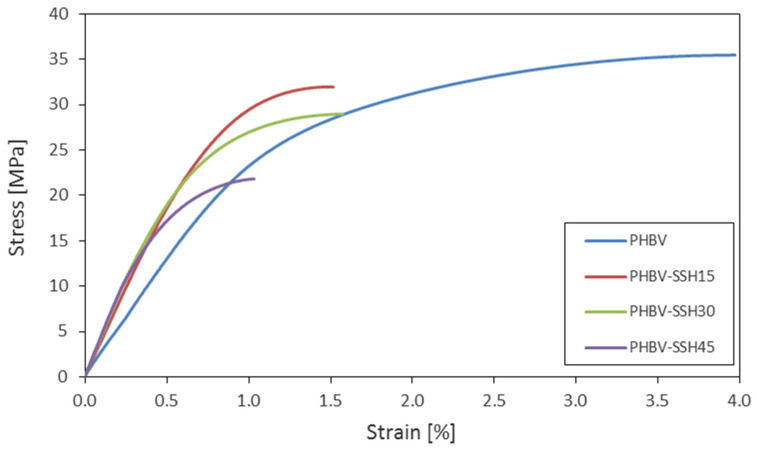 Figure 9
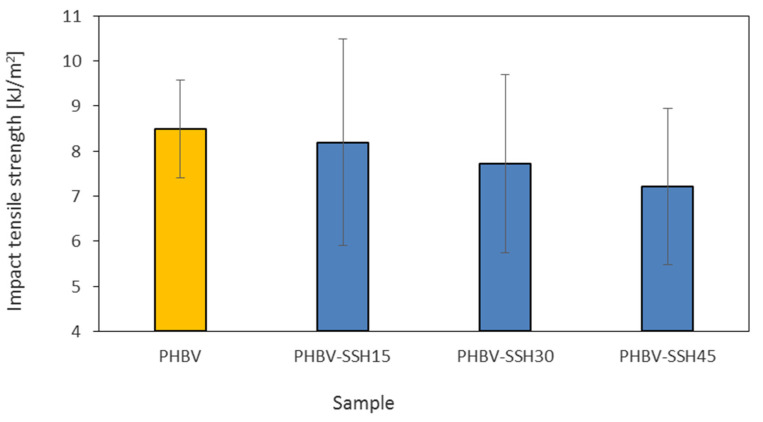 Figure 10
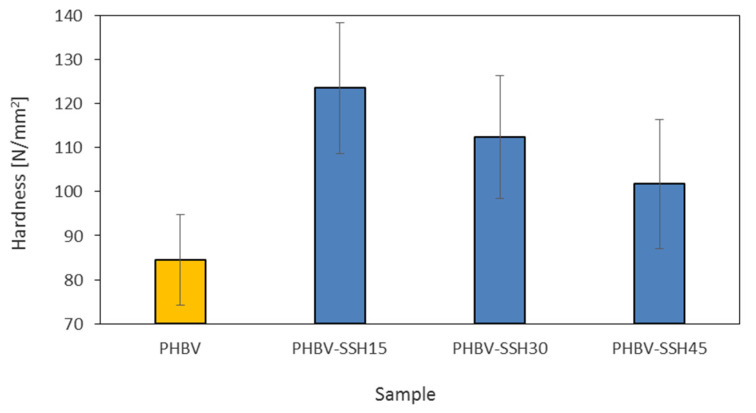 Figure 11
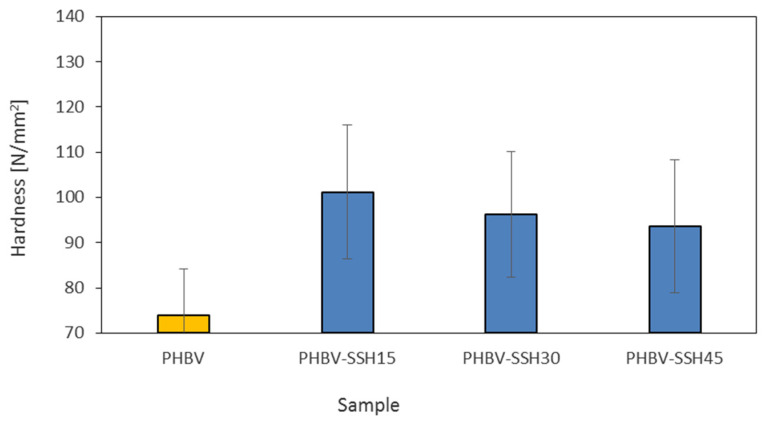 Figure 12
 Figure 13
 Figure 14
Peer Reviews
No public reviews on file for this paper yet. If you reviewed it on a platform where reviews are public (OpenReview, ICLR, NeurIPS, ICML), you can paste yours below so the community can read it here.
Videos
No videos yet. Explain this paper in a talk, walkthrough, or lecture? Add one.
Taxonomy
Topicsbiodegradable polymer synthesis and properties · Natural Fiber Reinforced Composites · Polymer composites and self-healing