T2T Colletotrichum lini Genomes with Hifiasm: ONT R9 and R10 Read Processing and Assembly Guidelines for Fungi
Elizaveta A. Ivankina, Ekaterina M. Dvorianinova, Alexander A. Arkhipov, Antoniy M. Kaplun, Tatiana A. Rozhmina, Ludmila P. Kudryavtseva, Nikolai M. Barsukov, Olesya D. Moskalenko, Fedor D. Kostromskoy, Kirill A. Klimov, Andrei A. Artamonov, Elena V. Borkhert

TL;DR
This paper provides optimized guidelines for assembling complete fungal genomes using Oxford Nanopore sequencing data and the Hifiasm assembler.
Contribution
The study introduces optimized ONT data processing and assembly guidelines for T2T fungal genome assembly using Hifiasm.
Findings
Dorado-basecalled ONT R10.4.1 reads produced higher quality assemblies with better telomere resolution.
Moderate coverage (40–65×) with Q15 quality and 5 kb length filtration yielded the most complete assemblies.
Overfiltration or excessive coverage reduced assembly quality, causing fragmentation or chromosome merging.
Abstract
The assembly of telomere-to-telomere (T2T) genomes is essential for understanding genomic architecture, especially in fungal pathogens with complex karyotypes, such as Colletotrichum lini, causing flax anthracnose disease. This study provides optimized guidelines for the T2T genome assembly using Oxford Nanopore Technologies (ONT) R9.4.1 and R10.4.1 sequencing data processed with the Hifiasm 0.25.0 assembler (with --ont module). We analyzed ONT sequencing data for four C. lini strains and compared basecalling tools (Guppy and Dorado), read filtration strategies (quality thresholds Q10/Q15 and length cut-offs 5 kb/10 kb), and genome coverage levels from 5× to 160×. Our results demonstrated that Dorado-basecalled reads consistently had higher average quality, especially the R10.4.1 data, leading to improved telomere resolution and complete mitochondrial genome assembly. Moderate genome…
Genes, proteins, chemicals, diseases, species, mutations and cell lines named across the full text — each resolved to its canonical identifier and authoritative record.
Click any figure to enlarge with its caption.
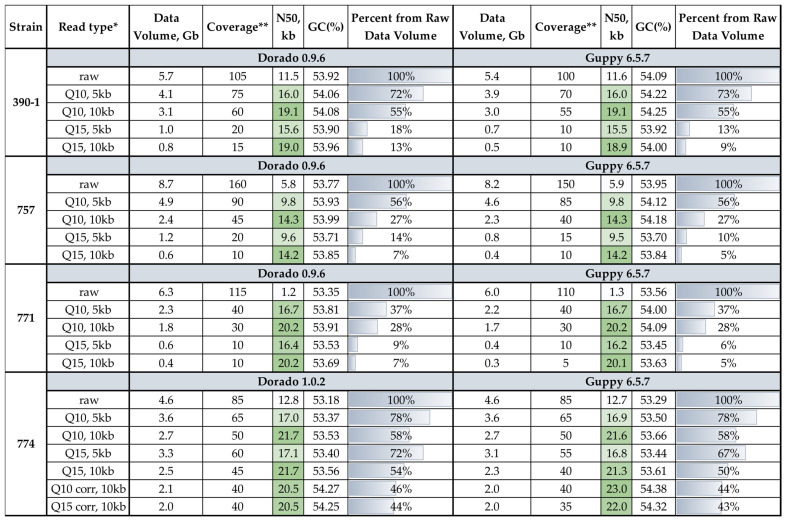 Figure 1
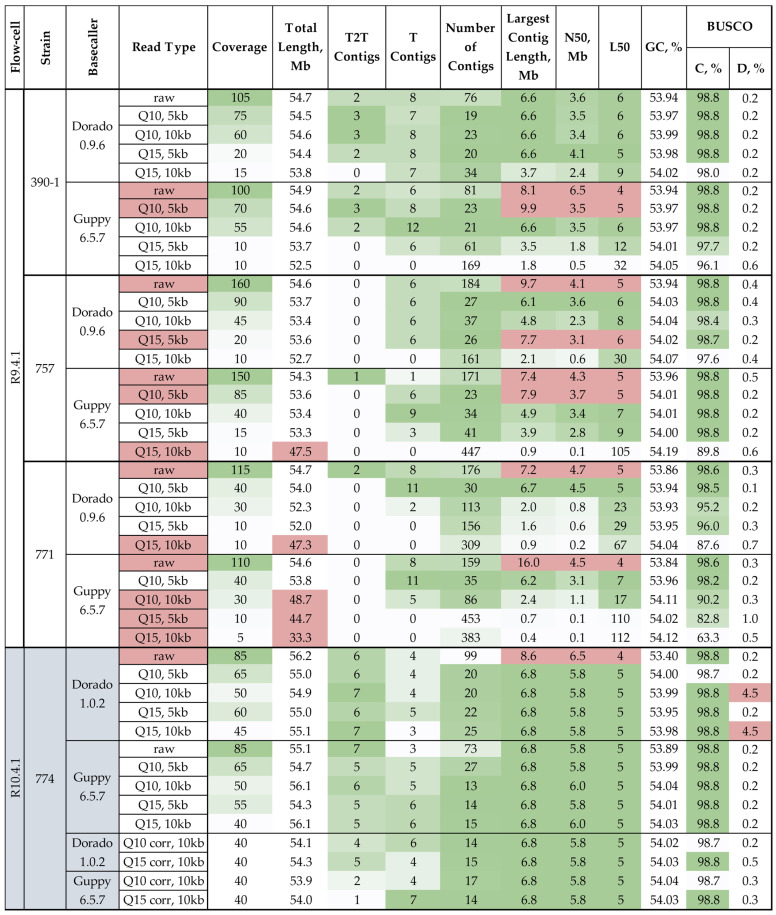 Figure 2
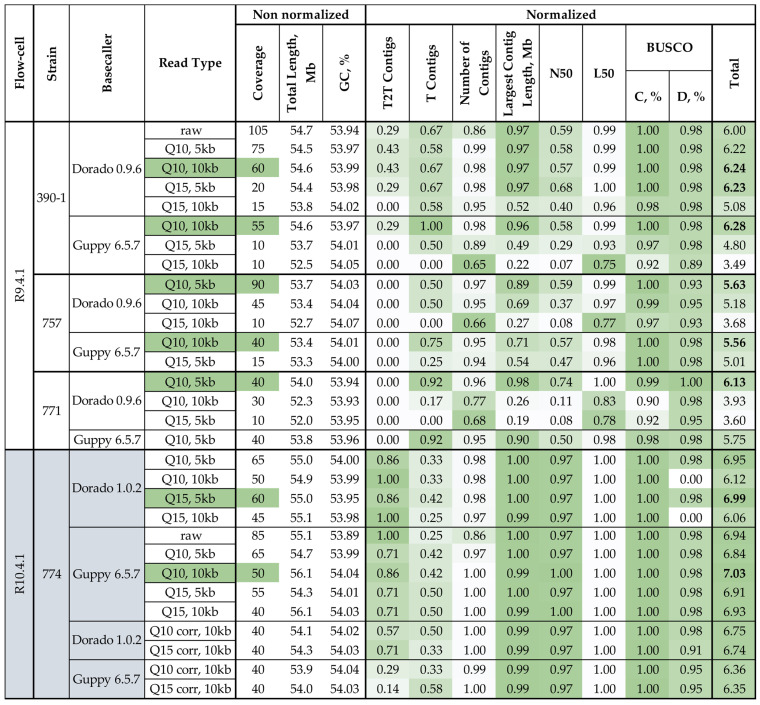 Figure 3
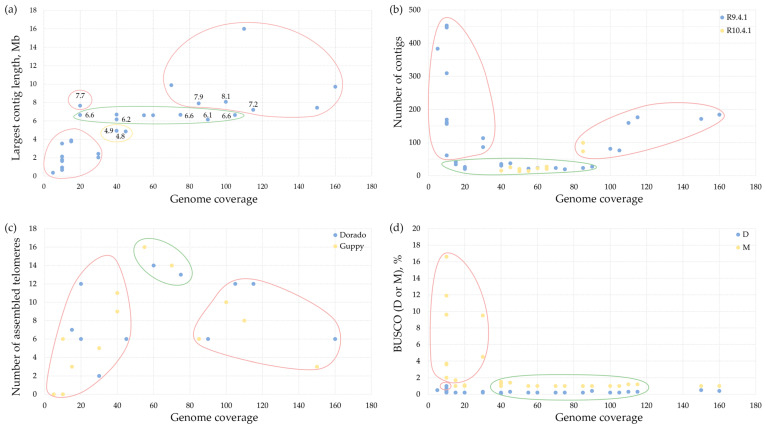 Figure 4
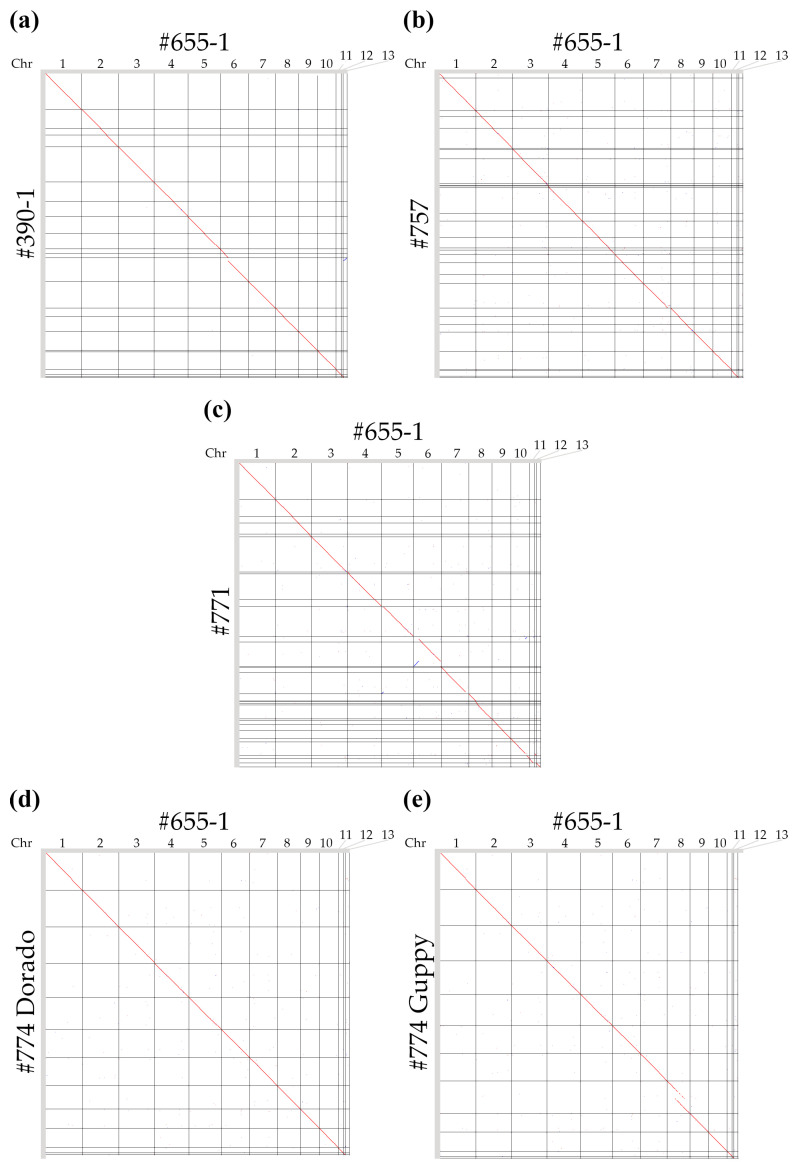 Figure 5
Peer Reviews
No public reviews on file for this paper yet. If you reviewed it on a platform where reviews are public (OpenReview, ICLR, NeurIPS, ICML), you can paste yours below so the community can read it here.
Videos
No videos yet. Explain this paper in a talk, walkthrough, or lecture? Add one.
Taxonomy
TopicsChromosomal and Genetic Variations · Genomics and Phylogenetic Studies · Telomeres, Telomerase, and Senescence