Biofeedback Fixation Training in the Rehabilitation of Patients with Geographic Atrophy
Kristóf Vörös, Illés Kovács, Gréta Kézdy, Ágnes Élő, Zsuzsa Szilágyi, Mirella Barboni, Zsuzsa Récsán, Zoltán Zsolt Nagy, Monika Ecsedy

TL;DR
This study explores how biofeedback training can improve vision and quality of life in patients with geographic atrophy, a condition causing central vision loss.
Contribution
The study introduces biofeedback fixation training as a novel rehabilitation method for geographic atrophy patients with limited treatment options.
Findings
Biofeedback fixation training significantly improved visual acuity, reading ability, and contrast sensitivity in patients with geographic atrophy.
Fixation stability and vision-related quality of life showed positive trends following the training.
The training was feasible and promising as a rehabilitation approach for geographic atrophy.
Abstract
Geographic atrophy (GA) is a progressive cause of central vision loss with limited rehabilitation options. This prospective case series aimed to evaluate the effects of biofeedback fixation training (BFT) on visual function and vision-related quality of life (QoL) in patients with GA. Eighteen patients with total central vision loss in one eye underwent BFT on the fellow eye (study eye) using the Macular Integrity Assessment (MAIA) system, which was used to select a new, previously chosen preferred retinal locus (PRL) to stabilize fixation or adopt a new fixation locus. Patients were followed for an average of 13.2 months (range 3–26 months). Functional outcomes included best corrected visual acuity (ETDRS chart), reading performance (Radner test), and contrast sensitivity (Spot Checks test). MAIA parameters comprised average retinal sensitivity, fixation distance and stability (P1,…
Genes, proteins, chemicals, diseases, species, mutations and cell lines named across the full text — each resolved to its canonical identifier and authoritative record.
Click any figure to enlarge with its caption.
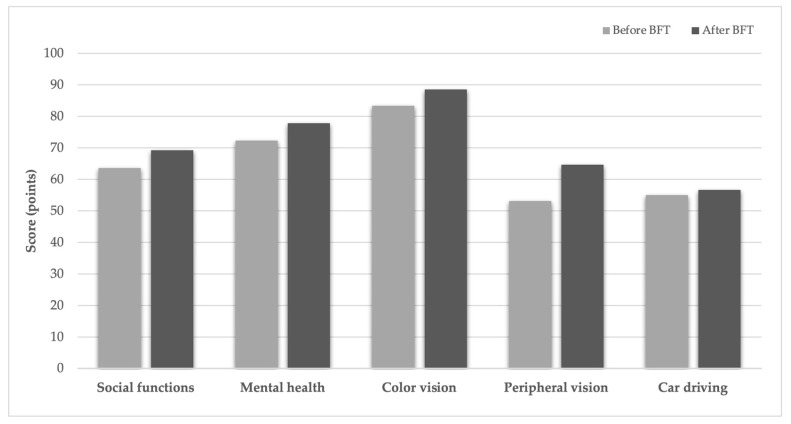 Figure 1
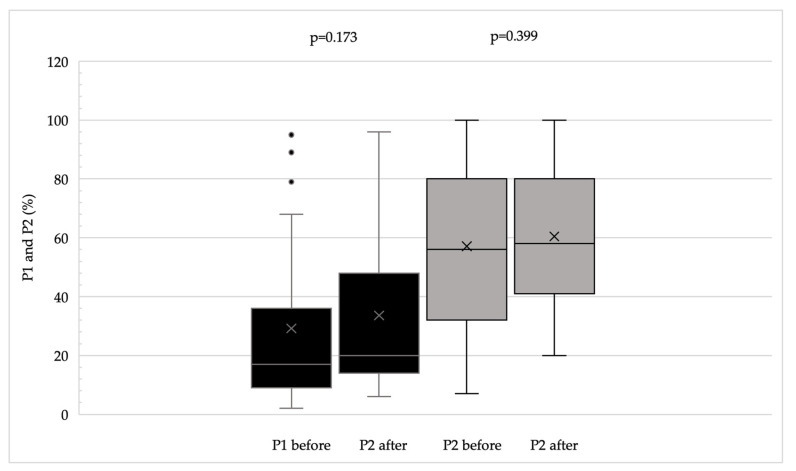 Figure 2
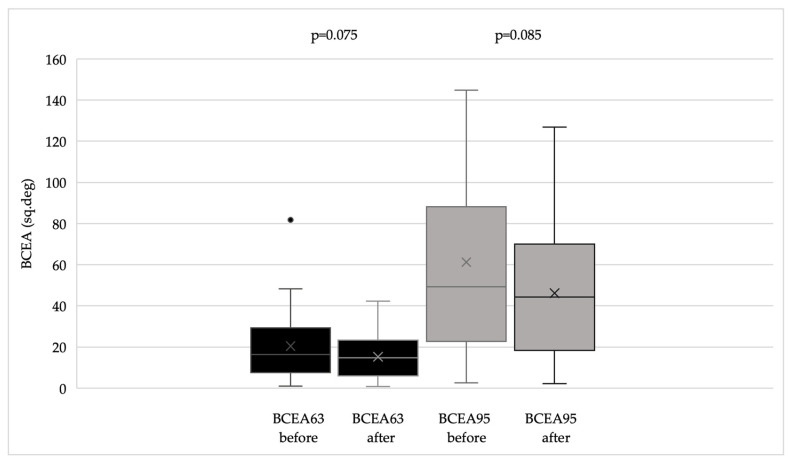 Figure 3
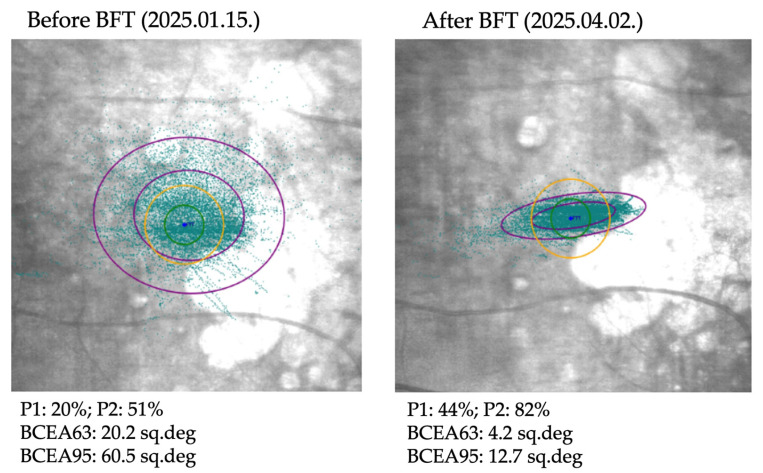 Figure 4
Peer Reviews
No public reviews on file for this paper yet. If you reviewed it on a platform where reviews are public (OpenReview, ICLR, NeurIPS, ICML), you can paste yours below so the community can read it here.
Videos
No videos yet. Explain this paper in a talk, walkthrough, or lecture? Add one.
Taxonomy
TopicsOphthalmology and Visual Impairment Studies · Retinal Development and Disorders · Visual perception and processing mechanisms