Ly6/uPAR Protein from Asterias rubens Starfish Stimulates Migration and Invasion of Human Epithelial and Immune Cells
Ekaterina N. Lyukmanova, Tamara Y. Gornostaeva, Sergey V. Shabelnikov, Zakhar O. Shenkarev, Mikhail P. Kirpichnikov, Alexander S. Paramonov, Maxim L. Bychkov

TL;DR
A starfish protein called Lystar5 promotes the movement of human skin and immune cells, which could lead to new wound-healing treatments.
Contribution
The study identifies Lystar5 from starfish as a novel stimulator of human cell migration and immune infiltration via nAChR and integrin interactions.
Findings
Lystar5 and its mimetic peptides stimulate migration of HaCaT keratinocytes and peripheral blood monocytes.
Lystar5 binds to integrin and nAChR subunits, promoting an E/N cadherin switch and upregulating E-selectin and ICAM-1.
The protein's loops I and II are critical for its pro-migratory activity and receptor binding.
Abstract
Recently, we found that Lystar5 protein from coelomic cells of A. rubens starfish interacts with nicotinic acetylcholine receptors (nAChRs) and integrin α8-like protein. We hypothesized that Lystar5 mediates detachment of coelomic cells from the matrix and their migration. Skin wound healing in humans is based on keratinocytes migration and is regulated by nAChRs and integrins. Here, we revealed that Lystar5 stimulates migration of human skin HaCaT keratinocytes and peripheral blood monocytes. Using ELISA, we found that Lystar5 binds to the membrane fraction of coelomic cells with its loops I and II, which form an active site of Lystar5 and resemble its pro-migratory activity. In keratinocytes and monocytes, Lystar5 and the peptides mimicking its loops I and II bound with α3, α4, and β2 nAChR and α5, αV, and β1 integrin subunits, which form molecular complexes. In keratinocytes, Lystar5…
Genes, proteins, chemicals, diseases, species, mutations and cell lines named across the full text — each resolved to its canonical identifier and authoritative record.
Click any figure to enlarge with its caption.
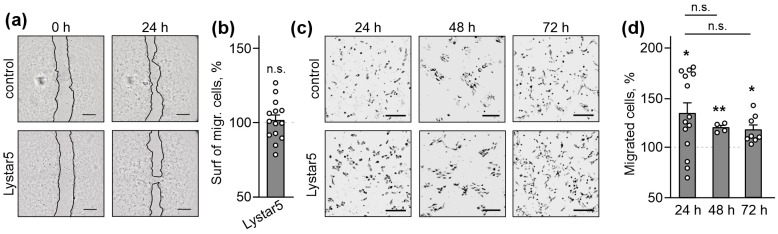 Figure 1
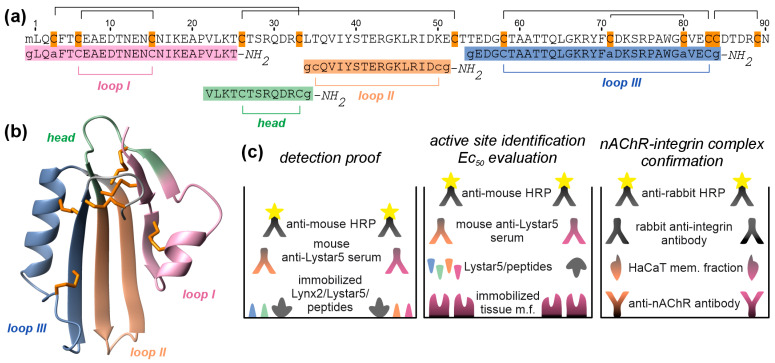 Figure 2
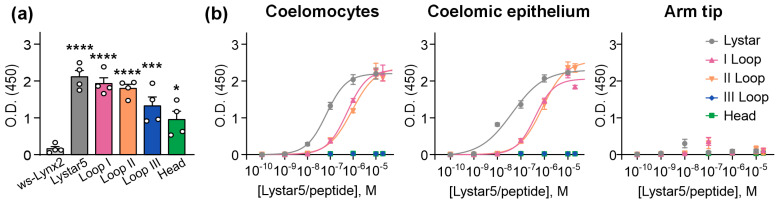 Figure 3
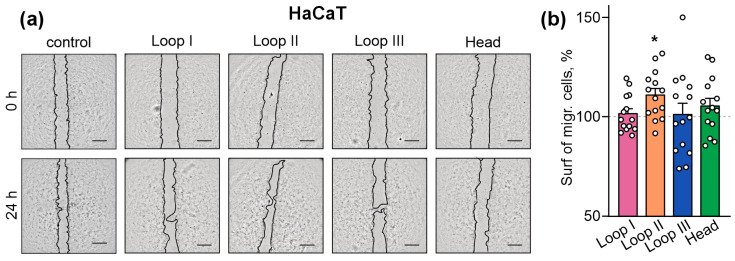 Figure 4
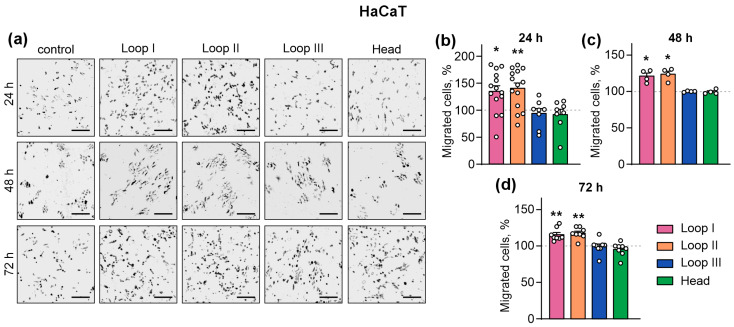 Figure 5
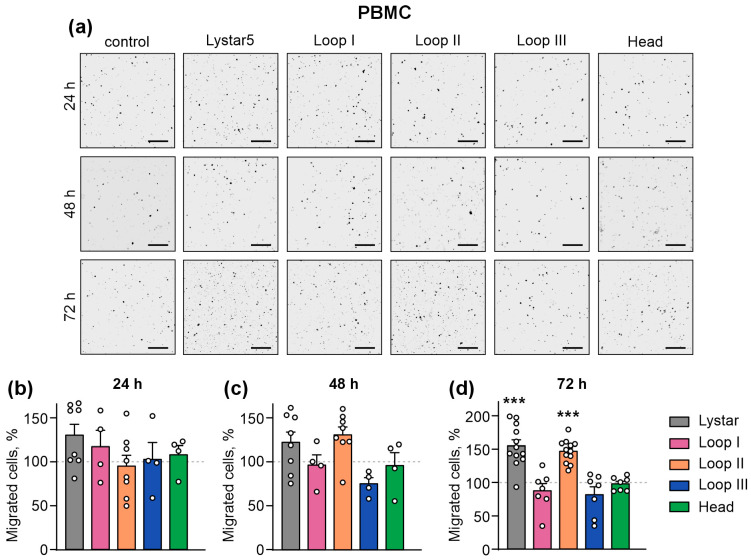 Figure 6
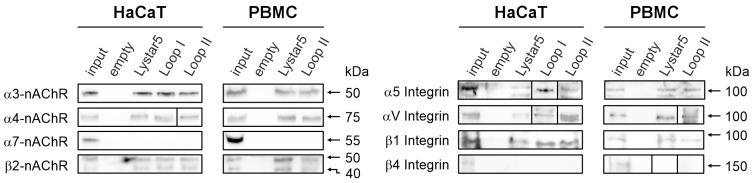 Figure 7
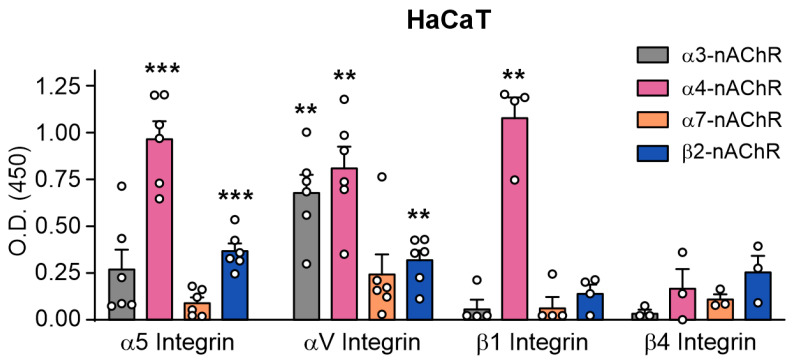 Figure 8
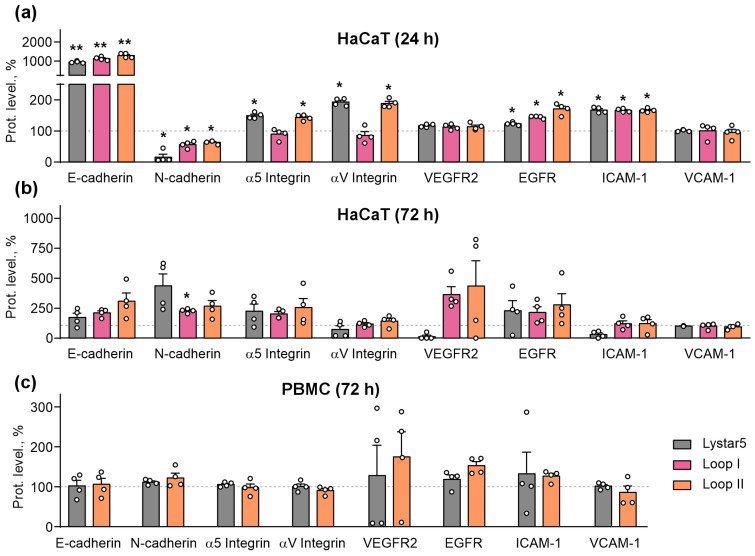 Figure 9
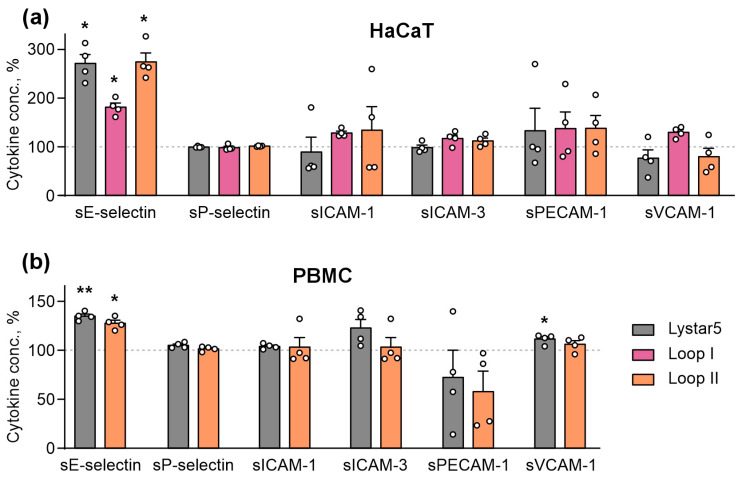 Figure 10
Peer Reviews
No public reviews on file for this paper yet. If you reviewed it on a platform where reviews are public (OpenReview, ICLR, NeurIPS, ICML), you can paste yours below so the community can read it here.
Videos
No videos yet. Explain this paper in a talk, walkthrough, or lecture? Add one.
Taxonomy
TopicsMarine Invertebrate Physiology and Ecology · Connexins and lens biology · Nicotinic Acetylcholine Receptors Study