Anti-Neuroinflammatory Effects of a Representative Low-Molecular-Weight Component Isolated from Codium fragile Through Inhibition of the NF-κB Pathway in Microglia and Macrophage Cells
Gyoyoung Lee, Yezhi Jin, Seul Ah Lee, Sook-Young Lee, Hwan Lee, Zisheng Nan, Chi-Su Yoon, Dong-Sung Lee

TL;DR
This study shows that a compound from Codium fragile can reduce neuroinflammation by blocking a key inflammatory pathway in brain cells.
Contribution
The novel contribution is identifying uracil in Codium fragile as an anti-neuroinflammatory agent through NF-κB inhibition.
Findings
AECF and uracil reduced pro-inflammatory cytokine production in LPS-stimulated cells.
The NF-κB pathway was suppressed by AECF and uracil in microglia and macrophage cells.
Uracil was identified as a major low-molecular-weight component in Codium fragile.
Abstract
The worldwide incidence of neurodegenerative diseases (ND), such as dementia, has increased, and neuroinflammation is considered a crucial factor in the development of ND. Codium fragile is considered ocean waste in many countries; however, some countries, including Korea, consume it as a food resource. In this study, a major low-molecular-weight component and chemical marker, uracil, was isolated from the aqueous extracts of C. fragile (AECF); additionally, its content was measured through HPLC quantitative analysis. AECF and uracil were examined for their anti-inflammatory activities against lipopolysaccharide (LPS)-stimulated BV2 microglia and RAW264.7 macrophage cell lines under inflammation conditions. The results showed that AECF and uracil inhibited the production of pro-inflammatory cytokines by suppressing the NF-κB pathway.
Genes, proteins, chemicals, diseases, species, mutations and cell lines named across the full text — each resolved to its canonical identifier and authoritative record.
Click any figure to enlarge with its caption.
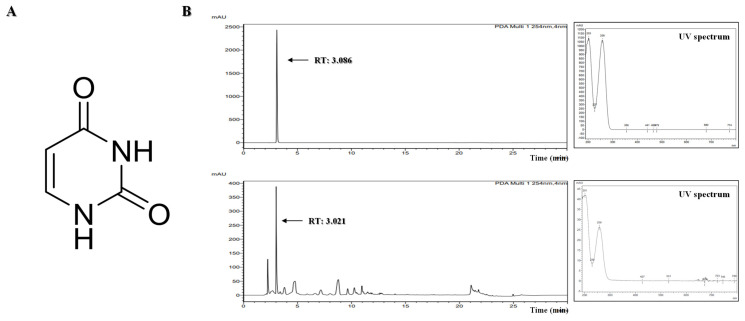 Figure 1
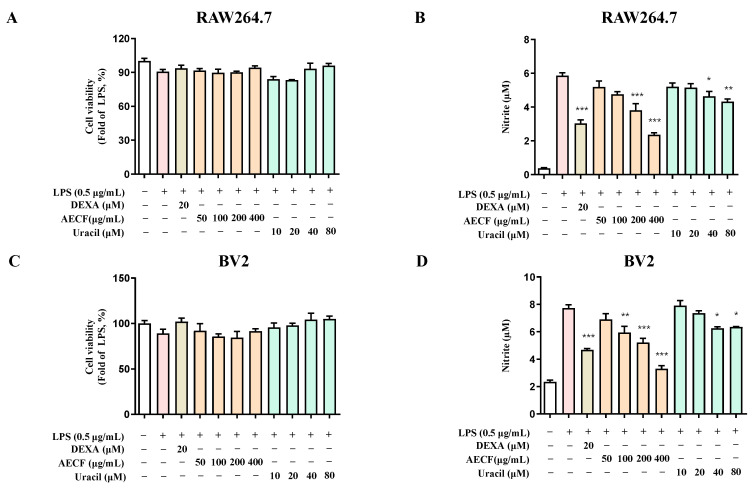 Figure 2
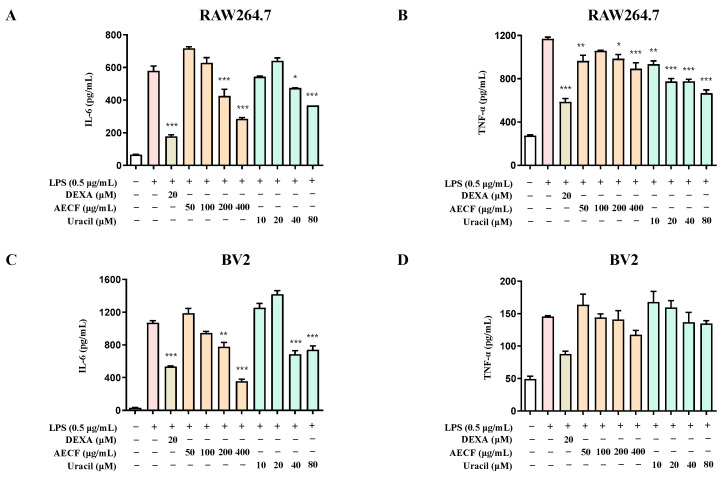 Figure 3
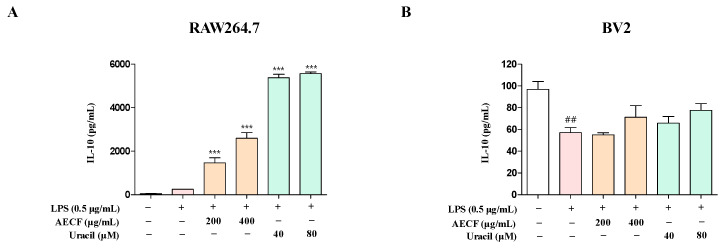 Figure 4
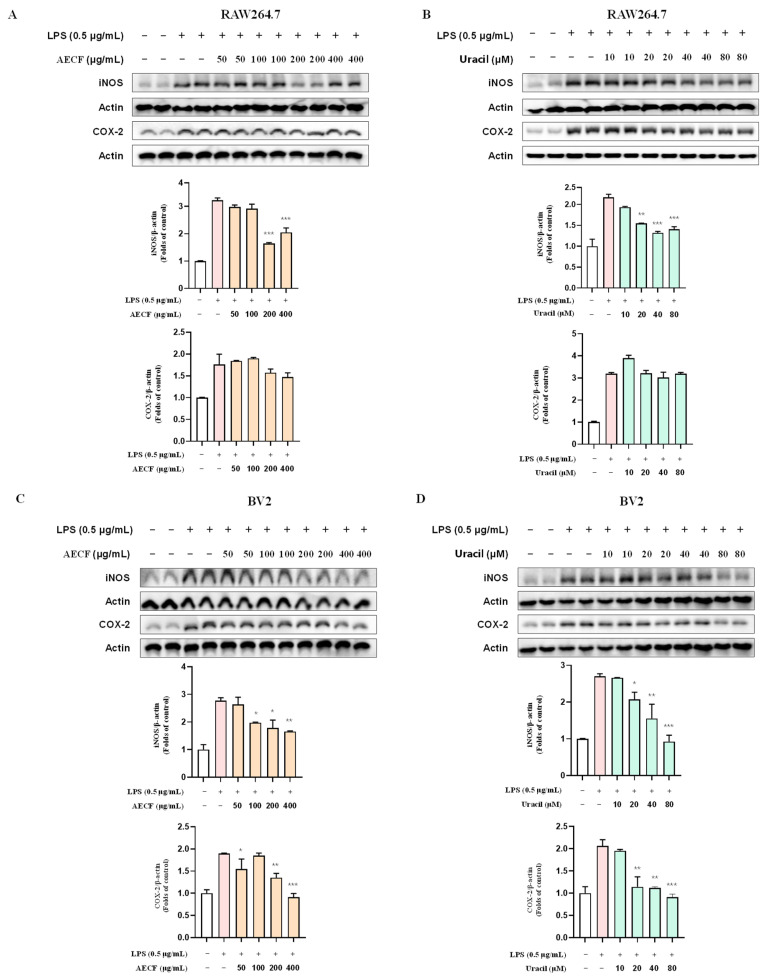 Figure 5
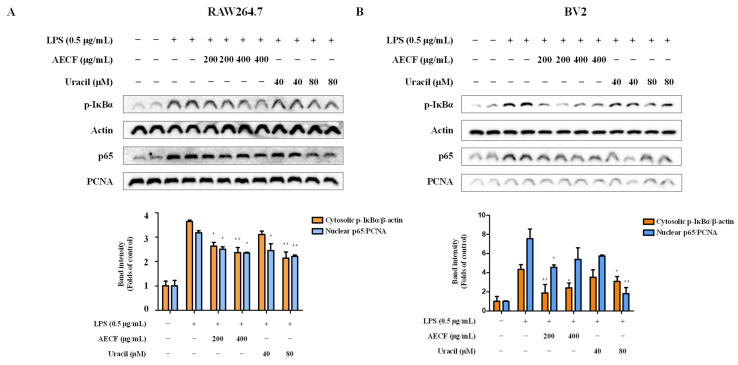 Figure 6
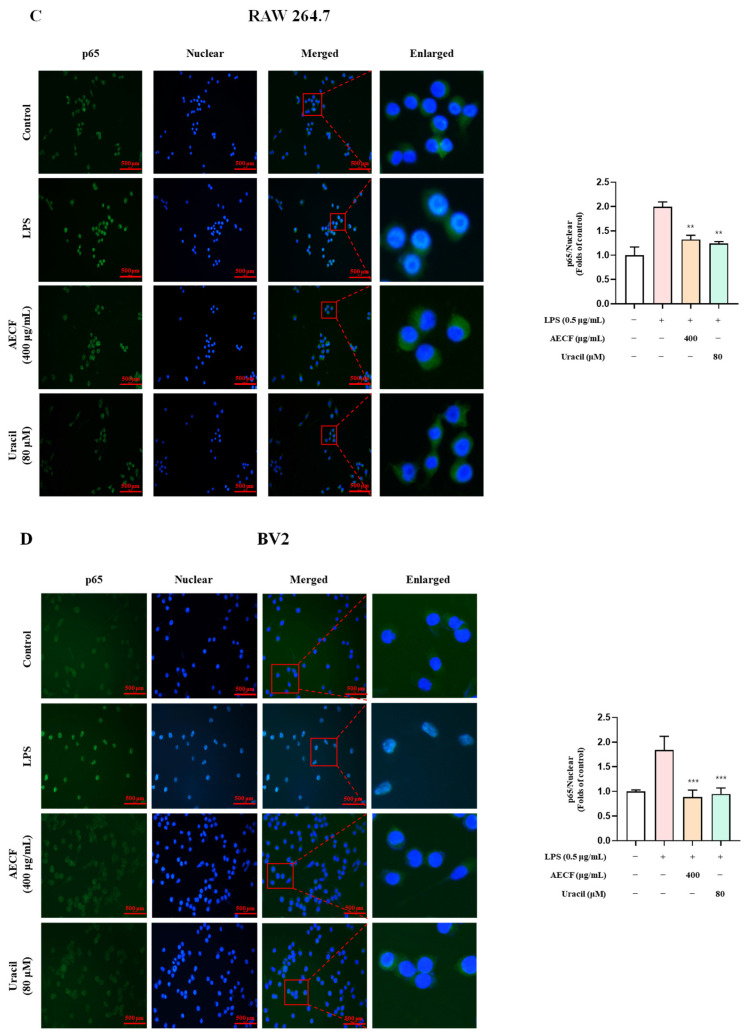 Figure 7
Peer Reviews
No public reviews on file for this paper yet. If you reviewed it on a platform where reviews are public (OpenReview, ICLR, NeurIPS, ICML), you can paste yours below so the community can read it here.
Videos
No videos yet. Explain this paper in a talk, walkthrough, or lecture? Add one.
Taxonomy
TopicsGenetics and Neurodevelopmental Disorders · Morinda citrifolia extract uses · Coenzyme Q10 studies and effects