Enhanced Thermostability and Catalytic Efficiency of Alginate Lyase Alyw203 by Hydrogen Bond Network Reconstruction
Chengcheng Jiang, Jing-Run Ye, Tian-Tian Zhu, Qin Wang, Yan Ma, Zhi-Peng Wang, Chuan-Yang Shi, Ying Wang, Shou-Fu Zhang, Tian-Hong Liu, Hai-Ying Wang

TL;DR
Researchers improved the stability and efficiency of an enzyme used to produce alginate oligosaccharides by redesigning its hydrogen bond network.
Contribution
A rational design strategy using hydrogen bond network reconstruction to enhance enzyme stability and catalytic efficiency.
Findings
The L172V mutant showed a 2.43-fold increase in half-life at 40 °C.
The mutant exhibited improved substrate affinity and catalytic efficiency (reduced Km and increased kcat/Km).
Molecular dynamics simulations linked improvements to stabilized enzyme–substrate interactions.
Abstract
Alginate lyases are commonly employed for producing alginate oligosaccharides (AOS), but their industrial application is often constrained by low thermal stability and catalytic efficiency. This study engineered mutants of alginate lyase Alyw203 from marine Vibrio based on B-factor values and negative ΔΔG values. The L172V mutant exhibited a 2.43-fold increase in half-life at 40 °C, reduced Km (from 107 to 65 mg/mL), and enhanced kcat/Km (from 0.07 to 0.35 mL/mg/s), indicating improved thermal stability, substrate affinity, and catalytic efficiency. Molecular dynamics simulations revealed that these improvements originated from reconstructed hydrogen bond networks, which stabilized enzyme–substrate interactions and reduced conformational flexibility. These results demonstrate that rational design focused on strengthening hydrogen bonding can simultaneously improve both stability and…
Genes, proteins, chemicals, diseases, species, mutations and cell lines named across the full text — each resolved to its canonical identifier and authoritative record.
Click any figure to enlarge with its caption.
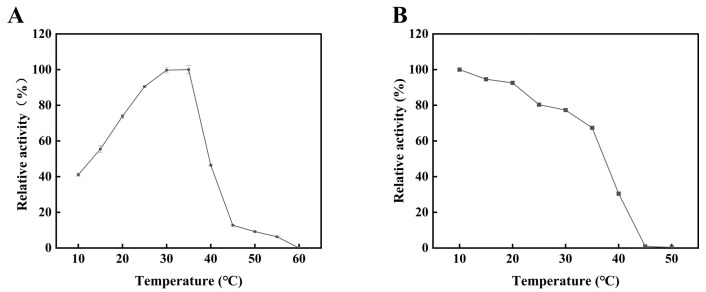 Figure 1
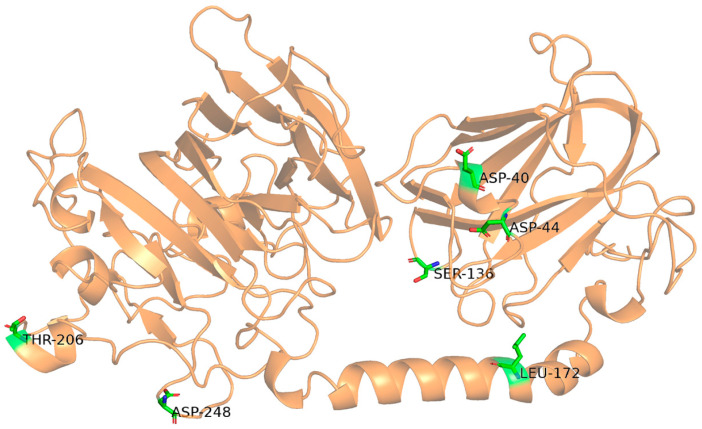 Figure 2
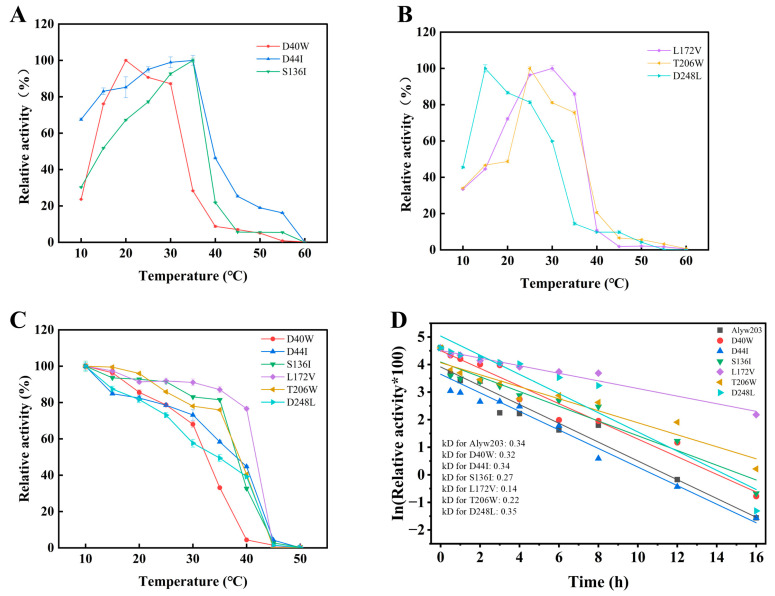 Figure 3
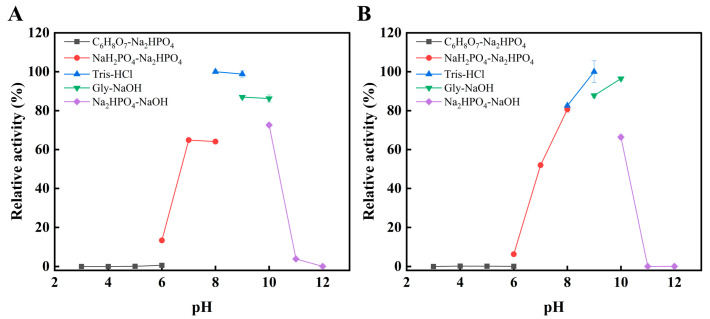 Figure 4
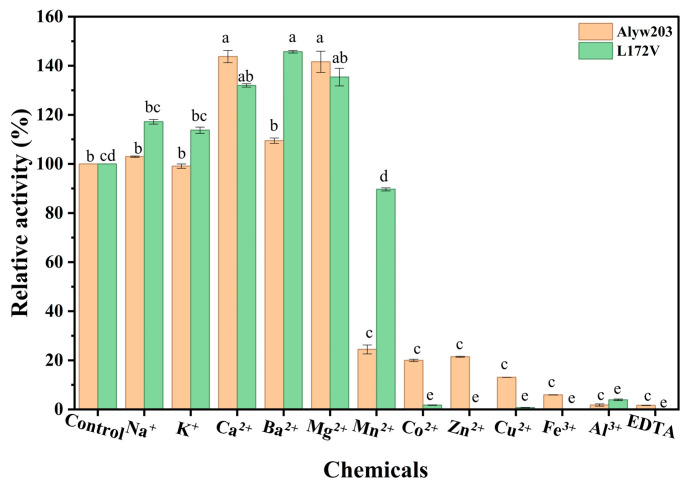 Figure 5
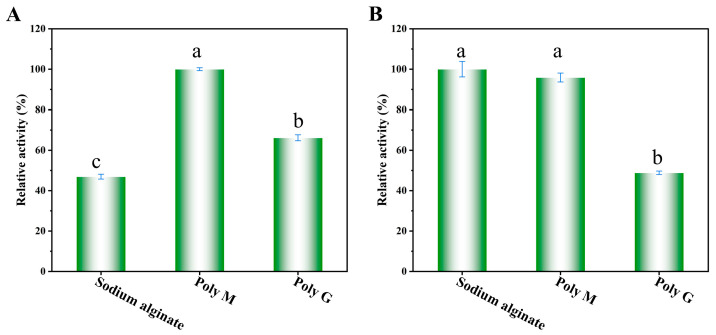 Figure 6
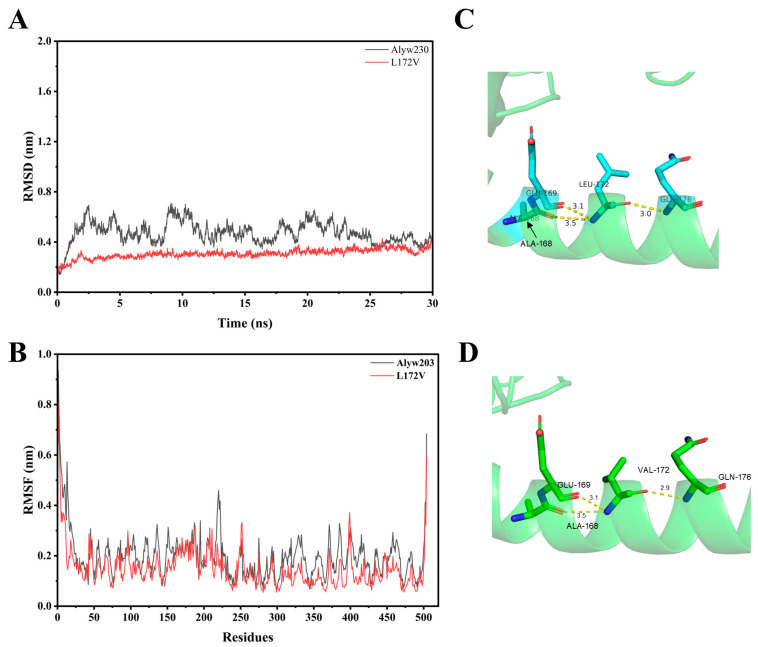 Figure 7
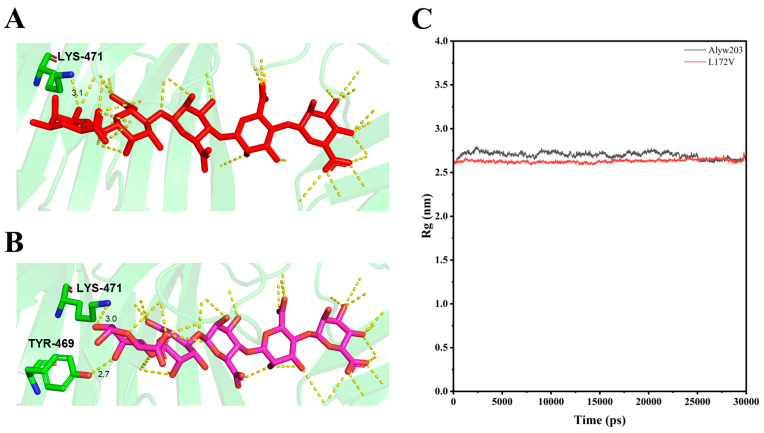 Figure 8
Peer Reviews
No public reviews on file for this paper yet. If you reviewed it on a platform where reviews are public (OpenReview, ICLR, NeurIPS, ICML), you can paste yours below so the community can read it here.
Videos
No videos yet. Explain this paper in a talk, walkthrough, or lecture? Add one.
Taxonomy
TopicsSeaweed-derived Bioactive Compounds · Enzyme Production and Characterization · Polysaccharides and Plant Cell Walls