Aptamer-Based Dual-Cascade Signal Amplification System Lights up G-Quadruplex Dimers for Ultrasensitive Detection of Domoic Acid
Jiansen Li, Zhenfei Xu, Zexuan Zhang, Rui Liu, Yuping Zhu, Xiaoling Lu, Huiying Xu, Xiaoyu Liu, Zhe Ning, Xinyuan Wang, Haobing Yu, Bo Hu

TL;DR
This paper introduces a highly sensitive fluorescent sensor for detecting domoic acid in shellfish using a dual-signal amplification system.
Contribution
The novel dual-cascade signal amplification system combines G-quadruplex dimers and carbon nanotubes for ultrasensitive detection.
Findings
The sensor detects domoic acid with a detection limit of 1.1 ng/mL.
Detection occurs within 5 minutes, making it rapid and practical for real-world applications.
The system uses a hairpin-structured aptamer and thioflavin T for signal amplification.
Abstract
In recent years, harmful algal blooms have led to frequent occurrences of shellfish toxin contamination, posing a significant threat to the safety of aquatic products and public health. As a potent neurotoxin, domoic acid (DA) can accumulate in shellfish, highlighting the urgent need for rapid and highly sensitive detection methods. In this study, we developed a fluorescent aptasensor based on a dual-signal amplification system by combining G-quadruplex (G4) dimers with multi-walled carbon nanotubes (CNTs). The sensor is designed with a hairpin-structured aptamer as the recognition probe, where short multi-walled CNTs serve as both a fluorescence quencher and platform, and G4 dimers are incorporated into the sensing interface to enhance signal output. In the absence of the target, the hairpin-structured aptamer remains closed, keeping the fluorescence signal “off”. Upon binding to DA,…
Genes, proteins, chemicals, diseases, species, mutations and cell lines named across the full text — each resolved to its canonical identifier and authoritative record.
Click any figure to enlarge with its caption.
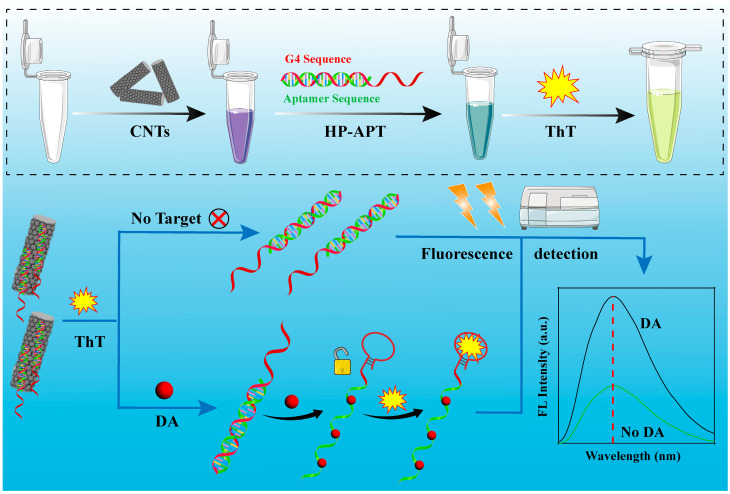 Figure 1
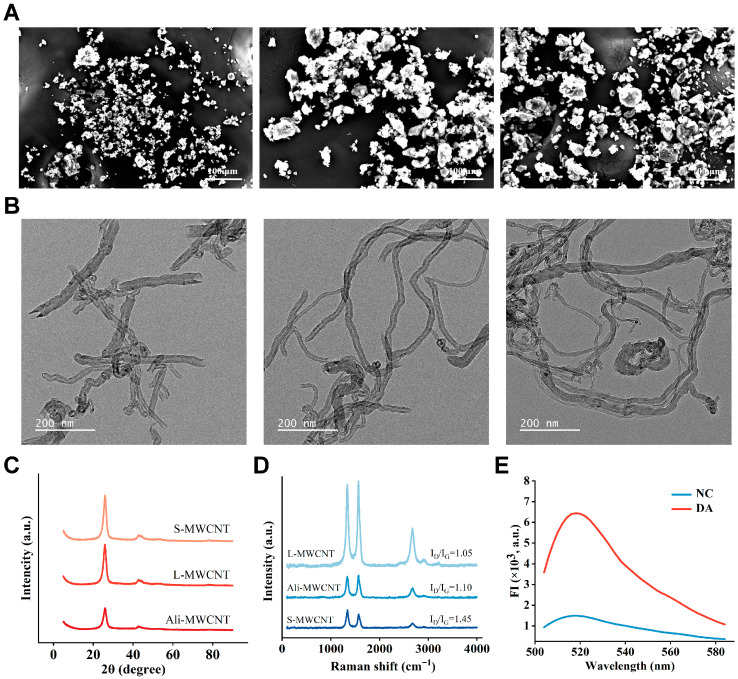 Figure 2
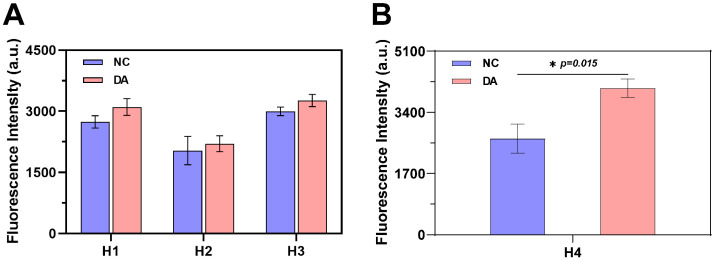 Figure 3
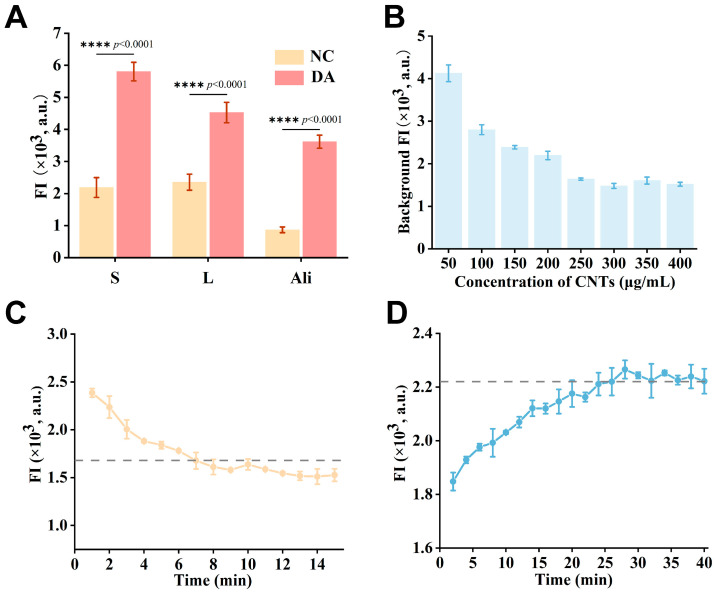 Figure 4
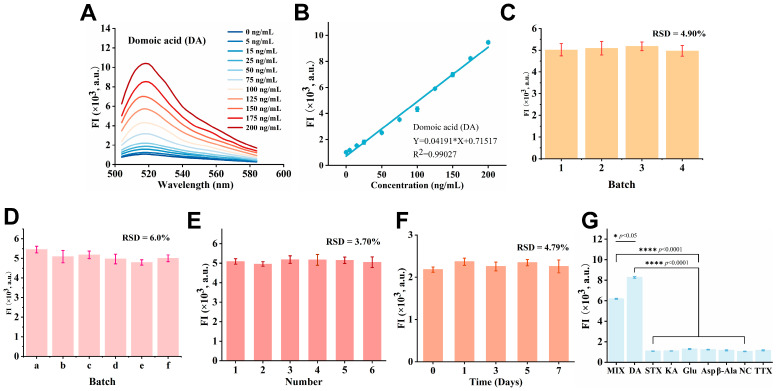 Figure 5
Peer Reviews
No public reviews on file for this paper yet. If you reviewed it on a platform where reviews are public (OpenReview, ICLR, NeurIPS, ICML), you can paste yours below so the community can read it here.
Videos
No videos yet. Explain this paper in a talk, walkthrough, or lecture? Add one.
Taxonomy
TopicsMarine Toxins and Detection Methods · Marine Sponges and Natural Products · Advanced biosensing and bioanalysis techniques