Zoonotic Sporotrichosis by Sporothrix brasiliensis in Chile: Evidence of Emerging Transmission Under a One Health Perspective
Patricio Godoy-Martínez, Rodrigo Muñoz, Pamela Thomson, Diego Orlandi, Flavio Queiroz-Telles, Nicomedes Valenzuela-Lopez, María Paz Villanueva, Joselin Solís, Isabel Iturrieta-González

TL;DR
A human case of sporotrichosis caused by Sporothrix brasiliensis in Chile is reported, highlighting the need for One Health approaches to track this emerging fungal disease.
Contribution
This is the first confirmed case of S. brasiliensis sporotrichosis in Chile, linking human infection to feline exposure.
Findings
A veterinarian in Chile contracted lymphocutaneous sporotrichosis from feline exposure caused by S. brasiliensis.
Molecular analysis confirmed the presence of S. brasiliensis through ITS and β-tubulin gene sequencing.
The patient successfully responded to itraconazole treatment.
Abstract
Sporotrichosis, the most common implantation mycosis worldwide, is caused by dimorphic fungi of several species of the genus Sporothrix. Sporothrix brasiliensis, the most virulent species, has emerged in Latin America as an epi-zoonotic pathogen linked to domestic cats, dogs and humans. This report describes a confirmed human case of lymphocutaneous sporotrichosis caused by S. brasiliensis in Chile, associated with feline exposure in a veterinarian. Diagnosis was supported by morphological and molecular analyses of the internal transcribed spacer (ITS) and β-tubulin gene. The patient responded favorably to itraconazole therapy. This case highlights the growing relevance of S. brasiliensis in Chile and reinforces the need for integrated One Health surveillance strategies.
Genes, proteins, chemicals, diseases, species, mutations and cell lines named across the full text — each resolved to its canonical identifier and authoritative record.
Click any figure to enlarge with its caption.
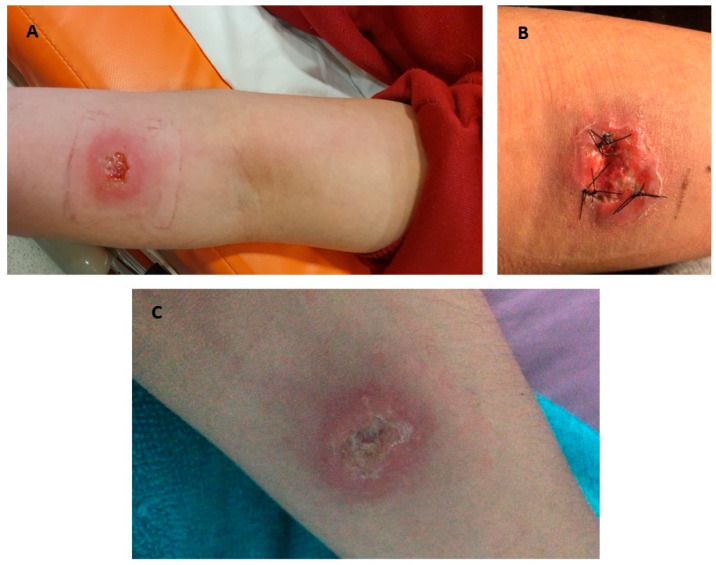 Figure 1
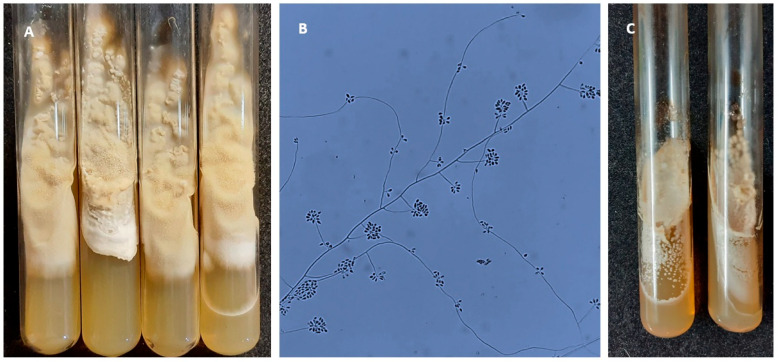 Figure 2
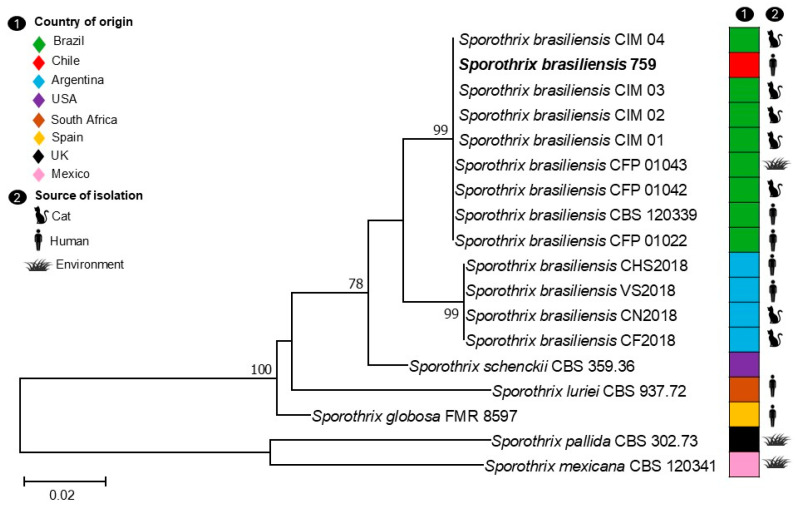 Figure 3
Peer Reviews
No public reviews on file for this paper yet. If you reviewed it on a platform where reviews are public (OpenReview, ICLR, NeurIPS, ICML), you can paste yours below so the community can read it here.
Videos
No videos yet. Explain this paper in a talk, walkthrough, or lecture? Add one.
Taxonomy
TopicsFungal Infections and Studies · Parasitic Infections and Diagnostics · Enterobacteriaceae and Cronobacter Research
1. Introduction
Sporotrichosis is the most prevalent implantation mycosis worldwide, with a global estimate of 40,000 new cases per year [1]. This infection is caused by thermally dimorphic fungi of the genus Sporothrix spp., currently considered a complex composed of cryptic species [2]. Although classical transmission typically occurs via the sapronotic route, zoonotic transmission has gained increasing relevance in recent decades. Sporothrix brasiliensis, belonging to the Sporothrix schenckii species complex, is present in Brazil and in several other Latin American countries and is recognized as the most virulent species associated with domestic and feral cats [3], which act as reservoirs and sources of infection, facilitating transmission to other cats, dogs, and humans through scratches, bites, exudates, respiratory droplets, and fomites [4,5,6]. The fact that transmission can occur through contact with secretions has challenged the traditional paradigm that occurs mainly through traumatic inoculation, turning this mycosis into an emerging public health problem [7].
In Chile, the detection of S. brasiliensis represents a significant change in the clinical and epidemiological landscape. Although autochthonous cases of sporotrichosis caused by other species of the genus had previously been described [8,9,10], the first confirmed human isolation of S. brasiliensis was reported in 2023 in the Valparaíso region and was associated with feline transmission in a 59-year-old woman [11]. At the same time, an outbreak in domestic and feral felines was documented in the Magallanes Region [12], followed by other cases in the Metropolitan and Valparaíso regions, highlighting the need to implement a “One Health” approach that integrates surveillance in animals, humans, and the environment [13,14,15].
In this context, we present the clinical case of an adult patient with a confirmed diagnosis of lymphocutaneous sporotrichosis caused by S. brasiliensis. This case is notable both for its relevance in the context of the rapid expansion of this species and for its implications for the surveillance, treatment, and prevention of zoonotic transmission in Chile.
2. Case Description
On 2 October 2021 (day 0), a 28-year-old female patient from Punta Arenas, Chile, with no history of comorbidities, presented for a dermatology consultation at the Hospital Clínico de Magallanes. She was a veterinarian specializing in small animals. Her medical history reports that approximately 15 days earlier, she treated a cat with ulcerated skin lesions located on the face, neck, and extremities; the animal was a short-haired domestic cat of unknown breed that had arrived on its own at the adopters’ home; therefore, its origin was unknown. She examined the cat twice while wearing gloves and did not recall having been scratched or bitten by the cat.
The patient’s clinical examination revealed an ulcerated lesion on her left forearm (Figure 1A), accompanied by left axillary adenopathy and lymphangitis, associated with pain, edema, and weakness in the extremity, without paresthesia. On 7 October (day +5), the patient underwent a biopsy procedure (Figure 1B). The tissue sample was sent for mycological analysis to the Mycology Laboratory of the Institute of Clinical Microbiology and the Australomics Center, both at the Universidad Austral de Chile. While awaiting laboratory results, itraconazole 200 mg once daily (Itodal, Chile Laboratory, Macul, Chile) was prescribed for three months [16].
One month after starting treatment with itraconazole 200 mg once daily (day +35), the patient’s clinical signs had decreased, the lesion borders were smaller (Figure 1C), and the lymphadenopathy had disappeared. Upon completion of treatment, clinical recovery of the lesion was observed. No recurrence has been observed to date.
The cat was treated with itraconazole 100 mg/kg/day for four months. The animal’s condition remains unknown, as the owners did not take it for a subsequent veterinary check-up.
The biological material was inoculated onto tubes containing Sabouraud glucose agar (SGA) supplemented with chloramphenicol (0.05 g/L) and cycloheximide (0.4 g/L) (Merck, Rahway, NJ, USA) and incubated at 25 °C for 10 days. Colonies exhibiting macroscopic characteristics, such as whitish coloration, a flat, moist, glabrous surface, and slight peripheral folding (Figure 2A), together with microscopic features, including thin, septate hyaline hyphae with an undifferentiated apical end from which clusters of denticulate conidia emerge (Figure 2B), were considered suggestive of Sporothrix spp. [17]. These were subcultured on the same medium at 35 °C to induce conversion to yeast (Figure 2C). Subsequent DNA extraction was carried out using the ZR Fungal/Bacterial DNA MiniPrep kit (ZYMO Research, Irvine, CA, USA).
The identification of S. brasiliensis was supported by comparisons of two nuclear loci, i.e., the ITS region and the β-tubulin gene, which were amplified and sequenced using the primer pairs ITS5 (GGAAGTAAAAGTCGTAACAAGG) and ITS4 (TCCTCCGCTTATTGATATGC) [18] and Bt2a (GGTAACCAAATCGGTGCTGCTTTC) and Bt2b (ACCCTCAGTGTAGTGACCCTTGGC) [19], respectively. Sequencing was performed at Austral-omics of the Universidad Austral de Chile (Valdivia, Chile), using the ABI Prism 310 (Applied Biosystems, Foster City, CA, USA) automated sequencer. The sequences obtained were edited using SeqMan software v. 7.0.0 (DNAStar Lasergene, Madison, WI, USA) and the consensus sequences were compared in the database of the National Center for Biotechnology Information (NCBI). A sequence identity of >99% was used as the criterion to confirm correct fungal species identification.
The ITS sequence showed 100% coverage and identity with the CBS 120339 strain of S. brasiliensis, whereas the β-tubulin gene showed 99% coverage and 99.4% similarity with the IPEC43174 strain of S. brasiliensis. The DNA sequences of the ITS region and β-tubulin gene were deposited in GenBank (Table 1).
Phylogenetic analysis was conducted using the maximum-likelihood (ML) method with Molecular Evolutionary Genetics Analysis (MEGA) software, version 7.0. For this purpose, the S. brasiliensis sequences obtained in this study and other open-access sequences from Brazil and Argentina were included. In addition, sequences from other species within the S. schenckii complex were included. The best nucleotide substitution model determined in the same software for the combined analysis of the two phylogenetic markers was Kimura 2-parameter (K2+G). The concatenated sequence alignment, with 18 strains, comprised 805 bp (ITS 411 bp and β-tubulin 394 bp) with 142 variable sites (ITS 38 bp and β-tubulin 104 bp), of which 81 were phylogenetically informative (ITS 27 bp and β-tubulin 54 bp) (Figure 3).
Based on the phylogenetic analysis, two well-supported clades within the species S. brasiliensis were observed: one clade with 99% bootstrap support grouping Brazilian isolates, and a second subclade with 99% bootstrap support grouping Argentinian isolates. The isolate from this study (S. brasiliensis 759) was located in the former clade, together with other strains isolated from Brazil. The identity between the ITS sequence of the isolate S. brasiliensis 759 was 100% and 99.5% with Brazilian and Argentinian strains, respectively. Otherwise, the β-tubulin sequences showed a marked difference between the two clades, with our isolate showing 99.7% identity with Brazilian strains and 92.8% with Argentinian strains.
3. Discussion
We present a case of lymphocutaneous sporotrichosis caused by S. brasiliensis in an adult woman who had prior contact with a cat with lesions suspicious for sporotrichosis. In Chile, sporotrichosis has historically been uncommon, and cases described before 2023 were associated with infections by S. schenckii or S. globosa (within the S. schenckii species complex) [8,9,10]. The detection of S. brasiliensis in humans [11], along with its identification in domestic and feral cats in Magallanes, Santiago, and Valparaíso [12,13,14] represents an epidemiological turning point. Unlike the Brazilian outbreaks, where the infection has been associated with tropical climates and high urban feline density [20], the Chilean cases have occurred in temperate-cold climate zones, suggesting that this species exhibits remarkable ecological plasticity [21]. This adaptation phenomenon has been previously analyzed, highlighting that S. brasiliensis has a unique ability to persist in cold environments and become established in feline populations outside its traditional climatic distribution area [4]. A similar situation occurred in the United Kingdom, where the first three cases of cat-borne sporotrichosis caused by S. brasiliensis outside South America were reported. In that outbreak, the most likely source of the human infections was a 9-year-old neutered male long-haired domestic cat that had been rescued by the affected family in southeastern Brazil and brought with them to the UK three years earlier [22].
The current case shares the zoonotic nature and feline origin of the infection with other cases but differs in that the patient does not recall experiencing trauma and was wearing gloves during handling. This suggests that inoculation could have occurred through other routes, considering that previous studies have demonstrated that feline secretions can contain a high load of virulent and infective yeast forms, capable of surviving on inanimate surfaces. These findings reinforce the notion that transmission can occur even without aggressive contact or an obvious traumatic event [5].
Treatment with itraconazole 200 mg daily for three months was successful, resulting in complete resolution of the lesions with no relapses. This outcome is consistent with that reported by Rodríguez et al. [16], who observed a good response to itraconazole and terbinafine in human and feline cases with cutaneous forms. However, Brazilian studies [7] have warned that S. brasiliensis may exhibit greater virulence and occasionally antifungal resistance, particularly in long-standing circulating strains or in disseminated infections. Therefore, prolonged clinical follow-up and post-treatment mycological confirmation are recommended.
The detection of genetically identical strains in cats from different Chilean regions [6] points to possible dissemination through the movement of animals within the country, representing an increasingly relevant epidemiological pathway. In Argentina, Etchecopaz et al. [3] described a series of human and feline cases of S. brasiliensis in which genetic analysis demonstrated a close phylogenetic relationship with Brazilian strains, supporting the hypothesis of regional expansion [3]. Our phylogenetic reconstruction revealed that the S. brasiliensis isolate obtained in Punta Arenas (Chile) shows high genetic similarity to isolates of Brazilian origin, indicating that they share a common ancestor. This suggests that the isolate may have originated from Brazil.
In Brazil and Argentina, multiple infections have been described in veterinary personnel after contact with sick cats [5], which aligns with the present case. In the far south of Argentina, specifically in Calafate (Santa Cruz province), cases of sporotrichosis transmitted by cats have been detected. Despite the low temperatures typically associated with the far south of Argentina, this location demonstrated favorable environmental conditions for the growth of S. brasiliensis [3]. Recently, a study conducted in the Magallanes region (Chile) evaluated a total of 140 cats, of which five tested positives for S. brasiliensis; three of these animals presented clinical symptoms [6]. These findings suggest that a similar event to that observed in Argentina could be occurring in the far south of Chile.
The absence of specific biosafety measures in routine practice—such as masks, eye protection, and impermeable barriers—can facilitate exposure. Therefore, it is recommended to strengthen personal protection protocols and the management of animals with ulcerated lesions of unknown etiology [7].
The identification of S. brasiliensis in humans and animals in Chile highlights the urgency of implementing an integrated surveillance strategy under the “One Health” concept, as proposed previously [7,13]. This requires active collaboration between physicians, veterinarians, microbiologists, and health authorities to detect cases early, control feline outbreaks, and educate the community about preventive measures. It also underlines the need to include this emerging species in the differential diagnosis of skin lesions in patients with a history of animal contact or environmental exposure.
4. Conclusions
This case confirms the emergence of S. brasiliensis as a zoonotic agent in Chile, highlighting its capacity to adapt and spread across different geographical regions. The successful treatment with itraconazole supports its therapeutic efficacy, although continued surveillance is needed due to reports of increased virulence and antifungal resistance elsewhere. Strengthening biosafety practices and adopting a “One Health” surveillance approach are essential to prevent further transmission and ensure early detection of new cases.
The reference list from the paper itself. Each links out to its DOI / PubMed record.
- 1Bongomin F. Gago S. Oladele R.O. Denning D.W. Global and multi-national prevalence of fungal diseases-estimate precision J. Fungi 201735710.3390/jof 304005729371573 PMC 5753159 · doi ↗ · pubmed ↗
- 2Marimon R. Cano J. GenéJ. Sutton D.A. Kawasaki M. Guarro J. Sporothrix brasiliensis, S. globosa, and S. mexicana, three new Sporothrix species of clinical interest J. Clin. Microbiol.2007453198320610.1128/JCM.00808-0717687013 PMC 2045377 · doi ↗ · pubmed ↗
- 3Etchecopaz A. Toscanini M. Gisbert A. Mas J. Scarpa M. Iovannitti C.A. BendezúK. Nusblat A.D. Iachini R. Cuestas M.L. Sporothrix brasiliensis: A review of an emerging South American fungal pathogen, its related disease, presentation and spread in Argentina J. Fungi 2021717010.3390/jof 703017033652625 PMC 7996880 · doi ↗ · pubmed ↗
- 4Cognialli R.C.R. Queiroz-Telles F. Cavanaugh A.M. Rediguieri B.C. Santos G.C.D. Matias F.M. Filho L.M. Neto E.N.M. Surek M. Vicente V.A. New insights on transmission of Sporothrix brasiliensis Mycoses 202568 e 7004710.1111/myc.7004740135382 PMC 12432969 · doi ↗ · pubmed ↗
- 5de Andrade Galliano Daros Bastos F. de Farias M.R. Gremião I.D.F. Bridi Cavassin F. Dos Santos Monti F. Vilas Boas R.R. Lustosa B.P.R. Razzolini E. Vicente V.A. Queiroz-Telles F. Cat-transmitted sporotrichosis by Sporothrix brasiliensis: Focus on its potential transmission routes and epidemiological profile Med. Mycol.202563 myaf 05110.1093/mmy/myaf 05140489322 · doi ↗ · pubmed ↗
- 6Thomson P. Dumont-Viollaz A. Dos Santos A.R. Del Río L.C. Blank O. Ramírez V. Cat claws as a possible reservoir of Sporothrix brasiliensis in Magallanes, Chile Med. Mycol.202563 myaf 09410.1093/mmy/myaf 09441100160 · doi ↗ · pubmed ↗
- 7Cavanaugh A.M. Ribeiro Dos Santos A. Prado C.M. Brunelli J.P. Thomson P. Gremião I. Smith D.J. Almeida-Paes R. Cognialli R.C.R. Pereira S.A. International Society for Human and Animal Mycology (ISHAM) One Health Sporotrichosis Working Group Proceedings—Bogota, Colombia, 2024 INFOCUS Conference Med. Mycol.202563 myaf 10110.1093/mmy/myaf 10141134018 · doi ↗ · pubmed ↗
- 8Escaffi M.J. Benedetto A.B. Podlipnik C.S. Díaz J.M.C. Misad S.C. Esporotricosis cutánea: Revisión a propósito de un caso contraído en Chile Rev. Chil. Dermatol.201026154158