Regulatory Effects of an Antioxidant Combination on Seminal Quality and Gut Microbiota in Ningxiang Boars Under Heat Stress
Lu Wang, Cheng Zhang, Siqi Li, Xueer Mei, Xijie Kuang, Qiye Wang, Huansheng Yang

TL;DR
This study shows that adding a specific antioxidant mix to the diet of heat-stressed Ningxiang boars improves sperm quality and gut health.
Contribution
The novel contribution is the identification of an antioxidant combination that improves seminal quality and gut microbiota in heat-stressed boars.
Findings
Dietary antioxidant supplementation increased sperm superoxide dismutase activity in heat-stressed Ningxiang boars.
The supplement increased gut abundance of beneficial Muribaculaceae bacteria and reduced Acholeplasmataceae pathogens.
The antioxidant combination did not significantly affect malondialdehyde or total antioxidant capacity levels.
Abstract
Heat stress during summer significantly impairs seminal quality in swine production. As a key genetic resource for enhancing indigenous Chinese fatty pig breeds, Ningxiang boars require effective nutritional strategies to maintain reproductive performance under thermal challenge. This study aimed to investigate the effects of a combined antioxidant dietary supplement on seminal quality, antioxidant status, and gut microbiota in heat-stressed Ningxiang boars. Ten Ningxiang boars were randomly assigned to two groups (n = 5 per group). The control group received a basal diet, while the experimental group was fed the same basal diet supplemented with 400 mg/kg vitamin E, 5 g/kg yeast-derived zinc, 250 mg/kg yeast-derived selenium, and 800 mg/kg N-carbamylglutamate (NCG). Results demonstrated that sperm and seminal plasma superoxide dismutase (SOD) activity was significantly elevated in the…
Genes, proteins, chemicals, diseases, species, mutations and cell lines named across the full text — each resolved to its canonical identifier and authoritative record.
Click any figure to enlarge with its caption.
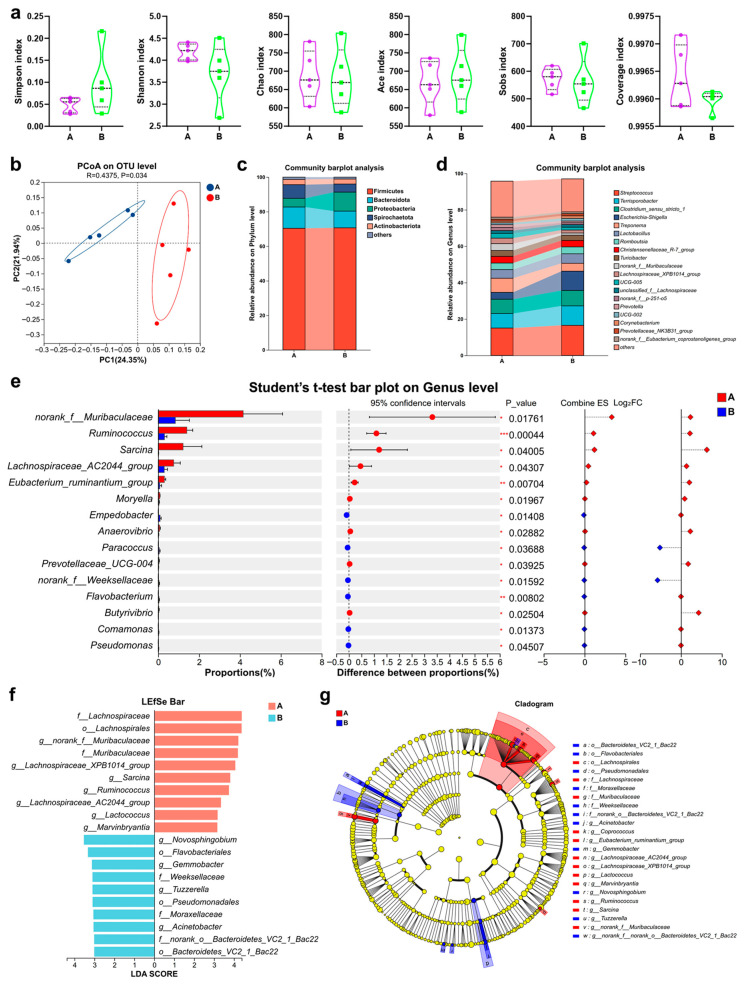 Figure 1
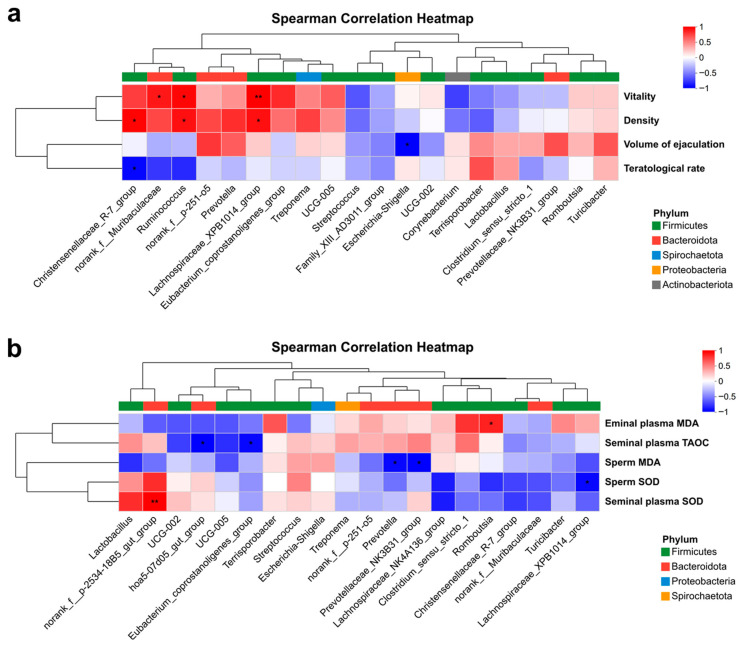 Figure 2
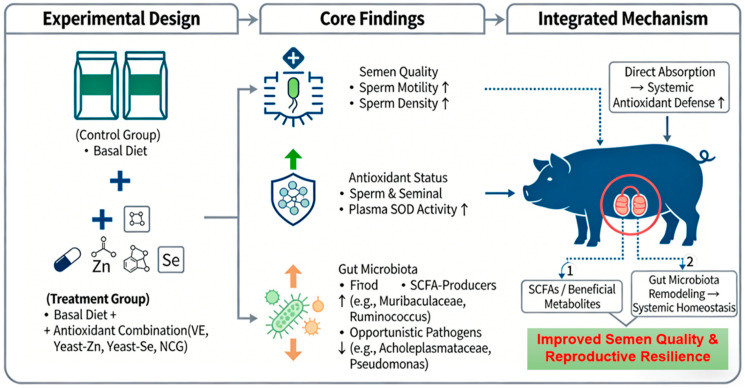 Figure 3
- —Ningxiang Agriculture and rural Bureau Project
Peer Reviews
No public reviews on file for this paper yet. If you reviewed it on a platform where reviews are public (OpenReview, ICLR, NeurIPS, ICML), you can paste yours below so the community can read it here.
Videos
No videos yet. Explain this paper in a talk, walkthrough, or lecture? Add one.
Taxonomy
TopicsEffects of Environmental Stressors on Livestock · Animal Nutrition and Physiology · Animal Behavior and Welfare Studies
1. Introduction
Summer heat stress is a major factor contributing to impaired semen quality in boars, leading to reduced sperm motility and density, as well as increased sperm deformity rates [1]. This seasonal infertility poses a significant economic challenge to pig production. The underlying mechanism is closely linked to oxidative stress; in male animals under thermal challenge, reactive oxygen species (ROS) production exceeds the capacity of endogenous antioxidant defenses, resulting in oxidative damage to spermatozoa membranes and DNA [2,3]. Organisms counteract ROS through antioxidant defense mechanisms [4]. These comprise an enzymatic system, including superoxide dismutase (SOD), glutathione peroxidase (GSH-Px), and catalase (CAT), and a non-enzymatic system involving molecules such as vitamin E, vitamin C, and glutathione [5,6,7,8]. Trace minerals like selenium and zinc are essential cofactors for key antioxidant enzymes (GSH-Px and SOD, respectively) [9,10]. When heat stress overwhelms these endogenous defenses, dietary antioxidant supplementation represents a practical strategy to mitigate oxidative damage and support reproduction [11].
Individual antioxidants have shown promise. Dietary zinc alleviates heat-induced epididymal damage in boars [12], organic selenium enhances GSH-Px activity in semen [4], and vitamin E protects sperm membranes from lipid peroxidation [13]. Furthermore, N-carbamylglutamate (NCG), a synthetic analog of N-acetyl-glutamate, promotes blood ammonia transformation and endogenous arginine synthesis, modulating antioxidant capacity via nitric oxide-dependent pathways [14], with demonstrated benefits for semen quality in poultry [15]. However, the synergistic effects of combining these specific nutrients, particularly in the context of indigenous pig breeds, are less explored.
Emerging evidence suggests a novel link between gut health and systemic physiology, including reproduction. The gut microbiota influences host metabolism, immunity, and inflammation [16]. Notably, diet-induced changes in the microbiota can affect distal organs, but the role of the gut microbiome in mediating the effects of dietary antioxidants on boar reproduction remains largely unknown.
Given that heat stress induces systemic oxidative stress and may disrupt gut homeostasis, we hypothesize that a combined dietary strategy may offer superior benefits. Therefore, this study aimed to evaluate the effects of a dietary combination of vitamin E, yeast-derived zinc, yeast-derived selenium, and NCG on (1) semen quality parameters, (2) seminal antioxidant status (SOD, MDA, T-AOC), and (3) the composition of the gut microbiota in Ningxiang boars under summer heat stress conditions. We posited that the supplement would improve seminal quality not only by directly boosting antioxidant defenses but also potentially through modulating the gut microbial community.
2. Materials and Methods
2.1. Ethics Statement
The animal care and handling procedures were approved by the Animal Care and Use Committee of Hunan Normal University (Changsha, Hunan, China; Approval No. 2023-011, approved on 27 February 2023). This study utilized only Ningxiang boars to evaluate the potential of an antioxidant combination in improving seminal quality during summer heat stress.
2.2. Animals and Experimental Design
Ten healthy, sexually mature Ningxiang boars with confirmed successful breeding histories and no testicular pathology were selected. Obtained in a single batch and matched for age, health status, and body weight, the boars were randomly divided into a control group (Group B, n = 5) and a treatment group (Group A, n = 5). They were individually housed under standardized conditions for a 60-day trial.
Group B received a basal diet formulated to meet the nutritional requirements of mature boars. Group A received the same basal diet supplemented with 400 mg/kg vitamin E, 5 g/kg yeast-derived zinc, 250 mg/kg yeast-derived selenium, and 800 mg/kg NCG. The diet composition and its nutritional levels are presented in Table 1. The trial was conducted at Chuwenxiang Agriculture Co., Ltd. (Changsha, China). All boars received identical routine health management, including a standard vaccination protocol. The study conducted from July to September 2022. The average daily temperatures ranged from 18 °C to 28 °C, with maximum daytime temperatures between 25 °C and 40 °C. Heat stress was functionally defined and confirmed by the observed decline in semen quality parameters (e.g., increased abnormalities) in the control group over the experimental period. Semen was collected before the experiment (T1, baseline), and at 30 (T2) and 60 (T3) days after initiating the experimental diets.
2.3. Sample Collection and Semen Quality Assessment
Semen was collected using the false mount technique. Gel-free semen was obtained by filtration through sterile gauze, and volume was recorded immediately. Semen volume, sperm concentration, sperm motility, and sperm morphology were evaluated according to the Chinese National Standard GB 23238-2021 [17]. Ejaculates were centrifuged (3000× g, 10 min) to separate seminal plasma and sperm cells; both were stored at −80 °C. Fresh fecal samples were collected via rectal stimulation, placed in sterile tubes on ice, and stored at −80 °C.
2.4. Antioxidant Capacity Assays
Malondialdehyde (MDA) levels in sperm and seminal plasma, and seminal plasma total antioxidant capacity (T-AOC), were measured using commercial kits (Nanjing Jiancheng Bioengineering Institute, Nanjing, China). Total superoxide dismutase (SOD) activity in sperm and seminal plasma was determined using kits from Suzhou Kemeing.
2.5. 16S rRNA Gene Sequencing and Analysis
Total genomic DNA was extracted from fecal samples using the QIAamp DNA Stool Mini Kit (Qiagen, Hilden, Germany). DNA integrity was verified by 1% agarose gel electrophoresis. V3–V4 region of the bacterial 16S rRNA gene was amplified via PCR using an ABI GeneAmp^®^ 9700 system (Applied Biosystems, Waltham, MA, USA). Amplification products were quantified with a QuantiFluor™-ST fluorometer (Promega, Madison, WI, USA). Sequencing was performed on an Illumina MiSeq platform at Majorbio Bio-Pharm Technology Co., Ltd. (Shanghai, China). Raw sequences were quality-filtered, trimmed, and clustered into operational taxonomic units (OTUs) at 97% similarity. Bioinformatics analysis was conducted using the Majorbio Cloud Platform. Taxonomic assignment was based on the SILVA database (v115). Alpha and beta diversity were assessed using MOTHUR. Treatment effects were tested using PERMANOVA via the Vegan package (v2.5-3). Differential taxa abundance (phylum to genus) was identified using linear discriminant analysis effect size (LEfSe) (LDA score > 3, p < 0.05). Robust correlations were defined as |Spearman’s rho| > 0.6 with p < 0.01.
2.6. Statistical Analysis
Data were analyzed using independent samples t-tests in SPSS software 26.0. Results are presented as mean ± standard error of the mean (SEM).
3. Results
3.1. Semen Quality Parameters
Compared to the control group, the treatment group showed significant increases in sperm density (p < 0.05) and sperm motility (p < 0.05) at the end of the 60-day experiment period (T3). No significant differences were observed in ejaculate volume or sperm abnormality rate (p > 0.05) (Table 2).
3.2. Antioxidant Status
SOD activity was significantly higher in both sperm and seminal plasma of Group A compared to Group B (p < 0.05). No significant differences were detected in MDA levels or T-AOC (p > 0.05) (Table 3).
3.3. Gut Microbiota Composition
A total of 264,576 high-quality sequences were clustered into 1019 OTUs. Alpha diversity (Ace, Chao1, Shannon) showed no significant differences (p > 0.05) (Figure 1a). In contrast, beta diversity analysis (PCoA) revealed a clear separation in microbial community structure between groups (R = 0.4375, p = 0.034) (Figure 1b). Dominant phyla included Firmicutes, Bacteroidota, Proteobacteria, Spirochaetota, and Actinobacteriota, with no significant abundance differences (Figure 1c). At the genus level, the antioxidant supplementation led to a significant increase in the abundance of several taxa, including norank_f__Muribaculaceae, Ruminococcus, Sarcina, Lachnospiraceae_AC2044_group, Eubacterium_ruminantium_group, Moryella, Anaerovibrio, Prevotellaceae_UCG-004, and Butyrivibrio (p < 0.05), many of which are associated with fiber degradation and short-chain fatty acid (SCFA) production. Conversely, the abundance of several potential opportunistic pathogens, such as Empedobacter, Paracoccus, norank_f__Weeksellaceae, Flavobacterium, Comamonas, and Pseudomonas, was significantly reduced (p < 0.05) (Figure 1d,e). LEfSe analysis also confirmed differentially enriched taxa (Figure 1f,g).
Correlation analysis revealed several notable associations. Semen vitality showed significant positive correlations with norank_f__Muribaculaceae (R = 0.762, p = 0.028), Ruminococcus (R = 0.810, p = 0.015), and Lachnospiraceae_XPB1014_group (R = 0.857, p = 0.007). Semen density positively correlated with Christensenellaceae_R-7_group (R = 0.826, p = 0.011), Ruminococcus (R = 0.786, p = 0.021), and Lachnospiraceae_XPB1014_group (R = 0.786, p = 0.021). Christensenellaceae_R-7_group was negatively correlated with ejaculate volume (R = −0.790, p = 0.020), and Escherichia-Shigella abundance was negatively associated with teratological sperm rate (R = −0.833, p = 0.010) (Figure 2a). Furthermore, norank_f__p-2534-18B5_gut_group positively correlated with seminal plasma SOD (R = 0.943, p = 0.005), while Romboutsia positively correlated with seminal plasma MDA (R = 0.812, p = 0.050). Prevotella (R = −0.829, p = 0.042) and Prevotellaceae_NK3B31_group (R = −0.886, p = 0.019) were negatively correlated with sperm MDA, and Lachnospiraceae_XPB1014_group was negatively correlated with sperm SOD (R = −0.829, p = 0.042) (Figure 2b).
These results indicate that the dietary antioxidant combination favorably remodels the gut microbiota, a change that may contribute to the improved semen quality observed in Ningxiang boars. The key findings of this study and their proposed underlying mechanisms are summarized in the graphical summary below (Figure 3).
4. Discussion
In pig production, semen quality is a critical determinant of breeding efficiency. Dietary antioxidant supplementation has been shown to support normal reproductive function and alleviate oxidative stress [18,19]. This study demonstrates that dietary supplementation with a combination of vitamin E, yeast-derived zinc, yeast-derived selenium and NCG significantly improves semen quality in Ningxiang boars under summer heat stress. The improvements in sperm motility and density were concomitant with enhanced seminal antioxidant defense (elevated SOD activity) and a beneficial remodeling of the gut microbiota.
The antioxidant dosages were selected based on previous research [20,21]. Yeast-derived zinc and selenium exhibit more pronounced biological effects than their inorganic counterparts [22,23,24], NCG, by promoting ammonia metabolism and endogenous arginine synthesis, participates in the arginine–nitric oxide pathway and has been reported to alleviate oxidative damage and improve sperm quality [15,25].
Heat stress is a major cause of seasonal infertility in boars [26]. The increased sperm abnormalities over time in our study indicate that experimental boars experienced significant thermal stress during summer, leading to diminished semen quality. A key mechanism by which heat stress impairs semen quality is through reduced antioxidant activity in seminal plasma, disrupting the balance between ROS production and clearance [27]. Excessive ROS can induce lipid peroxidation of sperm membrane polyunsaturated fatty acids, damage sperm DNA and membrane integrity, and compromise sperm function, ultimately contributing to male infertility [28]. The observed increase in SOD activity, a crucial first-line enzymatic antioxidant, is a key finding [29]. It suggests that the antioxidant combination bolstered the boars’ endogenous defense system against heat stress-induced oxidative damage, providing a plausible mechanism for the improved sperm motility [27,28]. Although no change in MDA was detected, the enhancement of the enzymatic defense likely played a predominant protective role.
Accumulating evidence indicates that nutrition modulates gut microbiota composition, which in turn influences host physiology and health [30,31]. Recent studies highlight the role of gut microbiota in regulating spermatogenesis and semen quality [32,33,34,35]. A novel and significant aspect of our work is the link to the gut microbiome. Antioxidant supplementation altered gut microbial community structure and enriched fiber-degrading and short-chain fatty acid (SCFA)-producing taxa, including Muribaculaceae, Ruminococcus, Prevotellaceae_UCG-004, Anaerovibrio, and Butyrivibrio [36,37] and exert immunomodulatory and anti-inflammatory effects [38]. Concurrently, we observed a reduction in potential pathogens, including Acholeplasmataceae, Empedobacte, Paracoccus, Comamonas, Pseudomonas, which may contribute to improved gut homeostasis and indirectly support semen quality [39]. The strong positive correlations between these beneficial microbial taxa and semen quality indicators (vitality, density) suggest that the gut microbiota may be an important mediator in the pathway from diet to improved reproductive performance [32,33,34,35]. SCFAs are known to exert systemic anti-inflammatory and metabolic effects [38], which could create a more favorable physiological state for spermatogenesis.
While this study focused on the combined effect of the antioxidants, future research employing factorial designs could delineate the individual contributions of each component. Furthermore, direct fertility trials (e.g., via artificial insemination) are warranted to confirm the translational impact of the improved semen parameters. The promising effects on the gut-reproductive axis also warrant validation in commercial breeds. Interestingly, the antioxidant and microbial-modulating properties of these components suggest a potential for exploration in semen extenders, a direction for future applied research.
In conclusion, a 60-day dietary supplementation with vitamin E, yeast-derived zinc, yeast-derived selenium, and NCG effectively mitigated heat stress-induced impairment of semen quality in Ningxiang boars. The mechanism appears to involve a dual action: enhancing endogenous antioxidant capacity (SOD activity) and promoting a favorable gut microbiota composition. These findings provide a scientifically grounded, practical strategy for seasonal nutritional management to support reproductive performance in heat-stressed boars. For on-farm application, we recommend initiating this supplementation approximately 60 days prior to the anticipated heat stress period to protect the complete spermatogenic cycle.
The reference list from the paper itself. Each links out to its DOI / PubMed record.
- 1Sui H. Wang S. Liu G. Meng F. Cao Z. Zhang Y. Effects of Heat Stress on Motion Characteristics and Metabolomic Profiles of Boar Spermatozoa Genes 202213164710.3390/genes 1309164736140814 PMC 9498559 · doi ↗ · pubmed ↗
- 2Schafer F.Q. Buettner G.R. Redox environment of the cell as viewed through the redox state of the glutathione disulfide/glutathione couple Free Radic. Biol. Med.2001301191121210.1016/S 0891-5849(01)00480-411368918 · doi ↗ · pubmed ↗
- 3Shiota Yokomizo A. Tada Y. Inokuchi J. Kashiwagi E. Masubuchi D. Eto M. Uchiumi T. Naito S. Castration resistance of prostate cancer cells caused by castration-induced oxidative stress through Twist 1 and androgen receptor overexpression Oncogene 20102923725010.1038/onc.2009.32219802001 · doi ↗ · pubmed ↗
- 4Surai P.F. Fisinin V.I. Selenium in pig nutrition and reproduction: Boars and semen quality—A review Asian-Australas. J. Anim. Sci.20152873074610.5713/ajas.14.059325924964 PMC 4413004 · doi ↗ · pubmed ↗
- 5Surai P.F. Blesbois E. Grasseau I. Chalah T. Brillard J.P. Wishart G.J. Cerolini S. Sparks N.H. Fatty acid composition, glutathione peroxidase and superoxide dismutase activity and total antioxidant activity of avian semen Comp. Biochem. Physiol. Part B Biochem. Mol. Biol.199812052753310.1016/S 0305-0491(98)10039-19787812 · doi ↗ · pubmed ↗
- 6Kohen R. Nyska A. Oxidation of biological systems: Oxidative stress phenomena, antioxidants, redox reactions, and methods for their quantification Toxicol. Pathol.20023062065010.1080/0192623029016672412512863 · doi ↗ · pubmed ↗
- 7Mruk D.D. Silvestrini B. Mo M.Y. Cheng C.Y. Antioxidant superoxide dismutase—A review: Its function, regulation in the testis, and role in male fertility Contraception 20026530531110.1016/S 0010-7824(01)00320-112020784 · doi ↗ · pubmed ↗
- 8Strzezek J. Secretory activity of boar seminal vesicle glands Reprod. Biol.2002224326614666148 · pubmed ↗