Clinical Spectrum of Arrhythmogenic Entities in Spanish Children Carrying Deleterious SCN5A Variants
Estefanía Martínez-Barrios, José Cruzalegui, Maria Hidalgo-Sanuy, Andrea Greco, Sergi Cesar, Fredy Chipa, Nuria Díez-Escuté, Patricia Cerralbo, Irene Zschaeck, Fernanda Merchán, Sol Balcells Mejia, Josep Brugada, Oscar Campuzano, Georgia Sarquella-Brugada

TL;DR
This study examines the range of heart conditions in Spanish children with harmful SCN5A gene variants and highlights the importance of genetic testing for early diagnosis and prevention.
Contribution
The study provides insights into genotype–phenotype correlations in pediatric patients with deleterious SCN5A variants in a Spanish cohort.
Findings
The most common diagnoses were isolated Brugada syndrome and long QT syndrome type 3.
Overlapping clinical phenotypes were observed in a subset of patients.
Genetic testing is emphasized for early diagnosis and risk stratification in children.
Abstract
Deleterious variants in SCN5A lead to a wide clinical spectrum that includes pathologies characterized by life-threatening cardiac events (CEs). In the pediatric population, early identification, management, and risk stratification of these pathologies are the main current challenges. This study analyzed a Spanish pediatric cohort (≤18 years) carrying rare SCN5A variants to explore genotype–phenotype correlations. A retrospective descriptive cohort study, including clinical, demographic, and genetic data of probands and their relatives, was conducted. Out of 100 children studied, 69 had definitively deleterious SCN5A variants (26 females, 38%; median age: 3 years, IQR 1–12). The main diagnoses were isolated Brugada syndrome (BrS) (31; 45%); isolated long QT syndrome type 3 (LQT3) (5; 7%); isolated progressive cardiac conduction disease (PCCD) (1; 2%); isolated familial atrial…
Genes, proteins, chemicals, diseases, species, mutations and cell lines named across the full text — each resolved to its canonical identifier and authoritative record.
Click any figure to enlarge with its caption.
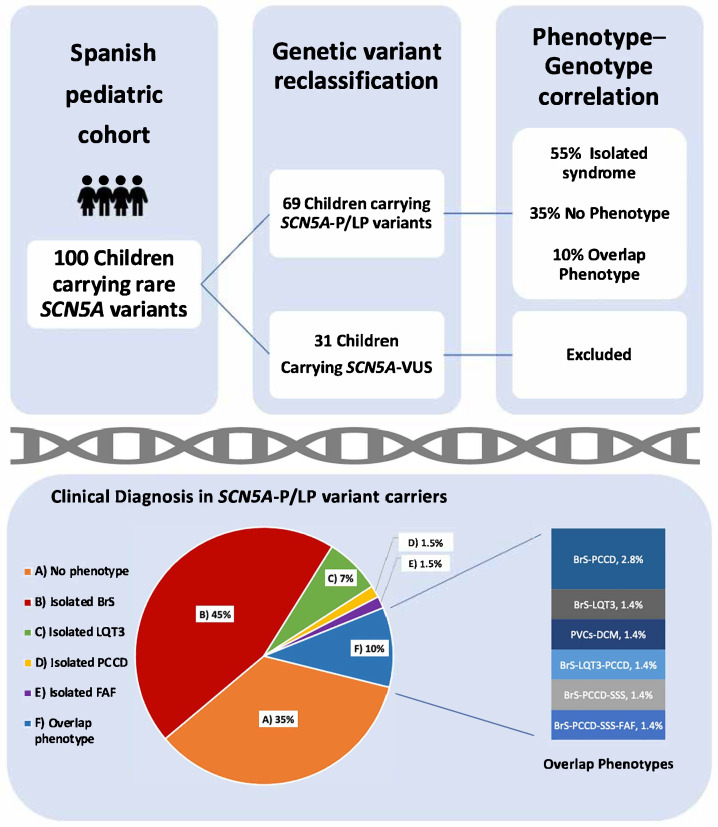 Figure 1
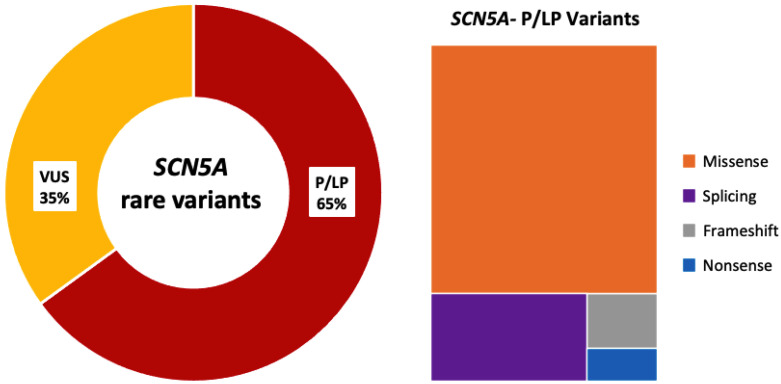 Figure 2
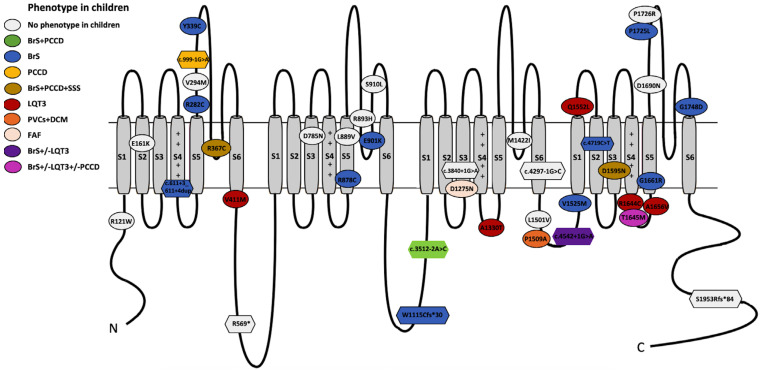 Figure 3
Peer Reviews
No public reviews on file for this paper yet. If you reviewed it on a platform where reviews are public (OpenReview, ICLR, NeurIPS, ICML), you can paste yours below so the community can read it here.
Videos
No videos yet. Explain this paper in a talk, walkthrough, or lecture? Add one.
Taxonomy
TopicsCardiac electrophysiology and arrhythmias · Cardiac Arrhythmias and Treatments · Cardiomyopathy and Myosin Studies