Evaluation of CYP2C8 and CYP2C9 Polymorphisms in Neonates with Patent Ductus Arteriosus Treated with Ibuprofen or Indomethacin: A Retrospective Cohort Study
Shaikha Jabor Alnaimi, Shimaa Aboelbaha, Ibrahim Safra, Mai Abdulla Al Qubaisi, Fouad Abounahia, Ahmed Al Farsi, Liji Cherian, Lizy Philip, Moza Alhail, Gulab Sher, Nader Al-Dewik

TL;DR
This study examines how genetic variations in CYP2C8 and CYP2C9 affect treatment response to ibuprofen or indomethacin in neonates with PDA.
Contribution
The study provides new data from the Middle East on the role of CYP2C8 and CYP2C9 polymorphisms in neonatal PDA treatment outcomes.
Findings
No significant association was found between CYP2C8 or CYP2C9 polymorphisms and treatment response in neonates with PDA.
Multiple surfactant doses independently predicted poor treatment response.
Extremely low birth weight showed a borderline association with treatment response.
Abstract
The pharmacologic management of patent ductus arteriosus (PDA) presents a challenge to clinicians due to the interindividual variability in drug response to available medications. There is evidence that CYP2C9 is associated with the response to PDA treatment; however, no data from the Middle East is available. This study aimed to investigate the association between CYP2C8 and CYP2C9 genetic polymorphisms and response to ibuprofen or indomethacin in neonates with PDA. We conducted a retrospective cohort study of neonates with a gestational age < 32 weeks and birthweight < 1500 g with PDA between 2019 and 2023. Eligible neonates were those diagnosed with PDA and treated with at least one course of ibuprofen or indomethacin. Genotyping was performed to identify four single-nucleotide polymorphisms (SNPs), namely CYP2C8*3 rs10509681, CYP2C9*2 rs1799853, CYP2C9 rs2153628, and CYP2C9*3…
Genes, proteins, chemicals, diseases, species, mutations and cell lines named across the full text — each resolved to its canonical identifier and authoritative record.
Click any figure to enlarge with its caption.
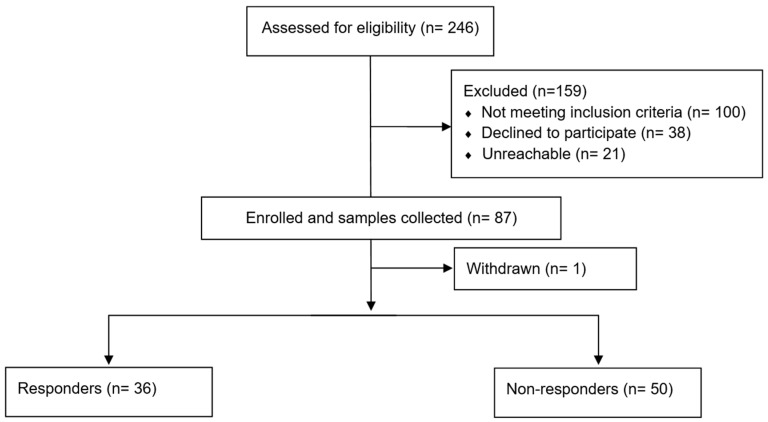 Figure 1
Peer Reviews
No public reviews on file for this paper yet. If you reviewed it on a platform where reviews are public (OpenReview, ICLR, NeurIPS, ICML), you can paste yours below so the community can read it here.
Videos
No videos yet. Explain this paper in a talk, walkthrough, or lecture? Add one.
Taxonomy
TopicsCardiovascular Conditions and Treatments · Congenital heart defects research · Congenital Heart Disease Studies