Complement Activation as a Predictor of Postoperative Delirium in Elderly Spine Surgery Patients
Antje Vogelgesang, Hannah Wolf, Sarah Strack, Agnes Flöel, Henry W. S. Schroeder, Jonas Müller, Jan-Uwe Müller, Angelika Fleischmann, Robert Fleischmann, Diana Pauly, Johanna Ruhnau

TL;DR
This study explores how complement proteins in the blood can predict delirium after spine surgery in elderly patients.
Contribution
The study identifies complement proteins like FD and C2 as potential biomarkers for postoperative delirium.
Findings
Preoperative FD and C2 levels were significantly higher in patients who developed delirium.
Complement profiling explained up to 43% of delirium severity variance.
Cognitive performance was the strongest predictor when adjusted for surgery duration.
Abstract
Postoperative delirium (POD) is a frequent and serious complication among elderly surgical patients. Despite its clinical relevance, reliable biomarkers for early identification and pathophysiological insight remain limited. Recent evidence implicates systemic immune activation and complements dysregulation as contributors to cognitive decline after surgery. This study investigated the association between perioperative levels of selected complement pathway proteins and both the incidence and severity of POD. Methods: We performed a secondary analysis of 22 patients aged ≥ 60 years from the prospective CONFESS cohort undergoing elective spine surgery. Complement proteins (C1q, C2, C4), mannose-binding lectin (MBL), Factor D [FD], Factor B [FB], Factor I [FI] were quantified from blood samples collected at baseline, preoperatively, and on postoperative days 1 and 2. POD was assessed using…
Genes, proteins, chemicals, diseases, species, mutations and cell lines named across the full text — each resolved to its canonical identifier and authoritative record.
Click any figure to enlarge with its caption.
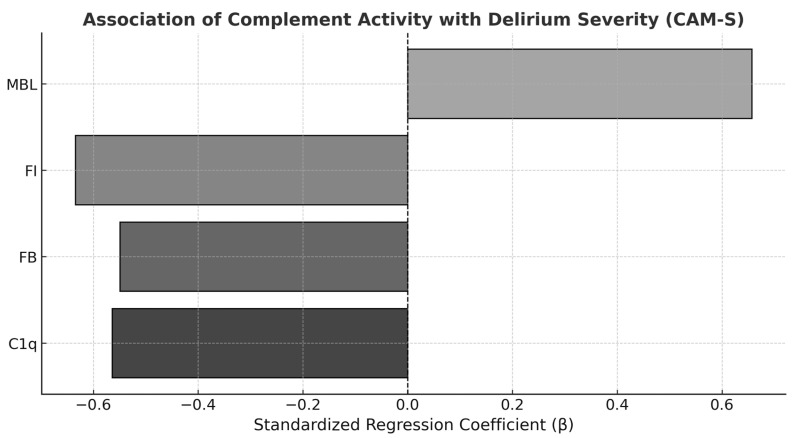 Figure 1
Peer Reviews
No public reviews on file for this paper yet. If you reviewed it on a platform where reviews are public (OpenReview, ICLR, NeurIPS, ICML), you can paste yours below so the community can read it here.
Videos
No videos yet. Explain this paper in a talk, walkthrough, or lecture? Add one.
Taxonomy
TopicsIntensive Care Unit Cognitive Disorders · Family and Patient Care in Intensive Care Units · Neuroinflammation and Neurodegeneration Mechanisms