PepScorer::RMSD: An Improved Machine Learning Scoring Function for Protein–Peptide Docking
Andrea Giuseppe Cavalli, Giulio Vistoli, Alessandro Pedretti, Laura Fumagalli, Angelica Mazzolari

TL;DR
PepScorer::RMSD is a new machine learning tool that improves the accuracy of predicting how peptides bind to proteins, enhancing drug discovery for peptide-based drugs.
Contribution
PepScorer::RMSD introduces a novel machine learning scoring function tailored for protein–peptide docking, outperforming existing methods in pose selection and docking power.
Findings
PepScorer::RMSD achieved a Pearson correlation of 0.70 and a mean absolute error of 1.77 Å in RMSD prediction.
The model demonstrated top-1 docking power values of 92% on the evaluation set and 81% on an external test set.
The workflow was benchmarked against AlphaFold-Multimer predictions, confirming its robustness for virtual screening.
Abstract
Over the past two decades, pharmaceutical peptides have emerged as a powerful alternative to traditional small molecules, offering high potency, specificity, and low toxicity. However, most computational drug discovery tools remain optimized for small molecules and need to be entirely adapted to peptide-based compounds. Molecular docking algorithms, commonly employed to rank drug candidates in early-stage drug discovery, often fail to accurately predict peptide binding poses due to their high conformational flexibility and scoring functions not being tailored to peptides. To address these limitations, we present PepScorer::RMSD, a novel machine learning-based scoring function specifically designed for pose selection and enhancement of docking power (DP) in virtual screening campaigns targeting peptide libraries. The model predicts the root-mean-squared deviation (RMSD) of a peptide pose…
Genes, proteins, chemicals, diseases, species, mutations and cell lines named across the full text — each resolved to its canonical identifier and authoritative record.
Click any figure to enlarge with its caption.
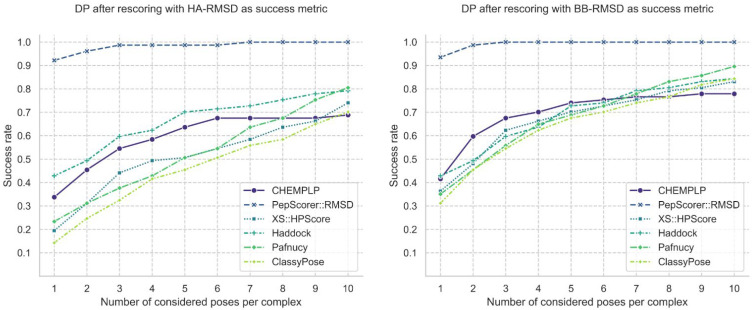 Figure 1
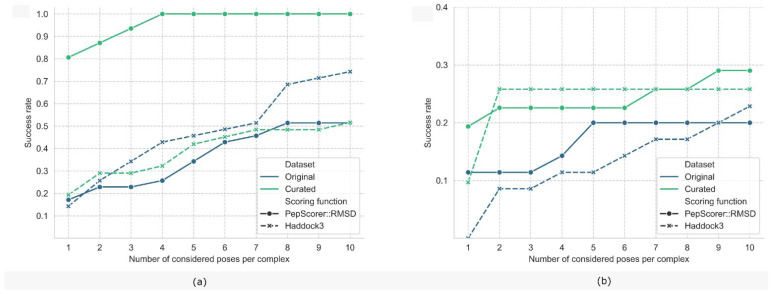 Figure 2
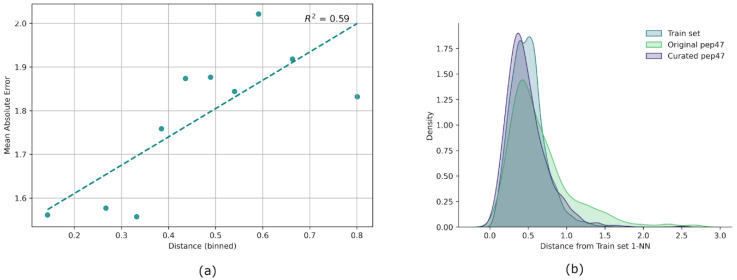 Figure 3
 Figure 4
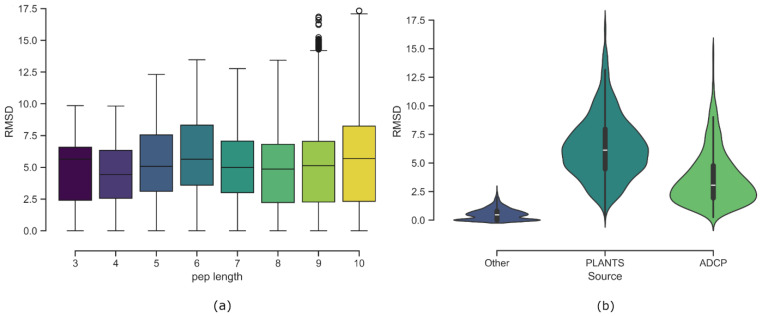 Figure 5
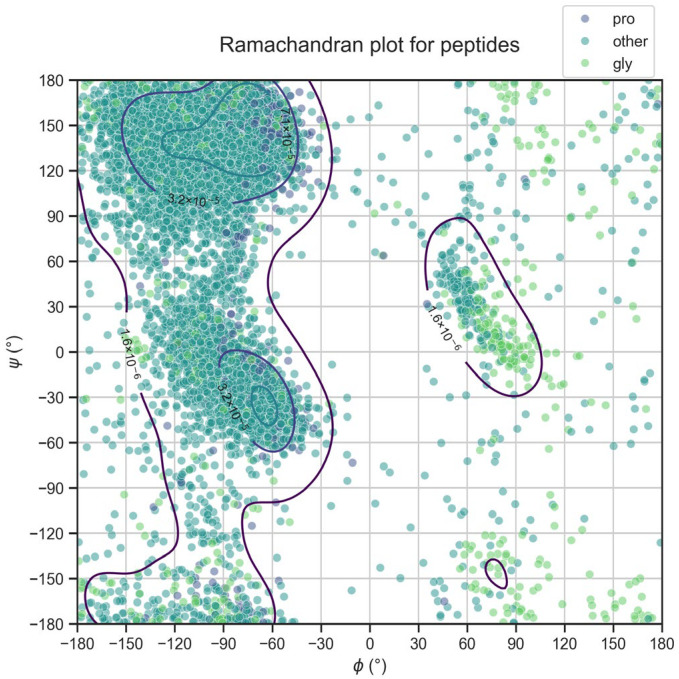 Figure 6
Peer Reviews
No public reviews on file for this paper yet. If you reviewed it on a platform where reviews are public (OpenReview, ICLR, NeurIPS, ICML), you can paste yours below so the community can read it here.
Videos
No videos yet. Explain this paper in a talk, walkthrough, or lecture? Add one.
Taxonomy
TopicsComputational Drug Discovery Methods · Chemical Synthesis and Analysis · Protein Structure and Dynamics