Apolipoprotein E4 in Alzheimer’s Disease: Role in Pathology, Lipid Metabolism, and Drug Treatment
Nour F. Al-Ghraiybah, Amer E. Alkhalifa, Yutaka Itokazu, Taylor O. Farr, Naima C. Perez, Hande Ali, Amal Kaddoumi

TL;DR
This review explores how the ApoE4 gene variant contributes to Alzheimer's disease, affecting brain barriers, lipid metabolism, and treatment responses.
Contribution
The paper integrates recent findings on ApoE4's role in AD pathology and treatment, emphasizing personalized medicine approaches.
Findings
ApoE4 is strongly linked to advanced Alzheimer's pathology and blood–brain barrier disruption.
ApoE4 influences lipid metabolism changes in Alzheimer's patients.
ApoE4 status should be considered in developing and personalizing Alzheimer's treatments.
Abstract
Alzheimer’s Disease (AD) is a neurodegenerative disorder characterized by cognitive decline and memory loss. Among the genetic risk factors linked to AD, the Apolipoprotein E4 (ApoE4) remains the strongest. It is well known that carrying the ApoE4 isoform is associated with advanced AD pathology, blood–brain barrier (BBB) disruption, and changes in lipid metabolism. In this review, we provide an overview of the role of centrally and peripherally produced ApoE in AD. After this introduction, we focus on new findings regarding ApoE4’s effects on AD pathology and BBB function. We then discuss ApoE’s role in lipid metabolism in AD, highlighting examples of lipid changes caused by carrying the ApoE4 isoform. Next, the review explores the implications of ApoE4 isoforms for current treatments—whether they involve anti-amyloid therapy or other pharmacological agents used for AD—emphasizing the…
Genes, proteins, chemicals, diseases, species, mutations and cell lines named across the full text — each resolved to its canonical identifier and authoritative record.
Click any figure to enlarge with its caption.
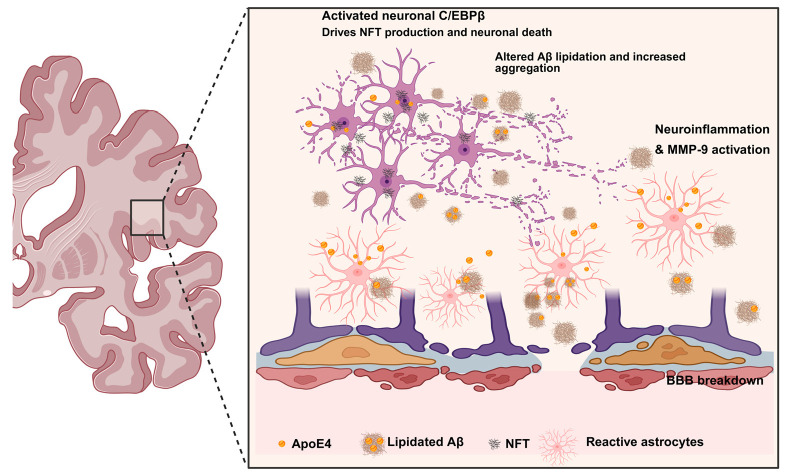 Figure 1
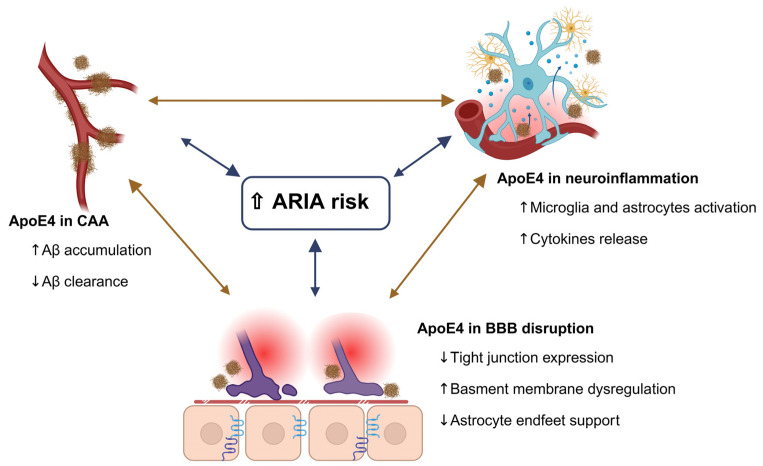 Figure 2
Peer Reviews
No public reviews on file for this paper yet. If you reviewed it on a platform where reviews are public (OpenReview, ICLR, NeurIPS, ICML), you can paste yours below so the community can read it here.
Videos
No videos yet. Explain this paper in a talk, walkthrough, or lecture? Add one.
Taxonomy
TopicsAlzheimer's disease research and treatments · Dementia and Cognitive Impairment Research · Clusterin in disease pathology