Bioclimatic and Land Use/Land Cover Factors as Determinants of Crabronidae (Hymenoptera) Community Structure in Yunnan, China
Nawaz Haider Bashir, Muhammad Naeem, Qiang Li, Huanhuan Chen

TL;DR
This study explores how climate and land use affect wasp communities in Yunnan, China, highlighting the importance of habitat protection for these ecologically important insects.
Contribution
The study provides the first province-level assessment of Crabronidae assemblages and their environmental determinants in Yunnan using species distribution modeling and multivariate analyses.
Findings
Land use/land cover (LULC) factors were the primary determinant for 90% of Crabronidae species assemblages in Yunnan.
Species richness peaked in southern Yunnan, particularly in counties like Jinghong and Mengla.
Canonical Correspondence Analysis showed that LULC and climatic factors together explained 70% of the variance in community structure.
Abstract
Many ecologically and economically important species of Crabronidae wasps (Hymenoptera) perform hunting of soft-bodied insect pests and pollen transformation services. Because of these highly beneficial economic services, Crabronidae deserve to be studied. This paper investigates the impact of environmental factors on the community structure and distribution patterns of these wasps in Yunnan Province, China. The Yunnan Province is an ideal place for this study as it is a biodiversity hotspot within China due to its climatic and topographic conditions. Our results suggest that environmental factors influenced the shape and community assemblages of Crabronidae species in Yunnan. In addition, different areas of the provinces support different species and this pattern is strongly associated with environmental factors. The land use/land cover (LULC) factors played a primary role in most…
Genes, proteins, chemicals, diseases, species, mutations and cell lines named across the full text — each resolved to its canonical identifier and authoritative record.
Click any figure to enlarge with its caption.
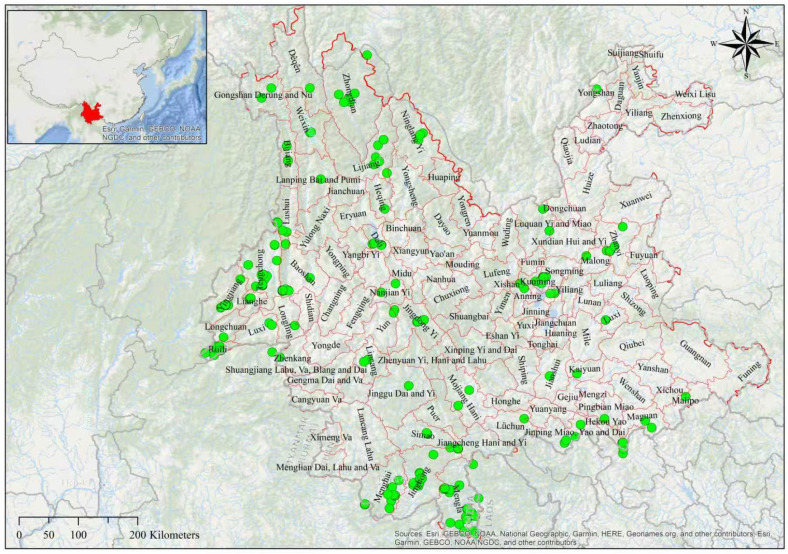 Figure 1
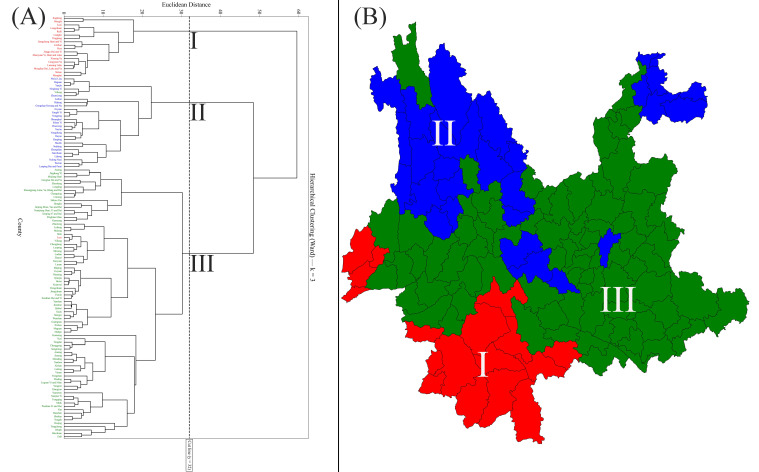 Figure 2
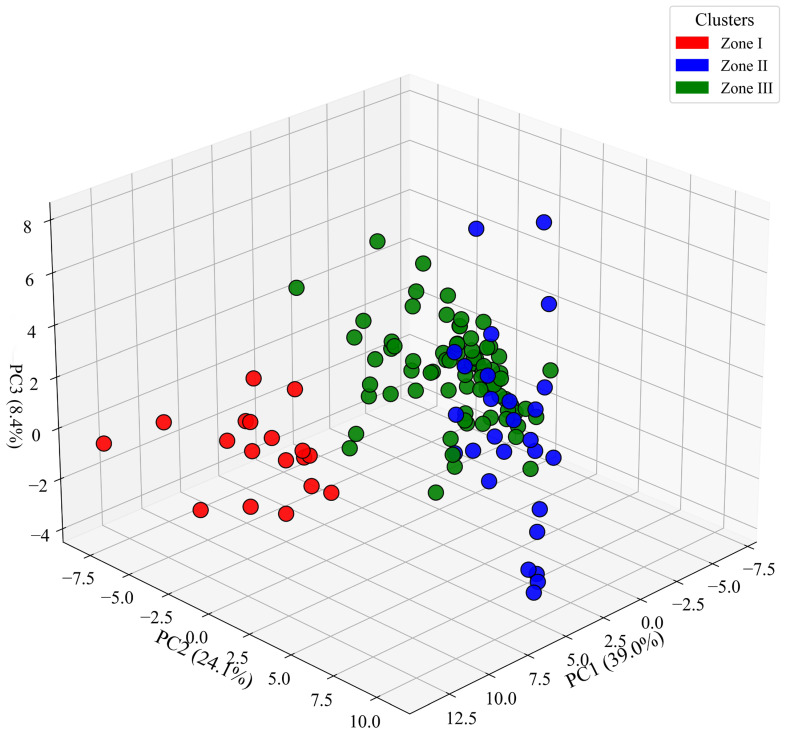 Figure 3
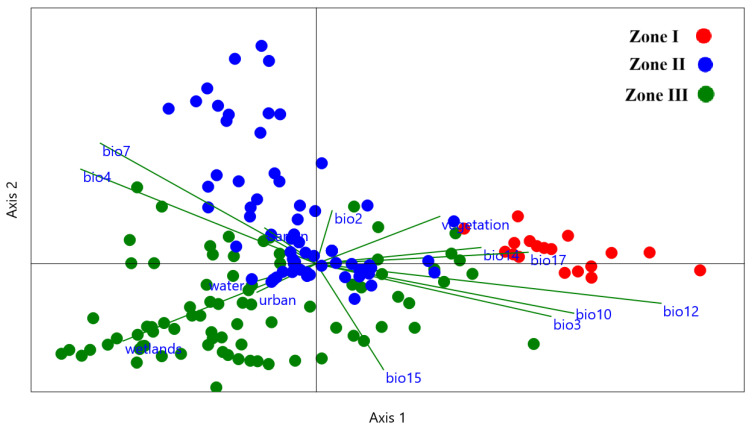 Figure 4
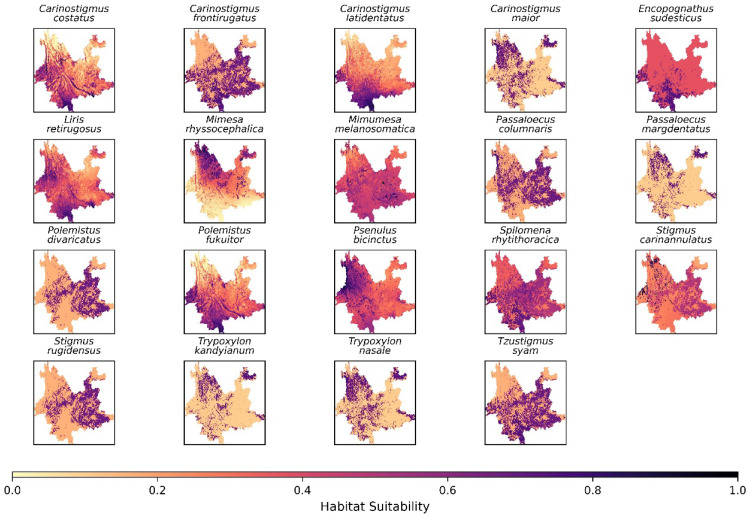 Figure 5
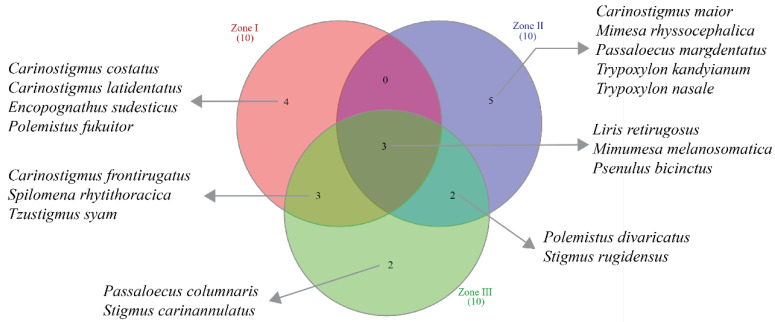 Figure 6
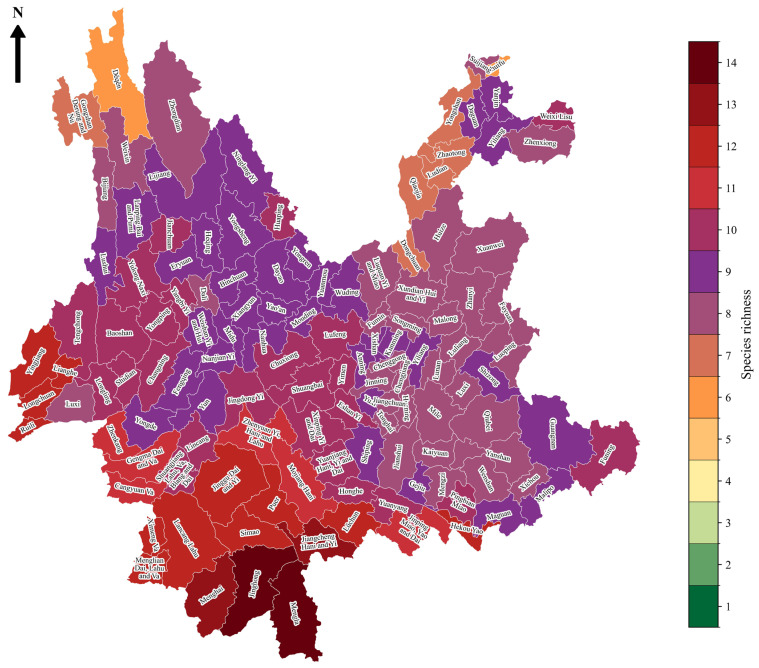 Figure 7
Peer Reviews
No public reviews on file for this paper yet. If you reviewed it on a platform where reviews are public (OpenReview, ICLR, NeurIPS, ICML), you can paste yours below so the community can read it here.
Videos
No videos yet. Explain this paper in a talk, walkthrough, or lecture? Add one.
Taxonomy
TopicsSpecies Distribution and Climate Change · Insect and Arachnid Ecology and Behavior · Ecology and Vegetation Dynamics Studies