Retromandibular Anteroparotid Versus Transparotid Approach for Subcondylar Mandibular Fractures: A Retrospective Comparative Study of 80 Cases
Andrea Battisti, Danilo Di Giorgio, Federica Orsina Ferri, Marco Della Monaca, Benedetta Capasso, Paolo Priore, Valentina Terenzi, Valentino Valentini

TL;DR
This study compares two surgical approaches for fixing subcondylar mandibular fractures and finds both are safe, but one reduces parotid-related complications.
Contribution
The study provides comparative clinical evidence on anteroparotid versus transparotid approaches for subcondylar fractures, focusing on complication profiles.
Findings
Both anteroparotid and transparotid approaches had low complication rates for subcondylar fracture ORIF.
Sialoceles occurred exclusively in the transparotid group, while anteroparotid avoided parotid-related complications.
Complex fracture patterns correlated with longer operative times, but not with increased complications.
Abstract
Background/Objectives: Subcondylar mandibular fractures represent a challenging subset of maxillofacial trauma due to their proximity to the temporomandibular joint and the facial nerve. The retromandibular approach can be performed through either an anteroparotid or a transparotid route, but comparative clinical data remain limited. This study aimed to evaluate clinical outcomes, complication profiles, and operative parameters associated with the retromandibular anteroparotid versus transparotid approach for open reduction and internal fixation (ORIF) of subcondylar fractures. Methods: A retrospective analysis was conducted on 80 consecutive patients treated for subcondylar mandibular fractures at the Department of Maxillofacial Surgery, Umberto I General Hospital, Sapienza University of Rome, between 2018 and 2025. All patients underwent ORIF via a retromandibular approach…
Genes, proteins, chemicals, diseases, species, mutations and cell lines named across the full text — each resolved to its canonical identifier and authoritative record.
Click any figure to enlarge with its caption.
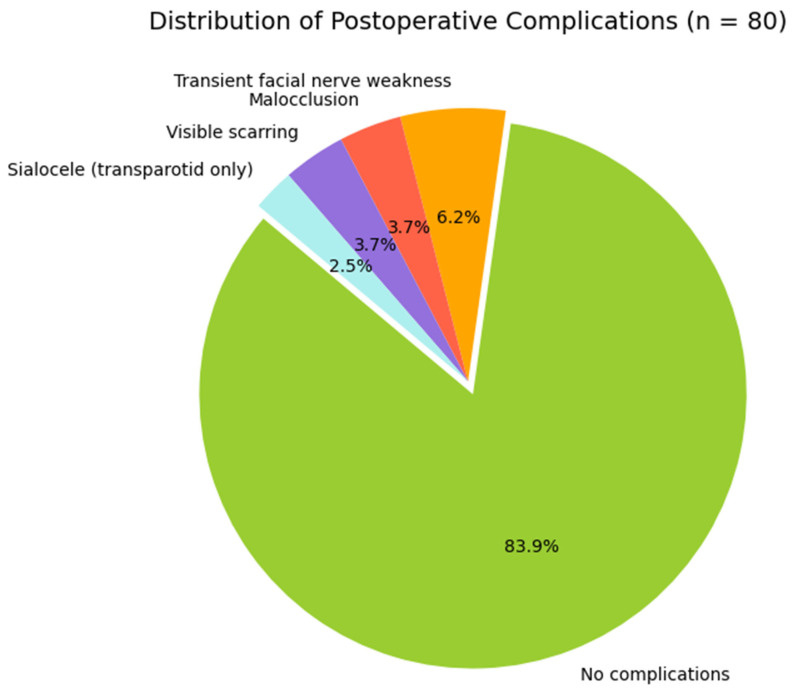 Figure 1
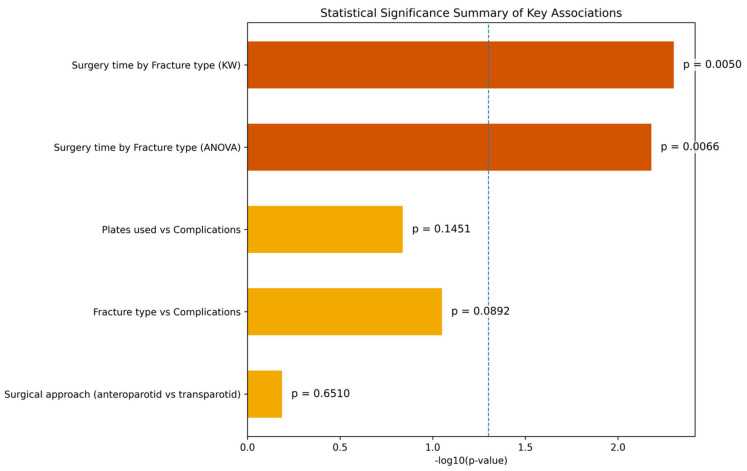 Figure 2
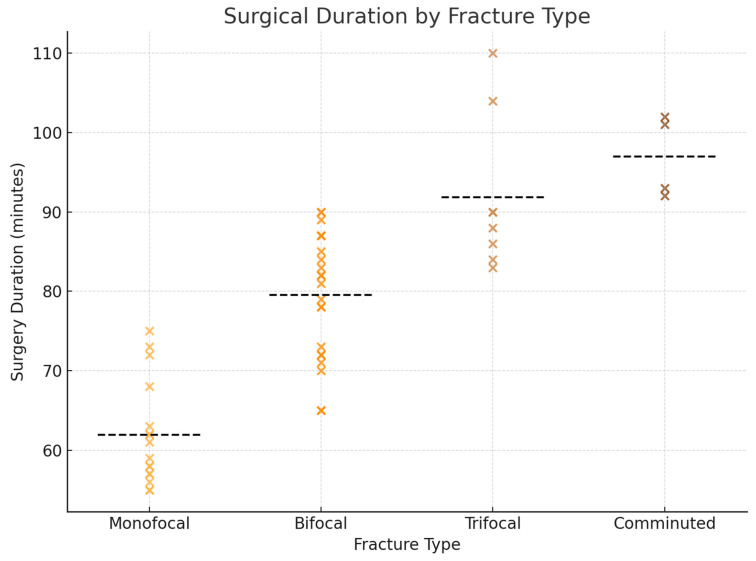 Figure 3
 Figure 4
Peer Reviews
No public reviews on file for this paper yet. If you reviewed it on a platform where reviews are public (OpenReview, ICLR, NeurIPS, ICML), you can paste yours below so the community can read it here.
Videos
No videos yet. Explain this paper in a talk, walkthrough, or lecture? Add one.
Taxonomy
TopicsFacial Trauma and Fracture Management · Dental Radiography and Imaging · Pelvic and Acetabular Injuries