EZHIP in Pediatric Brain Tumors: From Epigenetic Mimicry to Therapeutic Vulnerabilities
Tiziana Servidei, Serena Gentile, Alessandro Sgambato, Antonio Ruggiero

TL;DR
EZHIP is a protein linked to aggressive pediatric brain tumors and can disrupt gene regulation, offering new insights into potential therapies.
Contribution
This paper reviews the role of EZHIP in pediatric brain tumors and its broader oncogenic potential across cancers.
Findings
EZHIP inhibits PRC2 and alters H3K27me3 distribution in brain tumors.
EZHIP is associated with aggressive pediatric brain tumor subtypes and osteosarcoma.
Therapeutic strategies targeting EZHIP's epigenetic and metabolic roles are emerging.
Abstract
Enhancer of zeste homologs inhibitory protein (EZHIP) is a eutherian-specific protein, with poorly defined developmental functions and physiological expression restricted to germ cells. Its aberrant re-expression characterizes posterior fossa ependymoma subtype A and a subset of diffuse midline gliomas with wild-type histone H3—aggressive pediatric brain tumors marked by global loss of the repressive H3 lysine 27 trimethylation (H3K27me3). Functionally analogous to the H3 lysine 27 to methionine (H3K27M) oncohistone, EZHIP inhibits Polycomb repressive complex 2 (PRC2), altering genome-wide H3K27me3 distribution and fate commitment. Unlike H3K27M, EZHIP is epigenetically silenced under physiological conditions yet inducible, suggesting context-dependent oncogenic roles. Its intrinsically disordered structure enables multifunctional interactions and biological versatility. Beyond brain…
Genes, proteins, chemicals, diseases, species, mutations and cell lines named across the full text — each resolved to its canonical identifier and authoritative record.
Click any figure to enlarge with its caption.
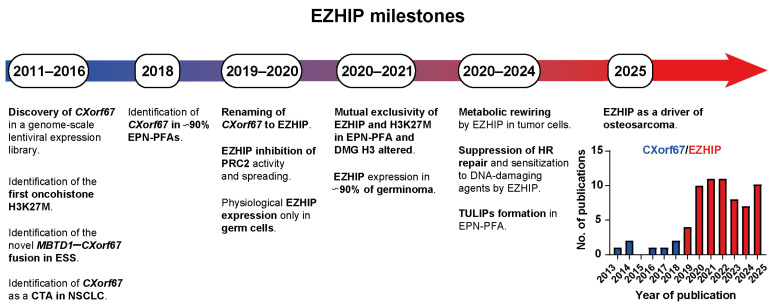 Figure 1
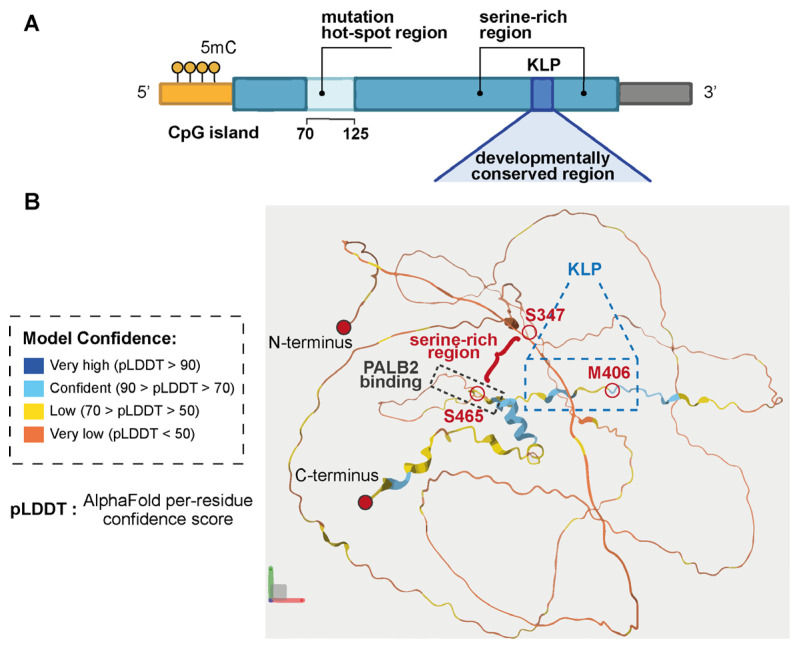 Figure 2
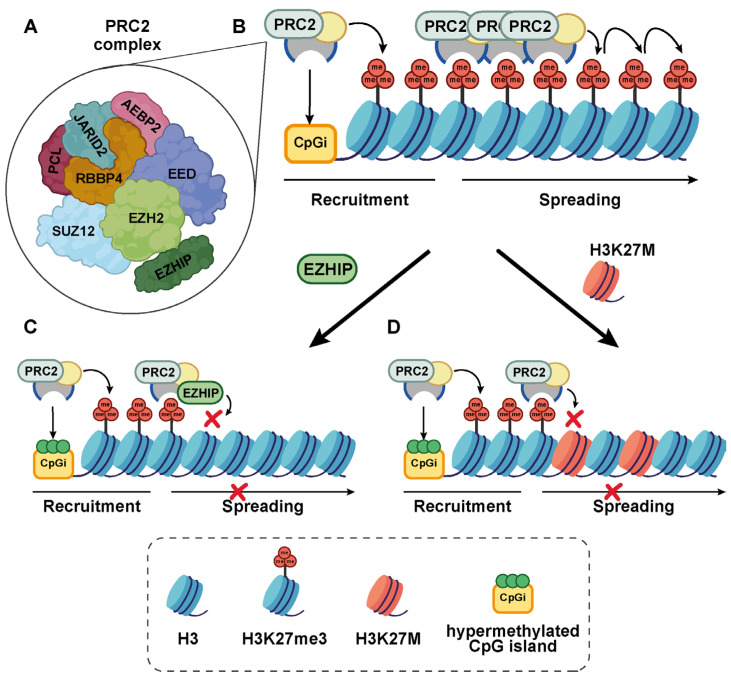 Figure 3
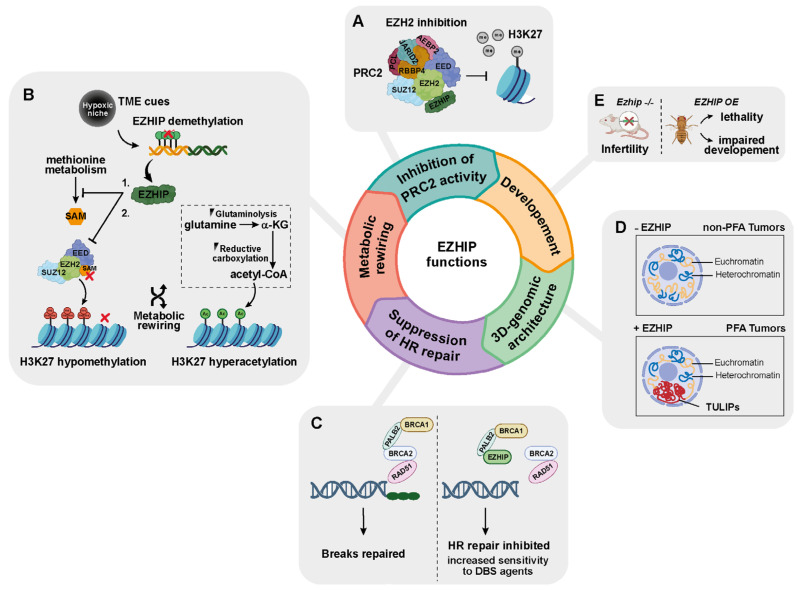 Figure 4
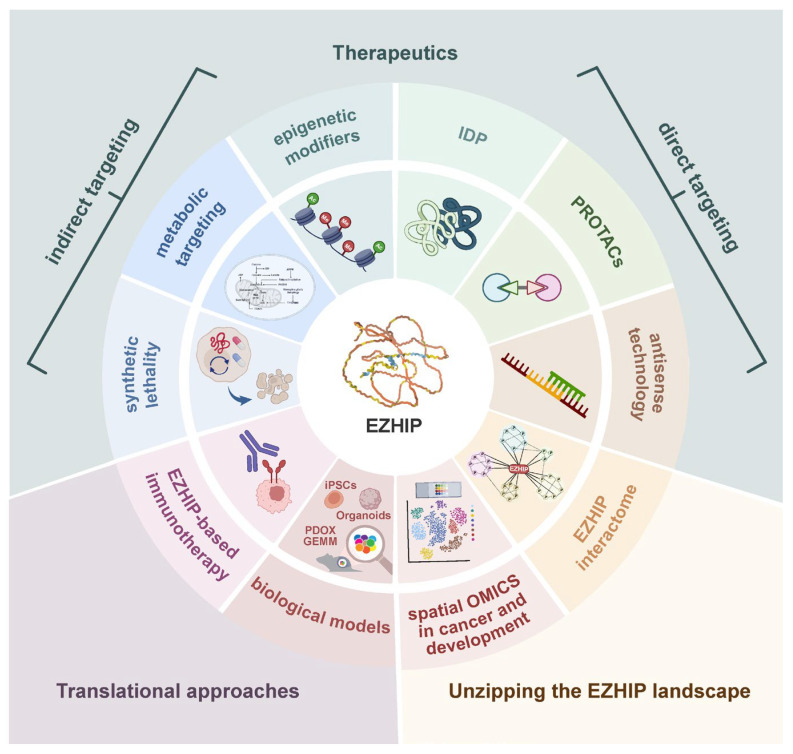 Figure 5
Peer Reviews
No public reviews on file for this paper yet. If you reviewed it on a platform where reviews are public (OpenReview, ICLR, NeurIPS, ICML), you can paste yours below so the community can read it here.
Videos
No videos yet. Explain this paper in a talk, walkthrough, or lecture? Add one.
Taxonomy
TopicsEpigenetics and DNA Methylation · Genomics and Chromatin Dynamics · Developmental Biology and Gene Regulation