An XGBoost-Based Morphometric Classification System for Automatic Subspecies Identification of Apis mellifera
Miaoran Zhang, Yali Du, Xiaoyin Deng, Jinming He, Haibin Jiang, Yuling Liu, Jingyu Hao, Peng Chen, Kai Xu, Qingsheng Niu

TL;DR
This paper introduces a fast and accurate tool using XGBoost to classify honey bee subspecies based on body measurements, aiding conservation and breeding efforts.
Contribution
A novel XGBoost-based morphometric classification system for Apis mellifera subspecies with high accuracy and interpretability.
Findings
The model achieved 98% accuracy using only 10 key morphometric traits like forewing angles and abdominal plate sizes.
SHAP analyses confirmed the importance of selected features and highlighted misclassifications in morphologically similar lineages.
The tool is portable, interpretable, and can be retrained on new datasets for other insect species.
Abstract
The reliable identification of honey bee subspecies is important for their breeding and conservation, but common approaches can be slow or expensive. We measured a compact set of routine body traits—mainly forewing angles and abdominal plate sizes—in worker bees collected under a standard protocol. Using these measurements, we built a small, easy-to-use classification tool that assigns subspecies with very high accuracy. The tool also shows which traits drive each decision so that users can understand why a specimen was assigned to a group. It runs quickly on a regular computer, accepts local data, and produces clear plots and a short list of key traits. The same steps can be retrained on new regional datasets. Our results show that routine measurements, combined with an accessible computer-based approach, can support fast screening in the lab or field and help prioritize samples for…
Genes, proteins, chemicals, diseases, species, mutations and cell lines named across the full text — each resolved to its canonical identifier and authoritative record.
Click any figure to enlarge with its caption.
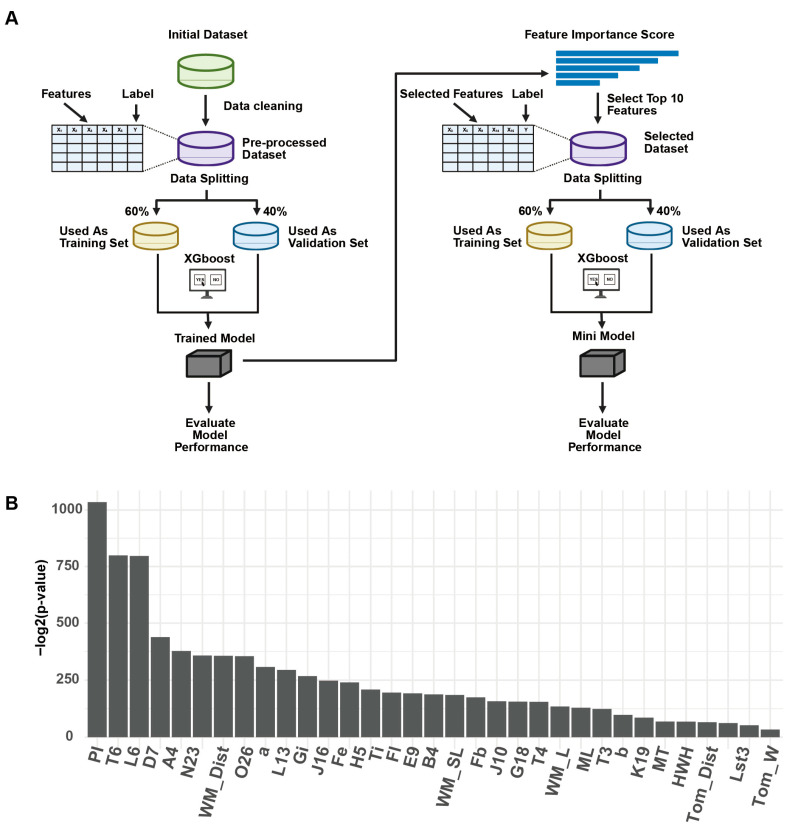 Figure 1
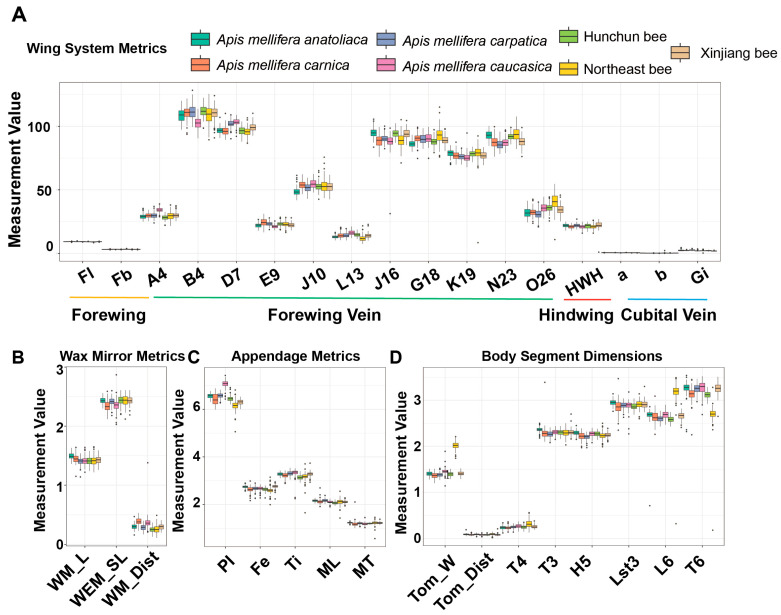 Figure 2
 Figure 3
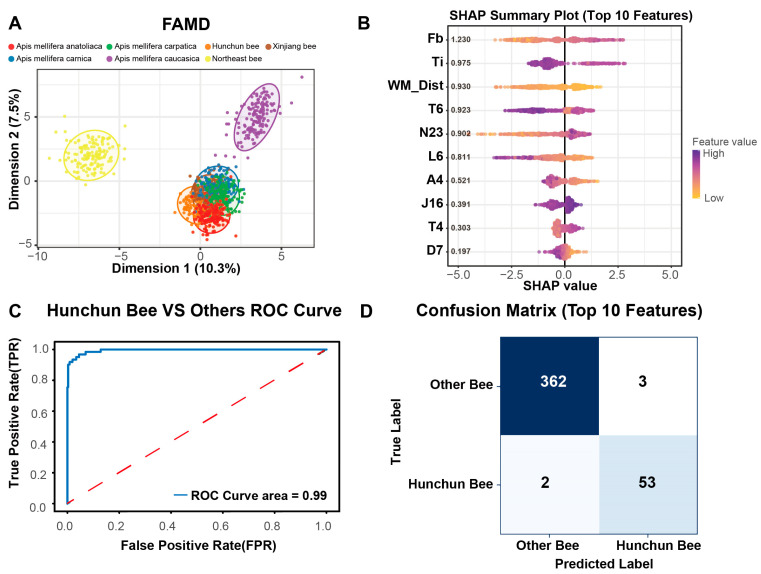 Figure 4
Peer Reviews
No public reviews on file for this paper yet. If you reviewed it on a platform where reviews are public (OpenReview, ICLR, NeurIPS, ICML), you can paste yours below so the community can read it here.
Videos
No videos yet. Explain this paper in a talk, walkthrough, or lecture? Add one.
Taxonomy
TopicsInsect and Arachnid Ecology and Behavior · Insect and Pesticide Research · Morphological variations and asymmetry