Mutation-Induced Resistance of SARS-CoV-2 Mpro to WU-04 Revealed by Multi-Scale Modeling
Mengting Liu, Derui Zhao, Hui Duan, Junyao Zhu, Liting Zheng, Nan Yuan, Yuanling Xia, Peng Sang, Liquan Yang

TL;DR
This study uses advanced modeling to show how mutations in the SARS-CoV-2 protease can reduce the effectiveness of a drug called WU-04 and suggests ways to design more resilient drugs.
Contribution
The paper introduces a novel multi-scale modeling approach combining molecular dynamics and network analysis to assess mutation-induced drug resistance in SARS-CoV-2 Mpro.
Findings
Single mutations at positions 49, 165, and 301 reduce WU-04 binding affinity by up to ~12 kcal/mol.
The M49K/S301P double mutant partially restores drug binding through re-established hydrophobic and hydrogen-bond interactions.
Residue 301 is part of a communication network linking distant domains, and its mutation rewires interactions to compensate for local disruptions.
Abstract
The clinical durability of SARS-CoV-2 main protease (Mpro) inhibitors depends on their resilience to emerging resistance mutations. Recent genomic surveillance and functional reports have highlighted substitutions at positions 49, 165, and 301, raising questions about the robustness of the noncovalent inhibitor WU-04 in variant backgrounds. Here, we combined μs-scale, triplicate molecular dynamics simulations with end-state binding free energy estimates and a network-rewiring inference (NRI) framework that maps long-range dynamical communication across the full protease dimer. We evaluated wild type (WT), single mutants M49K, M165V, S301P, and selected double mutants (M49K & M165V, M49K & S301P). Relative to WT, single substitutions produced reductions in computed binding affinity of up to ~12kcal/mol, accompanied by loss or reshaping of the S2 subsite and altered ligand burial.…
Genes, proteins, chemicals, diseases, species, mutations and cell lines named across the full text — each resolved to its canonical identifier and authoritative record.
Click any figure to enlarge with its caption.
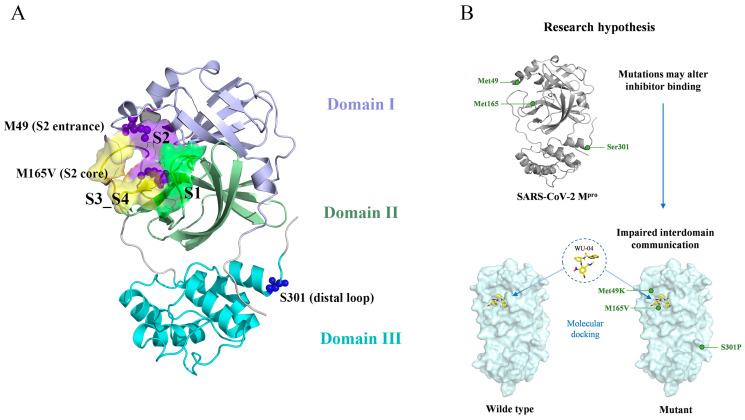 Figure 1
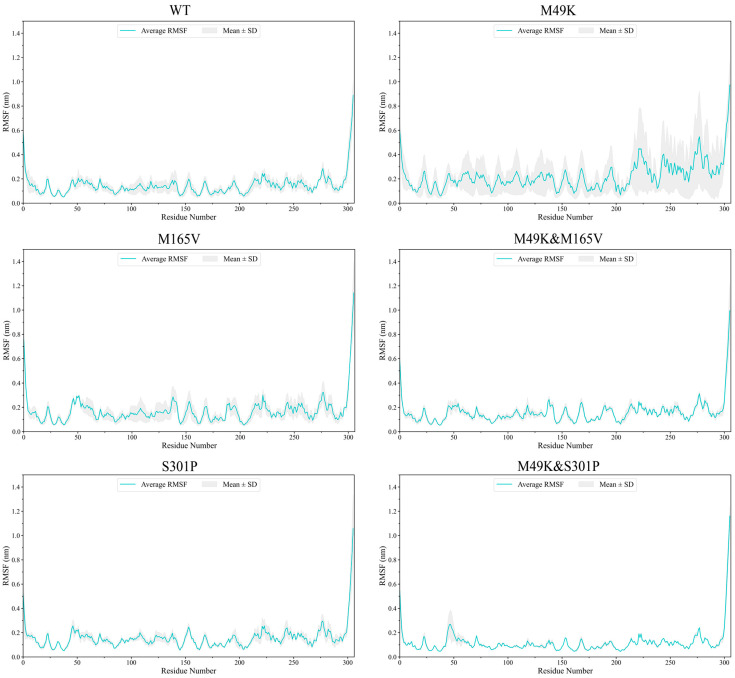 Figure 2
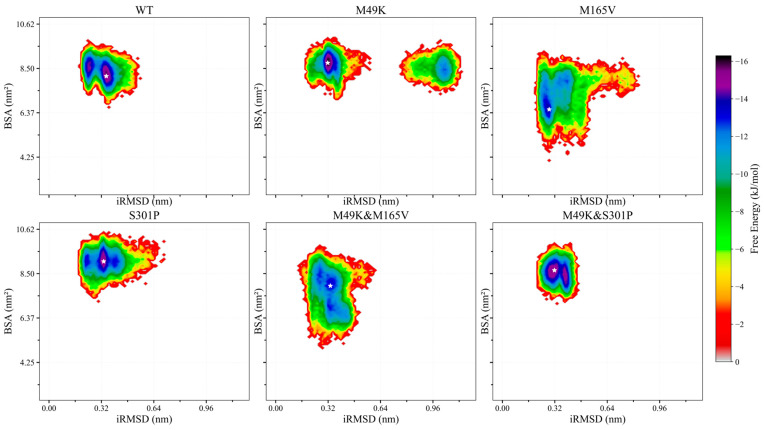 Figure 3
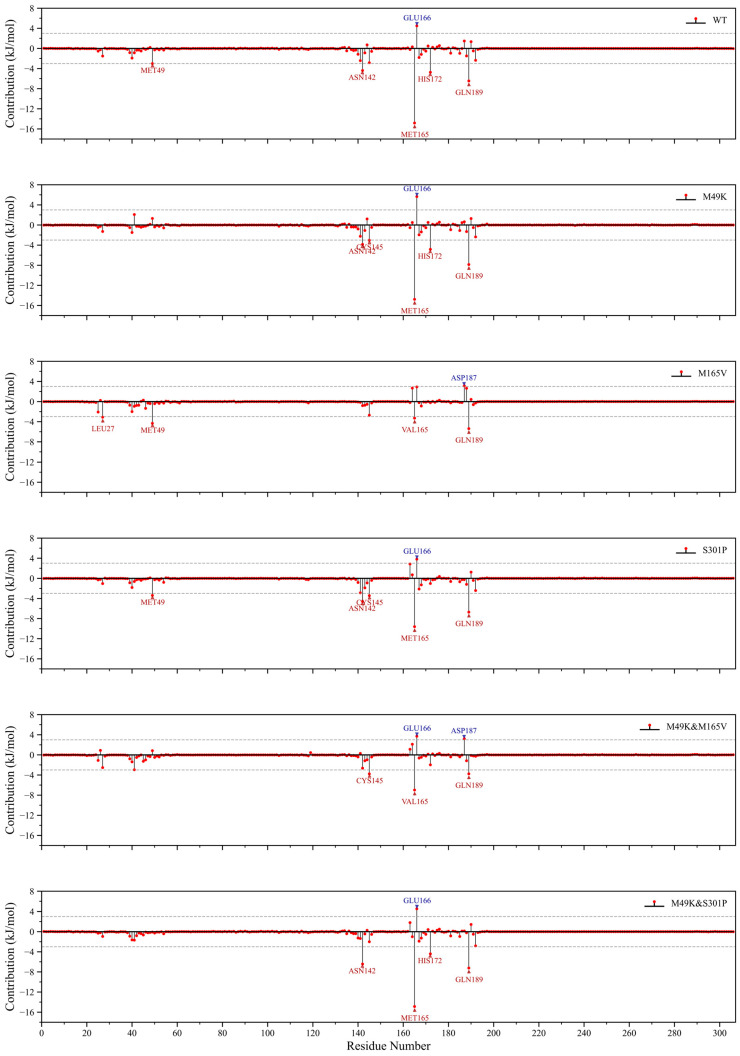 Figure 4
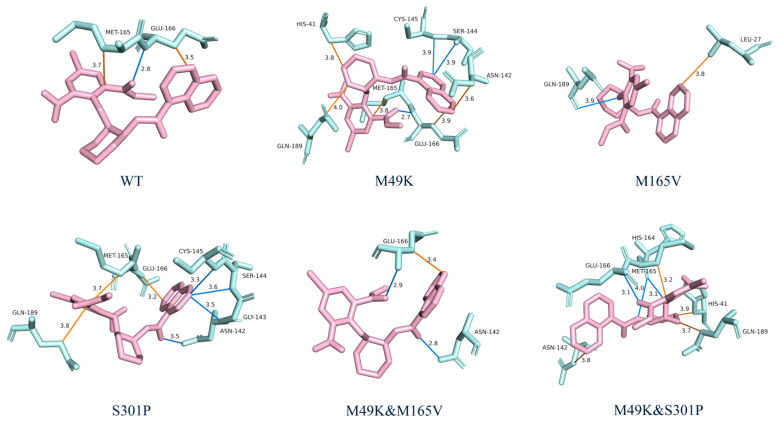 Figure 5
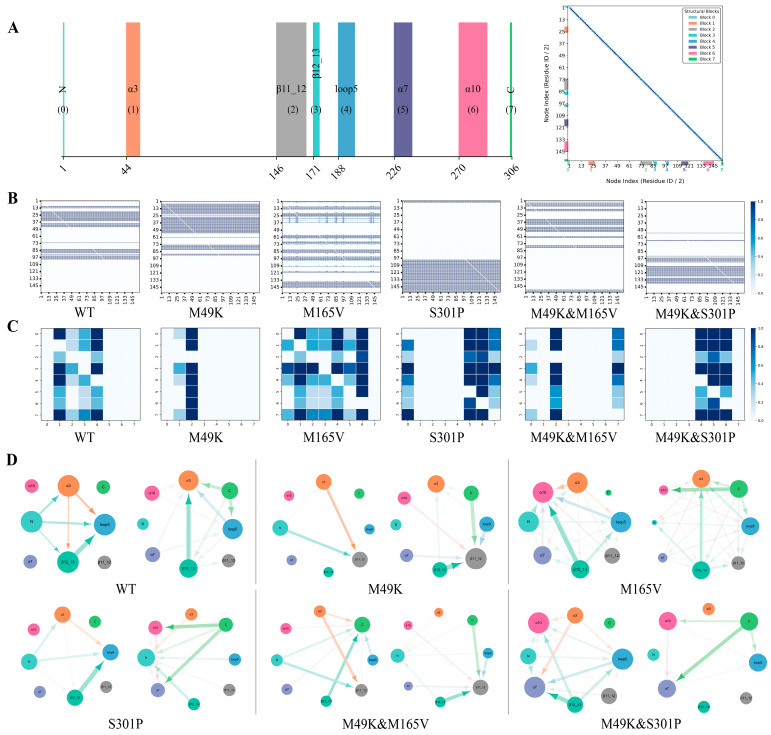 Figure 6
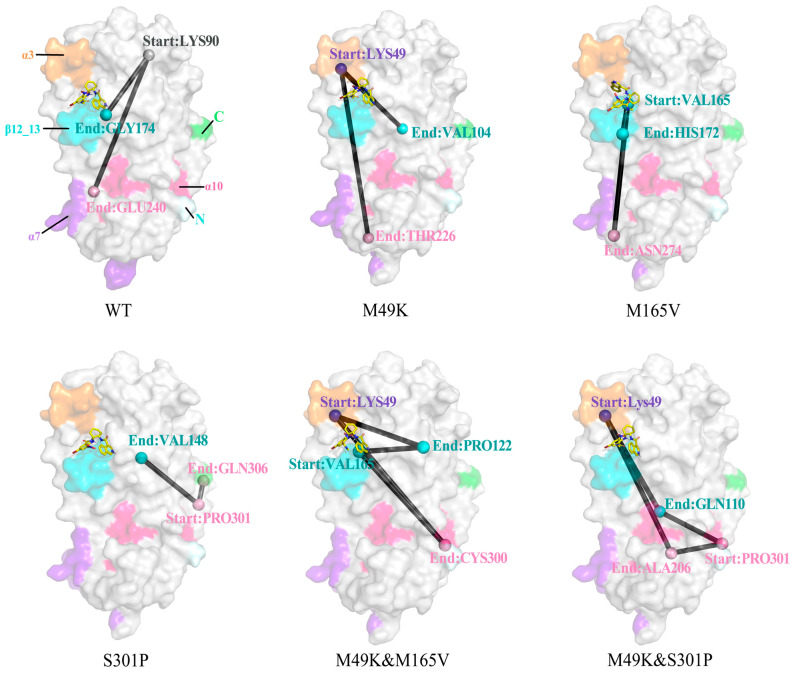 Figure 7
Peer Reviews
No public reviews on file for this paper yet. If you reviewed it on a platform where reviews are public (OpenReview, ICLR, NeurIPS, ICML), you can paste yours below so the community can read it here.
Videos
No videos yet. Explain this paper in a talk, walkthrough, or lecture? Add one.
Taxonomy
TopicsComputational Drug Discovery Methods · Protein Structure and Dynamics · SARS-CoV-2 and COVID-19 Research